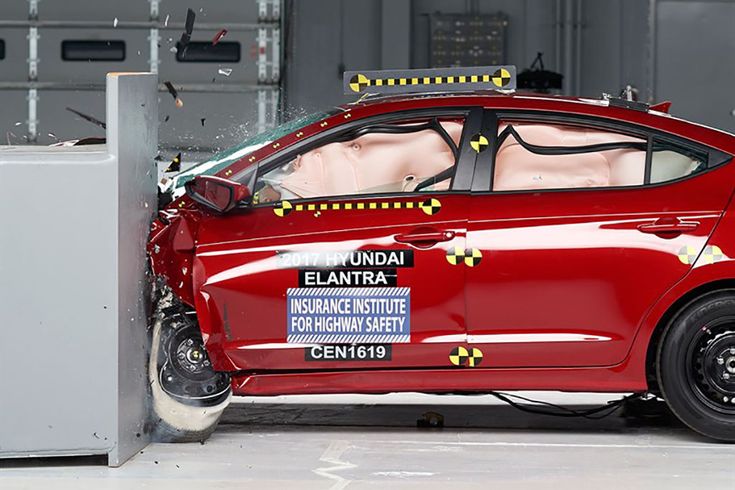
In 2022, the European New Car Assessment Programme (Euro NCAP) reported that 90% of new cars achieved a 5-star safety rating. That's a remarkable statistic, but it hides a critical detail. Those stars are not a blanket guarantee. They are the result of specific, often invisible, engineering choices that protect some areas more than others. I've seen the aftermath of crashes where the front was a write-off, but the rear passengers walked away. That's not luck. It's a deliberate design philosophy that has evolved dramatically, and understanding it can change how you think about your family's saf
The Unseen Fortress: Rear Structure and Crumple Zones
Modern car safety is a story of controlled chaos. The front of your car is designed to crumple. It absorbs kinetic energy in a calculated, progressive collapse. But what about the rear? The common belief is that a smaller crumple zone means less protection. This is where the engineering gets clever.
The rear of your vehicle has a different job. It must manage high-speed impacts from behind, often from taller vehicles like SUVs or trucks, while also protecting the fuel system and maintaining cabin integrity. To do this, manufacturers use ultra-high-strength steel in critical rear frame rails and pillars. This creates a "safety cell" around the passenger compartment. The structure is engineered to deform, but in a way that channels crash forces around the cabin, not through it. As the Insurance Institute for Highway Safety (IIHS) emphasizes in its crash testing, a good rating requires preventing excessive intrusion into the rear occupant space. That solid "thunk" you feel when closing a car door? That's the sound of this protective shell.
More Than Just Seats: The Technology You Can't See
Airbags and seatbelts for rear passengers are no longer an afterthought. They are a complex system that works in milliseconds.
Rear Side-Impact Airbags (Sometimes Called "Curtains")
These are a game-changer. In a side-impact collision, these long airbags deploy from the roof lining down the side windows, creating a cushion between passengers' heads and the glass or intruding vehicle. They are particularly vital for children, whose heads are more vulnerable. I've heard parents say, "The kids are in the back, they're safer back there." That's only true if the car is equipped with this specific technology. It's not universal, even today.
Pre-Tensioners and Load Limiters on Rear Belts
This is where seatbelt technology has leapt forward. A pre-tensioner instantly removes slack from the belt during a crash, holding the occupant firmly in the optimal position. Immediately after, a load limiter allows the belt to spool out slightly in a controlled manner. This reduces the peak force on the chest, especially important for smaller passengers. It's a one-two punch of restraint and gentle release that dramatically reduces injury risk.
The Critical Role of Head Restraints
Whiplash is a common and debilitating injury in rear-end collisions. Modern rear head restraints are not just padded bars; they are actively designed to catch and support the head early in the crash sequence to minimize violent backward motion. A properly adjusted head restraint is one of the simplest yet most effective protective features. It should be positioned so the top is at least level with the top of the occupant's ears.
What This Means for You: Actionable Safety
Knowing the engineering is one thing. Using it to your advantage is another. Your role is to activate and maintain these systems.
First, adjust every head restraint for every passenger, every time. A folded-down head restraint offers zero protection. Second, ensure all rear seatbelts are worn correctly. The shoulder belt should cross the chest, not be tucked behind the arm or under the armpit. The lap belt must lie low across the hips, not over the stomach. Third, if you have young children, their car seat must be installed rock-solid using either the seatbelt or the ISOFIX/LATCH anchors. There should be no more than an inch of movement side-to-side or front-to-back at the belt path. The National Highway Traffic Safety Administration (NHTSA) has excellent guides on proper installation.
Finally, be a savvy buyer. When choosing a vehicle, don't just look at the overall star rating. Dig into the details of the Euro NCAP or IIHS results. Look specifically at the "Rear Impact" or "Child Occupant" protection scores. See if rear side airbags are standard or an option. This research turns abstract safety ratings into a concrete checklist for your family.
Your car's rear seats are not a passive cargo area. They are a zone protected by some of the most sophisticated safety engineering in the vehicle. That engineering only works if you partner with it. Adjust the restraints. Buckle up every single time. Install seats correctly. The next time someone climbs into the back, you'll know they're sitting within a fortress of carefully designed steel, sensors, and fabric, all working in silent concert for their safety.
Comments (0)
Please login to join the discussion
Be the first to comment on this article!
Share your thoughts and start the discussion