I have seen more engines run poorly after a "simple" MAF sensor cleaning than I care to count. A study by the SAE International highlights how sensitive modern hot-wire MAF sensors are, noting that improper handling can cause calibration drift and performance issues that are hard to diagnose. That tells you everything. This tiny component, responsible for measuring the air your engine breathes, is both critical and fragile. People approach it with a can of cleaner and a "how hard can it be" attitude. The result is often a car that idles worse, has less power, or throws a check engine light for
Why Cleaning Goes Wrong
The Mass Air Flow sensor is not just a piece of plastic with some wires. Inside its housing is a thin, electrically heated wire or film. The engine computer sends a current through it to keep it at a specific temperature above ambient air. As air flows past, it cools the wire. The computer measures how much extra current is needed to maintain that temperature, and that data directly determines how much fuel to inject. It is a precise, delicate measurement.
The most common mistake is physical contact. Using a cotton swab, a brush, or even a finger to wipe the element can break the fine wire or damage the microscopic film. Once that happens, the sensor's calibration is destroyed. It cannot be fixed. Another error is using the wrong cleaner. Brake cleaner, carburetor cleaner, or any aggressive solvent can leave a residue or chemically degrade the sensing element. You need a cleaner specifically labeled as safe for MAF sensors. Finally, people often forget that the problem might not be dirt at all. A failing sensor will not be cured by cleaning. Spraying a faulty unit is a waste of time and cleaner.
The Right Way to Clean Your MAF Sensor
This process requires patience and the right tools. Rushing guarantees nothing but potential problems.
Gather What You Actually Need
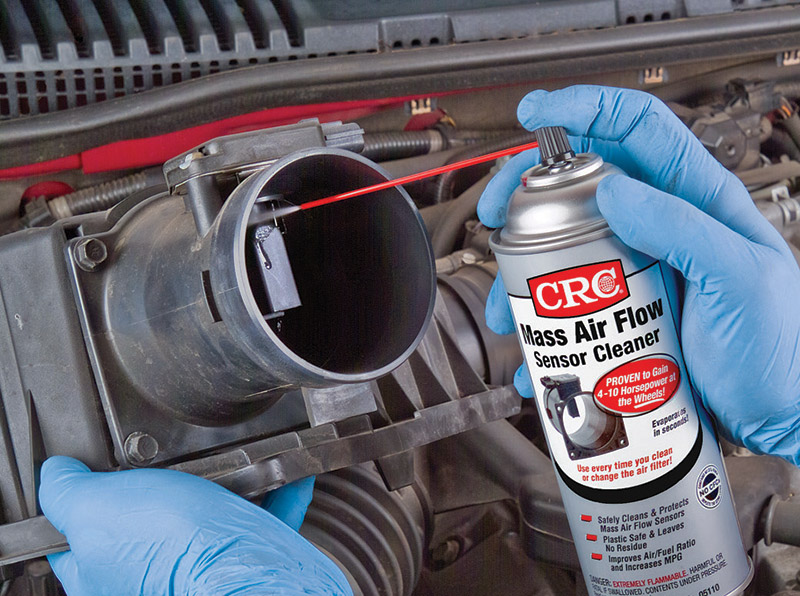
You will need a set of precision screwdrivers or Torx bits to match the sensor's fasteners. A can of CRC Mass Air Flow Sensor Cleaner is the industry standard. Do not substitute it. Have some lint-free shop towels ready. That is your entire kit. Do not use compressed air from a shop compressor, as it can contain moisture and oil that will coat the element.
Safe Removal and Inspection
First, disconnect the negative battery cable. This is a good safety practice to prevent any electrical spikes. Locate the MAF sensor, which is housed in the intake air duct between the air filter box and the throttle body. Unplug its electrical connector by pressing the release tab. Remove the sensor from the intake tube. Now, inspect the element in good light. You are looking for a thin wire or a small, flat ceramic plate with a thin film. If you see any obvious damage, like a broken wire, stop. Cleaning will not help. You need a new sensor.
If it looks intact but has visible dust or oil film, proceed. Hold the sensor so the element is facing down. This prevents dislodged debris from falling back onto it. Spray the cleaner liberally from about 6 inches away, using short bursts. Completely soak the element. The cleaner is designed to evaporate without leaving a residue. Do not touch it. Do not scrub it. Let it air dry completely for at least 15 minutes, or until no liquid is visible. This drying time is non-negotiable.
Reinstallation and Reset
Once the sensor is completely dry, reinstall it into the intake tube and reconnect the electrical connector. Reconnect the battery cable. This is a crucial step many skip. The engine control unit (ECU) has learned fuel trims based on the old, dirty sensor readings. By disconnecting the battery for a few minutes, you reset the ECU's short-term memory. When you start the car, it will begin relearning with the newly cleaned sensor, which helps it adapt faster. Start the engine and let it idle for a few minutes. It may idle roughly at first as the computer recalibrates. This is normal. After a few drive cycles, performance should smooth out and improve.
When Cleaning Is Not the Answer
Cleaning is a maintenance step, not a repair. If your MAF sensor is genuinely failing, no amount of spray will fix it. Symptoms of a failing MAF include persistent rough idle, hesitation on acceleration, stalling, and a noticeable drop in fuel economy. These often come with diagnostic trouble codes like P0101 (MAF Performance) or P0102 (MAF Circuit Low Input). If you have cleaned the sensor correctly, reinstalled it, and the problems or codes return immediately, the sensor itself is likely faulty. This is when I hear, "But it's clean!" Clean and functional are two different things. Trust the diagnostic code and the symptom pattern over your assumption.
A properly cleaned MAF sensor can restore lost power and fuel efficiency. It is a worthwhile piece of maintenance. The key is respecting the component's fragility. Use the right product, avoid all physical contact, and allow proper drying time. Follow those rules, and you will avoid turning a simple cleaning job into an expensive replacement. Because in the world of car repair, the right fix always starts with the right method.

Comments (0)
Please login to join the discussion
Be the first to comment on this article!
Share your thoughts and start the discussion