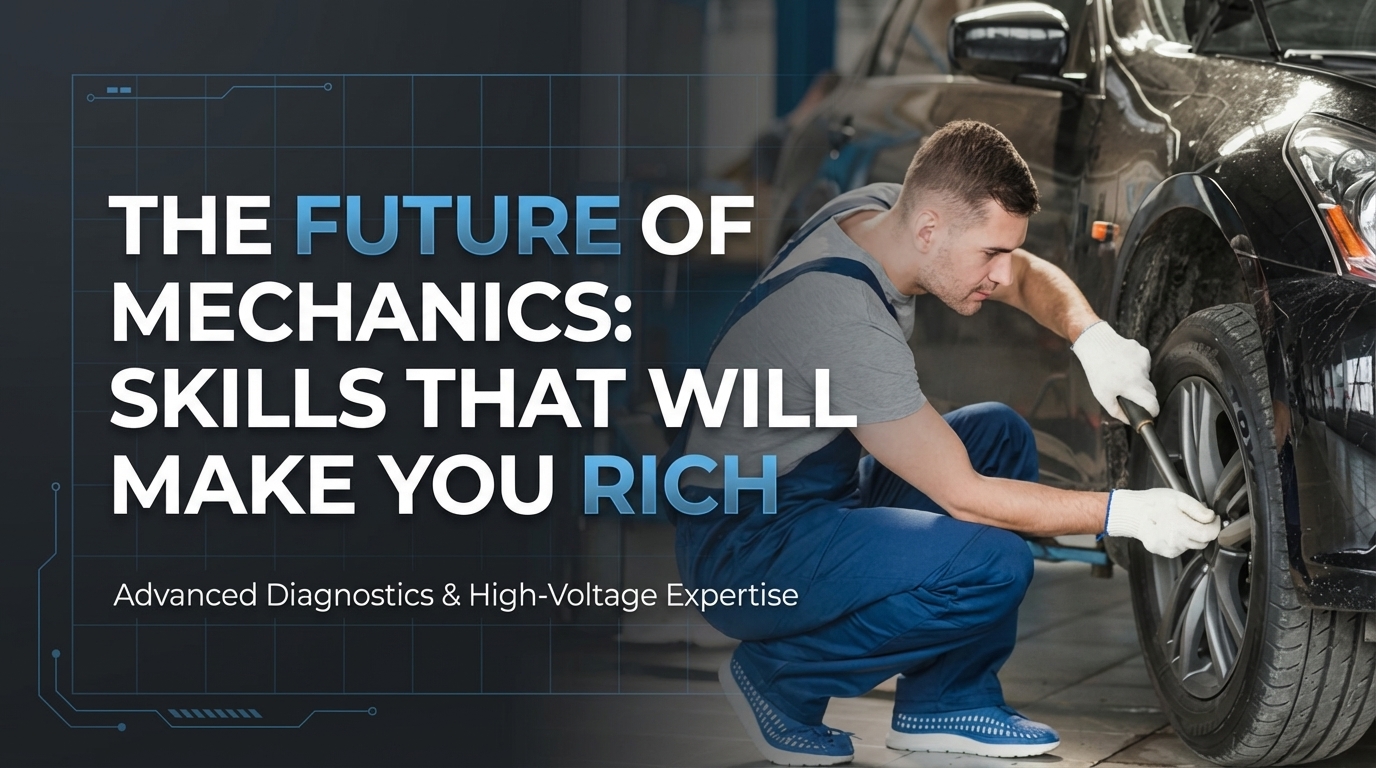
A recent study by the U.S. Bureau of Labor Statistics projects that employment for automotive service technicians and mechanics will grow 2% from 2024 to 2034, with about 67,700 openings projected each year. That steady demand is the baseline. The real story is the massive wealth gap forming within the profession. The technician who can only swap parts is being left behind. The one who can command a diagnostic computer, interpret complex electrical schematics, and calibrate a sensor network is writing their own ticket. The future of mechanics isn't about getting your hands dirty. It's about ge
The New Currency Is Data, Not Dirt
For decades, the core skill was mechanical aptitude. You fixed what you could see and touch. That world is gone. Modern vehicles are rolling data centers with over 100 million lines of code, more than a fighter jet. The technician of tomorrow is a hybrid: part electrician, part network engineer, part software analyst. The "wrench turner" archetype is fading. I hear shop owners say it all the time: "I can find ten people to do brakes. Finding one who can diagnose a CAN bus fault is like finding gold."
This shift creates a clear divide. The pay scale reflects it. According to data from the Bureau of Labor Statistics, the median annual wage for automotive technicians was $49,150 in May 2024. However, the top 10% earned more than $78,000. That upper tier isn't working harder. They're working smarter on fundamentally different problems.
Mastering High-Voltage Systems
Electric and hybrid vehicles are not a niche anymore. They are the fastest-growing segment of the market. Working on them requires a completely separate certification and mindset. It's high-stakes electrical work where a mistake can be fatal. This specialization commands a premium. A technician certified in EV/hybrid systems can instantly add 20-30% to their hourly rate. The demand is so high that manufacturers and independent shops are scrambling to find qualified people. This isn't about changing a battery pack. It's about understanding battery management systems, isolating high-voltage circuits, and performing repairs that keep everyone safe. The technician who says, "I stick to gas engines" is opting out of the single biggest income opportunity in a generation.
Becoming a Digital Diagnostician
Here's the reality check. Anyone can plug in a scan tool and read a code. P0420: Catalyst System Efficiency Below Threshold. The code tells you the what, not the why. The rich skill is diagnostic logic. Is it a failed oxygen sensor? A leaking exhaust manifold? A failing catalytic converter? Or is it a misleading reading caused by a faulty fuel trim from a dirty Mass Air Flow sensor? This is where you separate yourself.
The process involves systematic testing, analyzing live data streams, and understanding how systems interact. It requires resources like International Automotive Technicians' Network (iATN) for case studies and manufacturer-specific programming tools. The technician who can consistently pinpoint the root cause on the first visit saves the shop money and builds unshakable customer trust. That reliability is worth its weight in gold. Customers don't come back for the cheap oil change. They come back for the expert who solved the problem no one else could.
Soft Skills Are Your Silent Multiplier
Technical mastery alone won't make you rich. It gets you in the door. The ability to communicate complex issues in simple terms builds the relationship that allows you to charge what you're worth. I've seen brilliant technicians struggle because they can't explain a $2,000 repair to a worried customer. The result? The customer gets a second opinion, the repair goes elsewhere, and the technician's value is lost.
Think of it this way. You're not selling a timing belt job. You're selling peace of mind, reliability, and the expertise that ensures their family car is safe. You're translating "interference engine" into "if this belt breaks, your engine is destroyed." That communication skill turns a skeptical customer into a loyal advocate. It's the difference between being a cost and being an investment. When a customer says, "Just fix what's wrong," they're handing you their trust. How you handle that trust determines everything.
The Business Mindset
The highest earning potential isn't always on the shop floor. It's in owning the bay, then the shop, then the business. Understanding profitability, parts sourcing, workflow efficiency, and customer acquisition transforms a top technician into a successful entrepreneur. This means learning about markup, labor rates, and inventory turnover. It's about knowing that the right diagnostic tool isn't an expense. It's an asset that pays for itself by solving jobs faster and more accurately.
Resources like the National Institute for Automotive Service Excellence (ASE) offer more than certifications. They provide a framework for professional development and business standards. The mechanic who starts thinking like a business owner stops trading hours for dollars and starts building equity in their own reputation and operation.
Your Action Plan Starts Now
Waiting for your shop to train you is a losing strategy. The future belongs to the self-directed. Your upskilling plan should be aggressive and continuous.
First, pursue manufacturer-specific certifications, especially in hybrid and electric vehicle technology. These are the credentials that shops and dealerships actively pay for.
Second, invest in your own diagnostic education. Don't just use the shop's scan tool. Learn how to use an advanced diagnostic platform, a high-quality digital multimeter, and a lab scope. Understand waveform analysis.
Third, practice communication. Role-play explaining a complex repair to a friend or family member who knows nothing about cars. If you can make them understand, you can make any customer understand.
The landscape is changing faster than ever. The technician who adapts, who embraces the digital core of the modern vehicle, and who couples technical skill with human intelligence will not just have a job. They will have a career that is both lucrative and respected. The tool of the future isn't a bigger wrench. It's a sharper mind.
Comments (0)
Please login to join the discussion
Be the first to comment on this article!
Share your thoughts and start the discussion