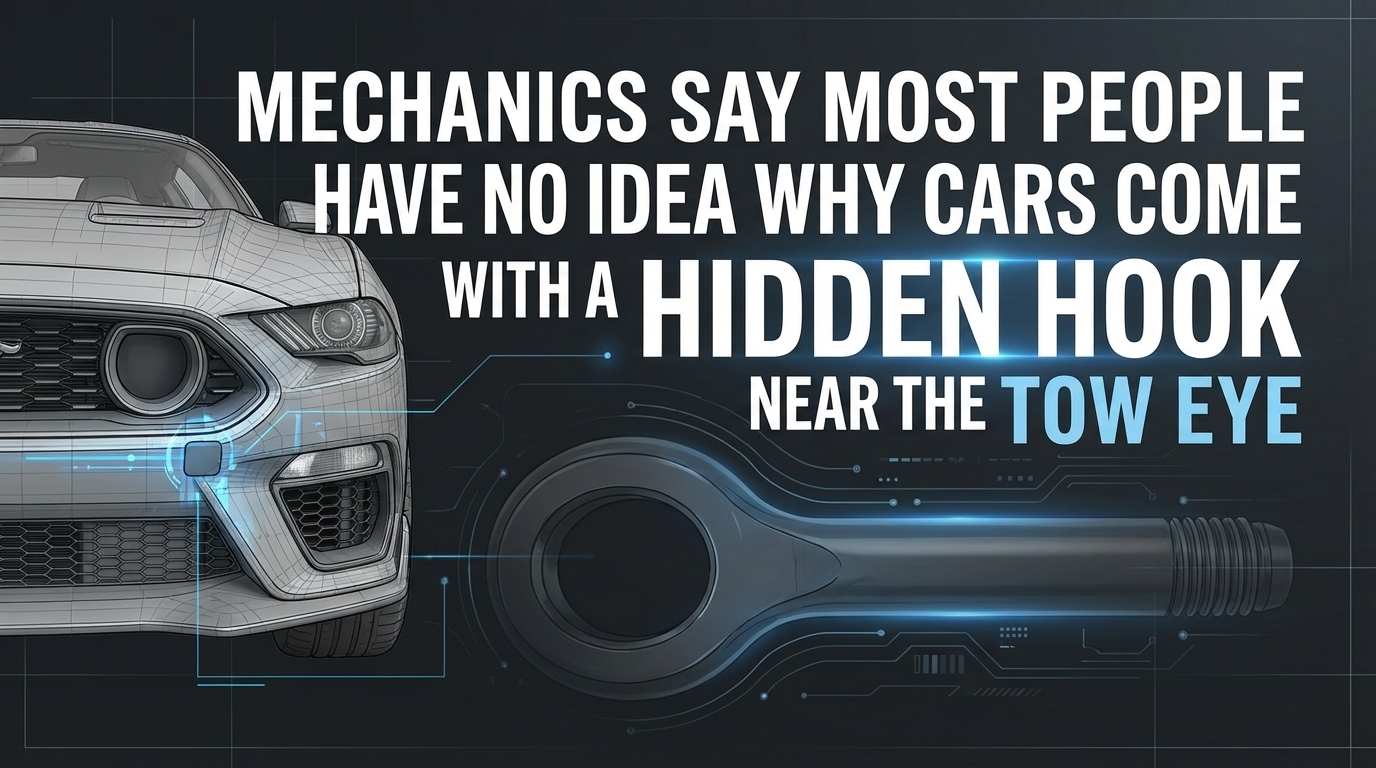
Look under the front or rear bumper of your car. You will likely find a small, square plastic cover. Pop it off, and you'll see a threaded hole. Most drivers think this is only for screwing in a tow hook. They are only half right. That threaded socket is the tow eye mounting point, but the real secret is the unassuming hook itself. Its design and placement are a direct result of global safety standards, and using it incorrectly is a fast way to cause serious damage. I have seen too many people confidently say, "It's just a tow point," right before they bend a bumper beam or crack a radiator su
The Real Purpose of the Tow Hook
First, let's clear up a major misconception. That hook is not for general towing or recovery. Its official, singular purpose is for flatbed loading and short, straight-line pulls to get a disabled vehicle onto a recovery truck. This is a critical distinction. The European New Car Assessment Programme (Euro NCAP), which influences global design, specifies these points specifically for "vehicle recovery and transport," not for yanking a car out of a ditch. Euro NCAP's vehicle homologation requirements detail the strict load testing these points must pass. They are engineered for a controlled, aligned pull, not the dynamic, angled stresses of off-road recovery.
Why does this matter? Your car's chassis is designed to handle crash forces in specific ways. The tow hook mounting point is reinforced to channel force directly into the vehicle's main longitudinal rails, the strongest parts of the frame. Using it correctly protects that structure. Using it like a tractor pull point can twist or buckle those very rails. I have heard the shop quote, "We'll need to pull the frame." That job starts with a tow hook used the wrong way.
How to Use It Correctly (And How Not To)
Using the tow hook properly is a three-step process that most people skip. First, find the specific tow hook for your vehicle. It is usually in the trunk with the spare tire kit. Do not use a generic hook from another car. Second, screw it into the mounting point by hand until it is fully seated and tight. Do not use tools to overtighten it. You risk cross-threading or damaging the receiver, which is often part of the bumper reinforcement. Third, attach the recovery strap or winch cable directly to the forged loop of the hook. Never wrap a strap around the hook's shaft or attach to a part of the hook not designed for load.
The most common mistake is using a kinetic recovery rope or snatch strap with these hooks. This is where I see the most damage. Kinetic ropes build immense dynamic energy. The sudden shock load can far exceed the static pull rating of the tow eye, snapping it or tearing it clean out of the body. As ARB's guide to kinetic ropes explains, these tools are for dedicated, frame-mounted recovery points, not factory tow eyes. If you are stuck in sand or mud, calling for professional recovery is often cheaper than the repair bill.
What That Plastic Cover Is Really For
That little square or circular cover is not just for aesthetics. It serves two vital engineering functions. Primarily, it maintains the aerodynamic profile of the bumper, reducing drag and wind noise. Secondly, and more importantly, it protects the threaded receiver from corrosion, dirt, and road debris. A clogged or rusted thread makes it impossible to screw in the hook when you actually need it. I advise checking this area during a wash. Make sure the cover fits snugly and the threads inside are clean.
Some manufacturers hide a second function here. On certain models, removing this cover reveals not just the tow eye point, but also an access hole for changing a daytime running light bulb or for securing a front license plate bracket. It is always worth consulting your owner's manual. The manual will have the exact page showing the location, the specific hook for your car, and the manufacturer's strict instructions for use. As one industry engineer told Popular Mechanics, these points are "designed for a very specific load case." Popular Mechanics' breakdown on tow hooks reinforces that they are safety-critical components, not an afterthought.
When You Should Never Use It
There are clear situations where threading in that hook is the wrong move. If your vehicle has sustained rear-end or front-end collision damage, the integrity of the mounting point is compromised. Do not use it. For any recovery situation where the pulling vehicle cannot align almost perfectly straight with yours, you need a different solution. Angled pulls create side-loading, which the hook is not designed to withstand. This is when people say, "It's on there tight, it'll hold." Then we hear a loud pop.
For SUVs and trucks used off-road, the factory tow hooks are almost always insufficient. These vehicles require properly rated aftermarket recovery points that bolt directly to the chassis. The factory points are for transport. The aftermarket points are for recovery. Knowing the difference saves your vehicle. If you are unsure, the safest course is always to wait for a professional with a flatbed. A tow costs a fixed fee. A damaged chassis does not.
That hidden hook is a precise tool. It is a product of stringent safety engineering, meant for a single, controlled job. Respect its purpose. Locate it before you need it. Screw in your own hook to understand how it works. And remember, the strongest tools are only as good as the knowledge of the person using them. Your car is telling you how to move it safely. That little threaded hole is the instruction. We just have to listen.
Comments (0)
Please login to join the discussion
Be the first to comment on this article!
Share your thoughts and start the discussion