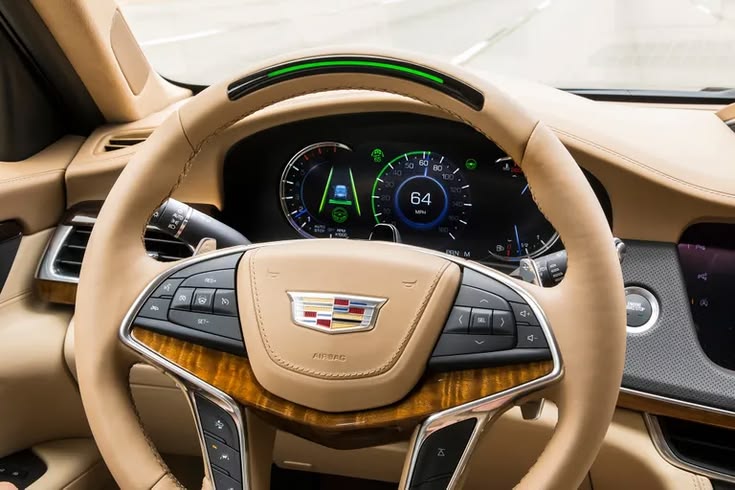
General Motors' Super Cruise system is currently the only hands-free driver assistance technology authorized for use on over 400,000 miles of compatible highways in North America. That's a staggering number of roads where a Cadillac driver can, quite literally, take their hands off the wheel at 70 miles per hour. It sounds like science fiction, and it feels that way the first time you try it. But this isn't about letting the car drive itself. It's about a specific, monitored form of assistance with a very clear purpose and even clearer limitations.
I've had the chance to experience Super Cruise on long highway stretches. The initial sensation is a mix of awe and unease. Your brain screams that this is wrong, even as the car calmly centers itself in the lane, adjusts speed for traffic, and executes gentle curves. The trust it requires from the driver is profound, but it's not blind trust. The system is built on a foundation of specific conditions and constant driver monitoring. Understanding what it actually does, and more importantly what it does not do, is the difference between using it as a sophisticated tool and misusing it as a dangerous party trick.
It's Not Autopilot, It's a Supervised Corridor
The most critical point to grasp is that Super Cruise does not work everywhere. It only functions on divided, limited-access highways that GM has pre-mapped with lidar data. This network includes most major interstates, but it excludes surface streets, construction zones, and complex intersections. The system uses this high-definition map data, combined with real-time cameras, radar, and GPS, to position the vehicle with extreme accuracy. It's not guessing where the lanes are; it knows.
This is why you'll hear a driver say, "It works perfectly on I-95, but it disengaged as soon as I took the exit ramp." That's by design. The moment you leave a mapped highway, the system will prompt you to take control. Relying on it outside of its intended domain is a fundamental misunderstanding of the technology. It's a corridor-based system, not a universal one.
The Driver Monitoring System is Non-Negotiable
This is where Super Cruise separates itself from many other systems. A small camera mounted on the steering column tracks your head position and eye gaze. If you look away from the road ahead for too long, a series of escalating warnings begins. First, green lights on the steering wheel will flash. Then, you'll get audible alerts and seat vibrations. If you continue to be inattentive, the system will safely slow the vehicle to a stop while alerting OnStar.
I've seen drivers test this. They think, "I can just watch a movie on my phone for a minute." The system catches that intent almost immediately. It's not a suggestion; it's a requirement. This constant monitoring is the cornerstone of its hands-free allowance. The National Highway Traffic Safety Administration (NHTSA) emphasizes that even advanced systems require the human driver to be actively engaged and ready to take over. Super Cruise's design enforces this principle physically.
What "Ready to Take Over" Really Means
Hands-free does not mean mind-free. You are still the driver. The system can handle predictable highway cruising, but it has limitations. It may not react optimally to sudden, severe weather like heavy rain or snow obscuring lane markings. It may not correctly interpret the actions of an erratic driver swerving into your lane. It requires you to supervise its operation and be prepared to intervene instantly.
This is the part that requires honest self-assessment. You must be alert, watching the road, and planning your next move just as you would if your hands were on the wheel. The moment you feel complacent, thinking "the car's got this," is the moment you've become a liability. The system is an assistant, not a replacement.
Knowing When It Will Hand Control Back to You
Super Cruise will disengage under specific conditions, and you need to recognize the cues. It will disengage if you manually use the turn signal and start to change lanes (you resume control for the maneuver). It will disengage if you take an exit off a mapped highway. Most importantly, it will disengage if the system encounters something it cannot confidently handle, like faded lane markings, a sharp curve it deems beyond its capability, or certain types of construction zones.
The warning is clear. You'll see a visual alert on the instrument cluster and hear a prompt. The driver must take control immediately. There is no grace period. I've heard the aftermath when someone isn't paying attention: "It just turned itself off!" But the system gave ample warning. The failure was in the driver's readiness to resume their primary role.
Used correctly, Super Cruise is a remarkable tool for reducing fatigue on long, monotonous highway drives. It can make a six-hour trip feel less taxing. But that benefit only exists within the strict framework GM has built. It demands your attention in exchange for your hands. Respect that boundary, and it works as advertised. Forget it, and you're piloting a heavy object at high speed without a clear plan. The technology is impressive, but it still answers to you.
Comments (0)
Please login to join the discussion
Be the first to comment on this article!
Share your thoughts and start the discussion