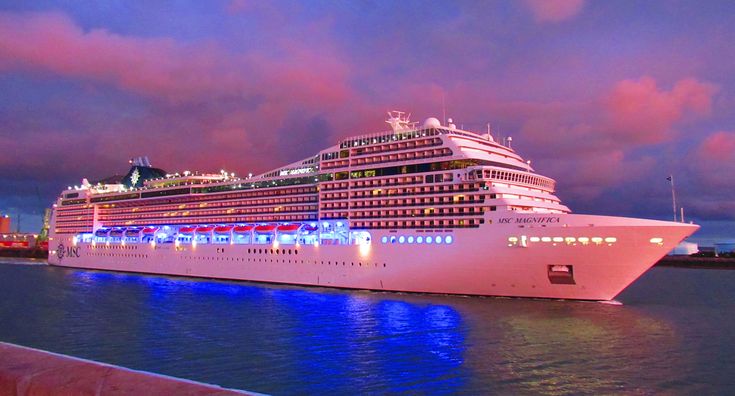
In 1912, the Titanic sank in under three hours. Today, a modern cruise ship is designed to stay afloat for weeks, even with massive hull damage. The difference isn't luck. It's a century of brutal maritime lessons forged into steel, law, and brilliant engineering. I've spent years studying complex systems, and the evolution of cruise ship safety is a masterclass in redundancy. The common belief that "ships can't sink anymore" is a dangerous oversimplification. The truth is more fascinating. They are built to be almost impossible to sink, and here is exactly how that promise is kept.
The Foundation Compartmentalization and Stability
Forget the idea of a single hull. Modern cruise ships use a double-skin hull, an outer layer for impact and an inner layer as a final watertight barrier. But the real magic happens inside. The entire vessel is subdivided into a series of watertight compartments by transverse bulkheads that run from the keel to several decks above the waterline. These are not simple walls. They are massive, sealed structures with no doors for passengers. Crew access is through watertight doors that can be closed remotely from the bridge in seconds.
The principle is simple and devastatingly effective. If one compartment floods, the water is contained. The ship is designed so it can lose buoyancy in multiple compartments and remain stable. The specific standard, set by the International Maritime Organization (IMO), is known as the "two-compartment standard" for most large passenger ships. This means the vessel can sustain flooding in any two adjacent major watertight compartments and still stay afloat and stable. Some are built to a "three-compartment standard." This isn't guesswork. It's proven through extensive computer modeling and physical stability tests conducted during construction.
Stability is the other half of the equation. A ship must not only float but also resist capsizing. The wide, shallow draft design of modern cruise ships, with much of their volume high up in the superstructure, creates a high center of gravity. This is counteracted by a massive, heavy keel and sophisticated ballast systems that can pump seawater between tanks to correct a list. The goal is to ensure that even if flooded, the ship returns to an upright position. It's a constant, calculated balance between buoyancy and weight.
Redundant Systems The Heartbeat That Never Stops
Power is life on a ship. Without it, pumps stop, lights go out, and navigation fails. That's why redundancy is engineered into every critical system. I always tell people, one backup is a plan, two is a philosophy. On a cruise ship, it's a mandate.
They have multiple engine rooms, often located in separate watertight compartments. If one floods or fails, others can take over. Power distribution is equally segmented. There isn't one electrical grid. There are several independent ones, fed by separate generators. Vital systems like bilge pumps, steering, and navigation have multiple power sources, including emergency generators that automatically start if main power is lost. These generators are located high up on the ship, away from potential flooding.
The bilge pump system is a network of pipes and powerful pumps that can move thousands of tons of water per hour. More importantly, they can be controlled from multiple locations. Even if the bridge is compromised, engineers in the control room or at local stations can activate pumps to combat flooding. This layered approach to systems ensures that a single point of failure, whether mechanical or spatial, cannot doom the vessel. It's the engineering answer to the old sailor's saying, "Don't put all your eggs in one basket." On a modern ship, the baskets are scattered, fortified, and have their own backup baskets.
The Human and Regulatory Backstop
All the steel in the world means nothing without strict procedures and constant vigilance. This is where regulation and training become the final, critical layer. After the Titanic, the International Convention for the Safety of Life at Sea (SOLAS) was created. It is the bible of maritime safety, continually updated and enforced by flag states and port authorities. SOLAS dictates everything from the number of lifeboats to fire safety standards and, crucially, stability requirements.
Crew training is relentless. Weekly drills for passengers are the visible part. Behind the scenes, crews undergo constant training on damage control. They practice setting up emergency patches, operating dewatering equipment, and sealing compartments. The bridge team trains for worst-case scenarios in high-tech simulators that recreate storms, blackouts, and flooding. This preparation aims to prevent the kind of confusion that can escalate an incident. There's a mindset professionals cultivate: hope for the best, but drill for the worst. It's a discipline that turns engineered potential into real-world survival.
Advanced technology provides the eyes. Modern ships are covered in sensors that monitor hull stress, water ingress, and stability in real-time. This data flows to computer systems that can model the effects of flooding within minutes, predicting the ship's condition and helping the captain make informed decisions. It's a far cry from relying on a crewman's report of how much water is in a hold. Today, they know the volume, the rate of ingress, and the projected effect on stability almost instantly.
The Reality of "Unsinkable"
So, can a modern cruise ship sink? The engineering makes it extraordinarily difficult, but "impossible" is a word we avoid in this profession. The Costa Concordia disaster in 2012 was a stark reminder. Human error, specifically a reckless deviation from the planned route, caused a massive, uncontainable breach across multiple compartments. The ship eventually capsized and sank, though the slow progression of the flooding allowed for the evacuation of most people. It proved that while the ships are incredibly resilient, they are not invincible against extreme, compounded failures, especially those driven by human factors.
The goal is not to create a mythical unsinkable ship. That hubris died with the Titanic. The goal, as defined by organizations like the International Maritime Organization, is to provide maximum time for evacuation. If a ship is critically damaged, the systems and design should keep it stable and afloat for long enough—ideally 24 hours or more—for help to arrive and for everyone to get off safely. That is the modern standard. It's a pragmatic, life-saving objective built on layered defense: robust design, redundant systems, strict regulation, and trained crews. It's why, when you step on a cruise ship, you are stepping onto one of the most rigorously engineered and regulated vehicles in the world.
Comments (0)
Please login to join the discussion
Be the first to comment on this article!
Share your thoughts and start the discussion