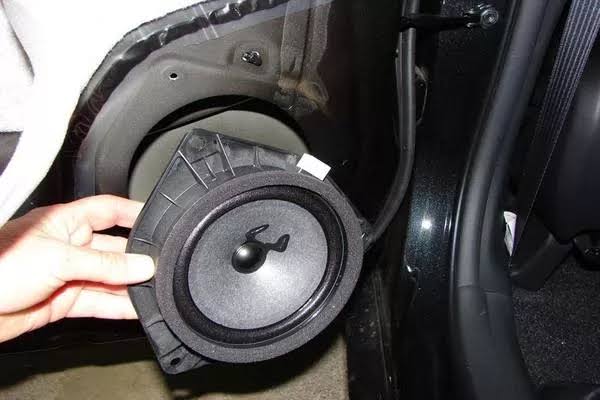
That crackle from your car's speakers is not a minor annoyance. It is a direct message from your vehicle's electrical system. I hear it all the time in my bay. A customer will say, "The sound is fine, it's just a little static," or "It only happens when I turn the volume up." They treat it like background noise. They shouldn't. That crackle is a symptom, and ignoring it can lead you down a frustrating and expensive path of replacing parts that were never broken. Let's talk about what is actually happening and how to fix it for good.
The Real Culprit Is Almost Never the Speaker
This is the first truth you need to understand. A blown speaker sounds torn, distorted, and muffled. A crackling sound, especially one that comes and goes with engine speed or steering input, is almost always an electrical fault. The speaker is the messenger, not the problem. When you hear that intermittent pop and fizz, your car is telling you the clean power signal from your head unit or amplifier is being corrupted on its way to the speaker.
Check the Ground Connection First
This is my absolute first step, every single time. A poor ground is the number one cause of electrical noise in a car audio system. The ground provides the return path for the electrical circuit. If that path is weak, corroded, or loose, the electrical current finds other, noisier paths back to the battery. This introduces interference you hear as crackling or a whining noise that changes with engine RPM.
The fix is straightforward but must be done right. Find the ground point for your head unit or amplifier. It should be connected to bare, clean metal on the vehicle's chassis, not to painted surfaces or existing bolt threads. Remove the connection, sand the contact area down to shiny metal, and reattach it securely. I cannot stress this enough. A customer once brought me a car with a new amplifier and speakers, complaining of terrible noise. The ground was attached to a seat bolt with paint under the ring terminal. We moved it to a clean spot on the floor pan. The noise vanished completely. People say, "I checked all the connections." Did you check the ground properly? It is worth your time.
Inspect Every Inch of the Speaker Wiring
Wires in a car door are in a hostile environment. They flex every time you open and close the door. Over years, this constant motion can break the tiny copper strands inside the insulation. The wire does not snap completely. It develops a partial break that makes and loses contact as the door moves or the car vibrates. This intermittent connection is a classic source of crackling.
Pull back the rubber boot between the door and the body. Carefully inspect the wires for any cracks, brittleness, or exposed copper. Gently flex the wires while the radio is on and listen for changes in the crackle. This is a common fix for noise that appears only when driving over bumps or turning. If you find damaged wiring, do not splice it in the middle of the flex point. Run a new section of wire from a solid connection inside the door to a solid connection inside the cabin. This is a permanent repair.
The Head Unit Itself Could Be Failing
If the ground and wiring check out, the source of the corrupted signal might be the head unit's internal amplifier. Modern head units have complex internal circuit boards. Solder joints can crack from heat cycles and vibration. Internal capacitors can degrade. When this happens, the preamp or power amp section sends a dirty signal to all speakers. A good test is to gently tap or press on the faceplate of the head unit while the crackle is present. If the noise changes, you have likely found the issue. This is a more technical fix, often requiring head unit replacement or professional repair. It explains why someone might replace a speaker, hear the crackle move to the new one, and think they got a defective part. The problem was upstream all along.
When to Suspect a Larger Electrical Issue
Sometimes, the audio crackle is a warning sign of a broader problem in your car's electrical system. If the crackle is accompanied by dimming headlights, erratic gauge behavior, or other electrical gremlins, you need to look deeper.
Alternator Whine and Bad Ground Paths
A whine that rises and falls with engine speed is a dead giveaway of alternator noise entering the audio system. This almost always points back to a ground loop or a poor main vehicle ground. The alternator's noise is riding on the power supply. Check the battery terminals for corrosion and tightness. Ensure the engine ground strap and chassis ground points are clean and secure. This kind of noise is a system-wide issue, not an audio-specific one. Fixing it improves overall electrical stability.
Ignition System Interference
In older vehicles, crackling that coincides with acceleration can sometimes be traced to ignition system interference. Faulty spark plug wires can act like little radio transmitters, and that interference can be picked up by poorly shielded audio cables running near them. While less common in modern cars with tightly controlled ignition systems, it is still a possibility if aftermarket components are involved. Ensuring your audio signal cables are routed away from power wires and ignition components is a good practice. For more on how ignition issues manifest, our guide on why a car shakes when accelerating at a low RPM covers related territory.
The Smart Diagnostic Path
Do not start by buying new speakers. Follow this order. First, test with a known good speaker. Temporarily connect a spare speaker directly to the head unit's wires for the problematic channel. If the crackle is gone, the problem is in the car's original wiring or the original speaker. If the crackle remains, the problem is in the head unit's output or the signal path. Second, meticulously inspect and reseat all connections, with supreme focus on the ground. Third, inspect the wiring harness for damage, especially at flex points. This logical approach isolates the fault without guesswork. For related electrical diagnostics, our article on random shaking at idle discusses how electrical faults can cause other driveability symptoms.
Crackling speakers are a puzzle your car is asking you to solve. The solution is almost always in the connections and the wiring, not in the speaker cone itself. Listen to what the noise is telling you. Is it constant? Check the head unit and ground. Does it change with movement? Check the wiring. By methodically tracing the signal path, you can silence the crackle for good and avoid wasting money on parts you do not need. Trust the process, not the assumption.
Comments (0)
Please login to join the discussion
Be the first to comment on this article!
Share your thoughts and start the discussion