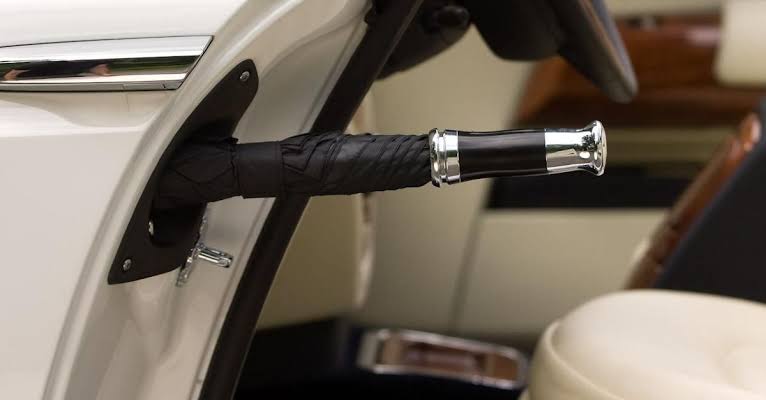
Rolls-Royce engineers once stated that the only sound you should hear inside the cabin is the ticking of the clock. That obsessive focus on silent, seamless luxury extends to the smallest details, like the umbrella hidden inside the door. But the real magic isn't that it's there. It's that it dries itself. This isn't a party trick. It's a masterclass in automotive engineering that solves a simple, messy problem with brilliant complexity.
I hear the same phrase from clients who see this feature for the first time: "It's an umbrella in a door. Big deal." Then they watch it work. The mechanism, the hidden venting, the dedicated drain path. It changes their perspective. It shows how true luxury isn't about adding things. It's about perfecting the experience of using them. Let's look at how this system works, because it reveals more about modern car design than you might think.
Deep Dive: Alternator Failure Symptoms and Service Handling Notes (Interactive Diagram)
The Anatomy of a Self-Drying Umbrella
The umbrella itself is a high-quality Teflon-coated item, but the star is the chamber it slides into. This isn't a simple tube. It's a climate-controlled compartment integrated into the door structure. When you stow the wet umbrella, you're engaging a system with three key components.
The Hidden Airflow System
This is the core of the drying function. The chamber is connected to the vehicle's climate control system via discreet ducting. When the umbrella is inserted, warm, dry air is gently circulated around the fabric. This isn't a blast of heat. It's a consistent, low-temperature flow designed to evaporate moisture without damaging the umbrella's material or the door's interior trim. The air is then extracted, carrying the moisture away.
The Dedicated Drainage Path
Engineering for the real world means planning for failure. What if the umbrella is soaking wet? The initial drip water has to go somewhere. A cleverly designed drain channel at the base of the chamber directs this runoff out of the door and safely underneath the vehicle. This prevents any chance of water pooling inside the door shell, which would lead to corrosion, mold, or electrical faults. It's a simple but critical piece of the puzzle.
Precision Mechanical Integration
Fitting a heated, vented tube into a door already packed with window regulators, speakers, and crash structures is a serious challenge. The compartment is made from a lightweight, corrosion-resistant material and is sealed from the door's internal cavity. The mechanism that holds the umbrella in place must be robust yet silent, engaging with a satisfying, precise click that feels expensive. Every part of this system is over-engineered for a single, flawless function.
Related Reading: 0.008 Seconds: Inside the World's Fastest Gearbox Technologies
Why This Matters Beyond the Gimmick
On the surface, it's an umbrella. Look deeper, and it represents a philosophy. It's about anticipating the client's entire experience, down to the last minor inconvenience. A wet umbrella is a nuisance. It drips on leather seats, carpets, and shoes. The traditional solution is a plastic bag or a towel. Rolls-Royce's solution is to engineer the problem out of existence.
This same philosophy drives other areas of their vehicles. The dashboard and warning systems are designed to inform without alarming. The suspension is tuned to isolate occupants from road imperfections so completely that reviewers often struggle to describe the sensation. It's not about one spectacular feature. It's about a thousand considered details working in unison.
A Lesson in Problem-Solving
For engineers and technicians, this is a fascinating case study. It shows how a multidisciplinary approach solves a real-world issue. It blends body and chassis design, HVAC principles, materials science, and electrical integration. When you break it down, the self-drying umbrella is a compact, automotive-grade dryer. That reframing is what good engineering is all about.
It also highlights the importance of drainage and moisture management, a critical aspect of vehicle longevity that often goes unnoticed until it fails. Proper channeling of water is why your brakes and suspension components don't rust prematurely and why your door electronics keep working.
The Broader Context of Automotive Luxury
Features like this define the upper echelon of the automotive world. They are not listed on a spec sheet with a horsepower number. They are discovered. The owner's manual might mention it, but the true value is in the daily use. It's a conversation piece, sure. But more importantly, it's a constant, quiet reassurance that every conceivable need has been addressed.
This attention to detail creates an emotional connection. People develop a fondness for their car not because of its 0-60 time, but because it took care of them in a rainstorm without a second thought. It's the antithesis of the "add more screens" approach to modern luxury. It's tactile, practical, and deeply thoughtful.
Automotive Insight: P0032 H02S heater control circuit high (Bank 1 sensor 1)
So, the next time someone calls it a gimmick, you'll know better. That self-drying umbrella is a monument to a specific kind of engineering ambition. It's the pursuit of perfection in places most people would never think to look. In a world of complex engine management systems and driver aids, it's refreshing to see such brilliant effort applied to something so beautifully simple. It reminds us that in the right hands, even the most mundane object can become a piece of automotive art.
Comments (0)
Please login to join the discussion
Be the first to comment on this article!
Share your thoughts and start the discussion