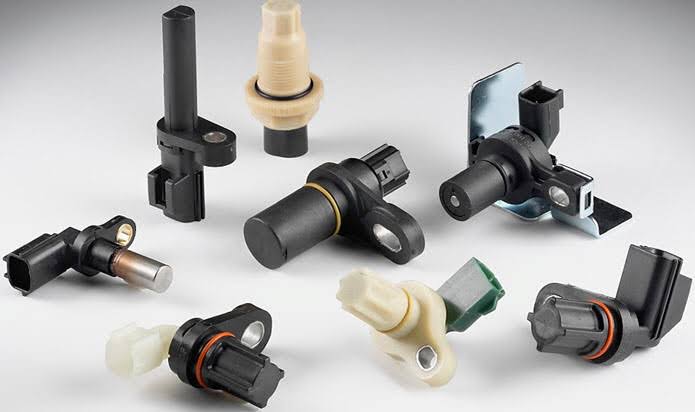
Modern engines are managed by a silent committee of sensors. When they agree, your car runs efficiently. When they start lying to each other, your wallet starts losing weight. A study by the U.S. Department of Energy found that a single faulty oxygen sensor can degrade fuel economy by up to 40%. That's not a small dip. That's a financial leak most drivers blame on the price at the pump. I hear it all the time: "This car is just a thirsty beast." Often, it's not the car. It's a confused sensor telling the computer to burn fuel for no good reason. The fix is usually simpler and cheaper than you
Related Reading: The Secret Role Of Oxygen Sensors And How They Quietly Waste Your Fuel
The Usual Suspects: Which Sensors Steal Your Fuel
Not every sensor has the power to ruin your mileage. Focus on the ones that directly control the engine's air and fuel mixture. These are the culprits I see daily in the workshop.
The Oxygen Sensor: The Chief Informant
Your upstream oxygen sensor, or O2 sensor, is the primary source for fuel trim calculations. Located in the exhaust manifold, it measures how much oxygen is left in the exhaust after combustion. This tells the engine computer if the mixture was too rich (too much fuel) or too lean (too little fuel). The computer then adjusts the fuel injector pulse width for the next cycle. A lazy or contaminated O2 sensor sends slow or incorrect data. The computer constantly over-corrects, richening the mixture when it shouldn't. You burn extra fuel. You might see black smoke from the tailpipe or smell sulfur. The check engine light will usually come on for this, but not always immediately. A diagnostic scan tool showing negative or positive fuel trim values outside a 10% range often points here first.
The Mass Air Flow Sensor: The Air Accountant
Think of the Mass Air Flow (MAF) sensor as the gatekeeper of your engine's air intake. It sits between the air filter box and the throttle body, measuring the exact mass of air entering the engine. The engine control unit uses this critical number to calculate how much fuel to inject. When the MAF gets dirty from oil vapors or debris, it under-reports the air volume. The computer responds by injecting less fuel, creating a lean condition. To compensate, the system adds fuel via long-term fuel trim, hurting efficiency. Or, if it's failing electrically, it might over-report air and dump in too much fuel. Symptoms include rough idle, hesitation on acceleration, and of course, poor fuel economy. The check engine light may stay off because the sensor is still "working."
Smart Link: What Mechanics Check First When Fuel Usage Suddenly Spikes
The Coolant Temperature Sensor: The Impostor
This one fools everyone. The Engine Coolant Temperature (ECT) sensor tells the computer how warm the engine is. A cold engine requires a richer fuel mixture to run smoothly. If the ECT sensor fails and constantly reports a cold engine temperature, even when the engine is hot, the computer will stay in "warm-up" mode. It enriches the fuel mixture indefinitely. Your fuel economy plummets. You might also notice the cooling fans running oddly or the temperature gauge behaving erratically. This sensor is relatively inexpensive and often accessible, making it a prime candidate for DIY testing and replacement.
How to Diagnose and Fix It Yourself
You don't need a full mechanic's toolkit to start. You need a method. Throwing parts at the problem is expensive. Testing is free.
Step 1: Read the Car's Mind with an OBD2 Scanner
This is non-negotiable. A basic OBD2 scanner is your window into the engine computer. Plug it into the port under your dashboard. Check for stored diagnostic trouble codes (DTCs). Codes like P0171 (System Too Lean) or P0172 (System Too Rich) are direct hints. More importantly, use the scanner's "live data" function. Look at these key parameters:
- Short-Term & Long-Term Fuel Trim (STFT/LTFT): These should hover near 0%. Consistent values above +10% or below -10% indicate the computer is actively adding or subtracting fuel to compensate for a problem.
- Upstream O2 Sensor Voltage: It should fluctuate rapidly between 0.1V and 0.9V. A lazy, slow-moving, or flat line signal points to a bad sensor.
- MAF Sensor Grams/Sec: At idle, a typical reading might be 2-7 grams/second. Rev the engine to 2500 RPM in park; the reading should rise smoothly and steadily. A jumpy or inconsistent reading suggests a dirty or faulty MAF.
- Engine Coolant Temperature (ECT): Verify it rises to a normal operating temperature (usually 195°F-220°F / 90°C-105°C) and stays there.
Step 2: The Visual and Physical Inspection
Before you buy anything, look. Unplug the MAF sensor connector. Inspect the pins for corrosion. Remove the MAF sensor from its housing (usually two screws). Examine the small wire or film element inside. Is it coated with a black or oily film? That's your problem. A failing fuel pump can also mimic sensor issues by delivering weak pressure, so consider that if symptoms point to lean mixtures under load.
Essential Guide: This is How A Failing Fuel Pump Often Causes Sudden Power Loss At Highway Speeds
Step 3: Clean, Don't Replace (Sometimes)
For MAF and some O2 sensors, cleaning is a valid first repair. Use a dedicated MAF sensor cleaner only. It's non-conductive and leaves no residue. Never use brake cleaner, carburetor cleaner, or touch the element. Spray it liberally and let it air dry completely. For an O2 sensor, removal is usually required for cleaning, which is often more work than replacement. Reinstall, clear the codes with your scanner, and take the car for a 15-minute drive to let the computer relearn. Monitor the live data again. I've fixed countless "bad" MAF sensors with a $10 can of cleaner. People say, "It was running fine yesterday." Sensors fail gradually, and the final straw often seems sudden.
Step 4: Safe Replacement Procedure
If cleaning fails, replacement is next. Always disconnect the negative battery terminal before unplugging any sensor. This can prevent electrical spikes and reset the engine computer's adaptive memory. Use a quality sensor-specific socket for oxygen sensors. Apply anti-seize compound only to the threads if it's not pre-applied, and keep it off the sensor tip. Torque to the manufacturer's specification. Reconnect the battery, start the engine, and use your scanner to clear any persistent codes. The engine may idle roughly for a few minutes as it relearns its fuel trims. This is normal.
Don't Miss: Ignoring These Fuel Usage Signs Can Lead to Expensive Engine Repairs Later
Final Word
Bad fuel economy is a message, not a life sentence. Start by listening to the data from a simple scanner. Target the sensors that control the mixture. Clean before you replace. The process is logical, and the tools are affordable. You can silence that committee of sensors and get your efficiency back. Trust the data over the assumption. Because "I filled it up last week" isn't a diagnostic tool. A multimeter is.
Comments (0)
Please login to join the discussion
Be the first to comment on this article!
Share your thoughts and start the discussion