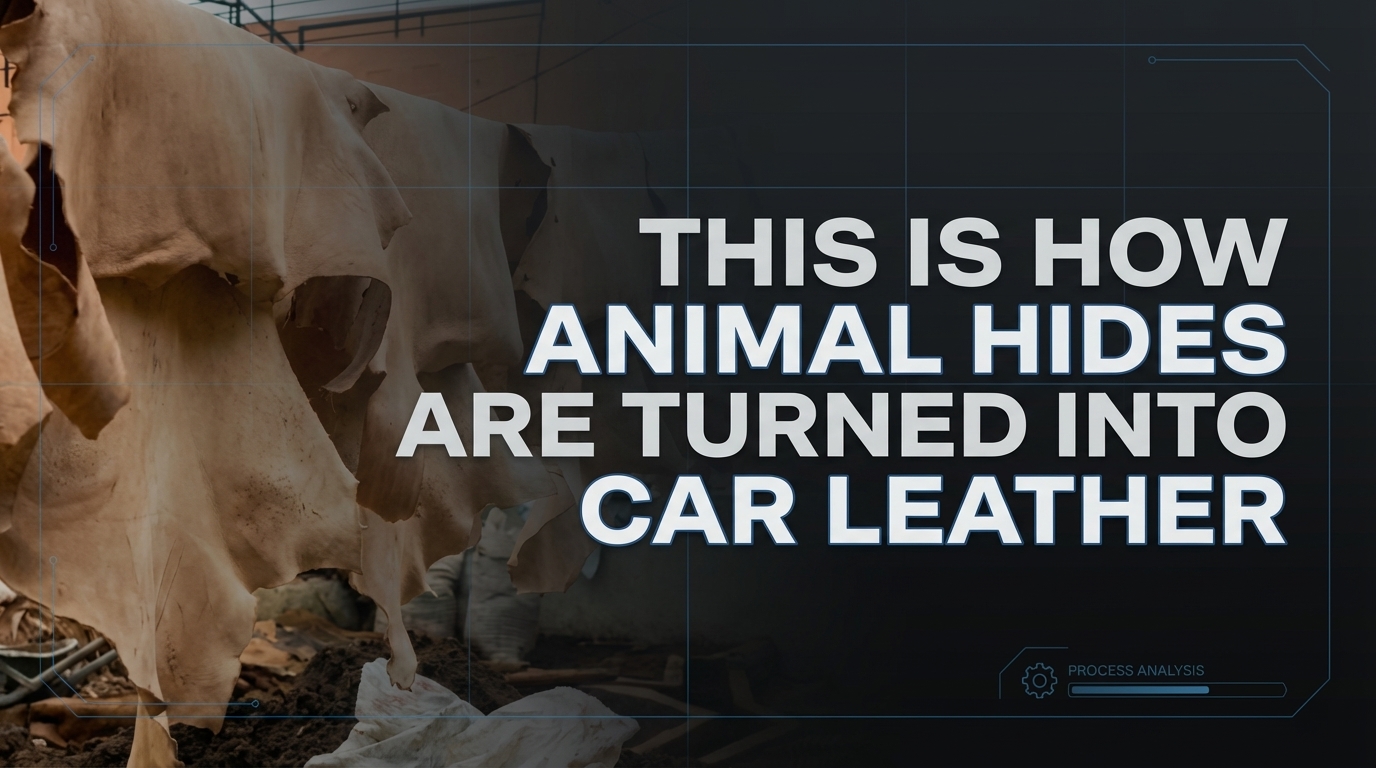
Most drivers see leather seats as a simple luxury feature. They say, "It's real leather, so it's premium." But the journey from a raw animal hide to the supple, durable surface in your car is a complex engineering feat. It involves more chemistry and precision than most people realize. The quality of that final product depends entirely on the steps taken long before it reaches the assembly line. Let's look at how it's really done.
From Raw Hide to Stable Material
The process starts long before the tannery. A hide is a perishable organic material. If not treated, it will rot. The first critical step is curing, which involves salting or chilling the hide to remove moisture and prevent bacterial growth. This is where quality control truly begins. Hides with scars, insect bites, or brand marks are graded. The best hides, with minimal blemishes, are destined for high-end automotive interiors where a flawless grain is essential.
Next comes the beamhouse operations. This is the dirty work. Hides are soaked in water to rehydrate, then limed to remove hair and fats, and finally fleshed to clean the underside. It's a messy but vital purification stage. The goal is to get down to the pure collagen fiber network. This collagen matrix is what will eventually become leather. Any imperfection left here becomes a weakness later.
The Core Transformation
Tanning is the magic that turns a hide into a stable, non-perishable material. For automotive leather, chrome tanning is the dominant method. It's fast, efficient, and produces a soft, heat-resistant leather perfect for car interiors. The hides are submerged in drums containing chromium salts, which bond with the collagen fibers. This stabilizes the structure, making it resistant to decay and heat. A poorly executed tanning process leads to inconsistent color uptake and weak spots. You might not see it for a year, but that's when the driver's seat bolster starts to crack prematurely.
After tanning, the wet blue leather (named for its pale blue color from the chromium) is split and shaved. Splitting slices the leather horizontally to achieve a uniform thickness. Shaving further refines it. This precision is critical for automotive applications where consistent thickness ensures uniform wear and proper fit during the upholstery process. A seat cover made from uneven leather will stretch and wrinkle differently.
Creating the Automotive Finish
This is where automotive leather diverges sharply from fashion leather. A car interior faces extreme conditions: UV radiation, temperature swings from freezing to over 60°C (140°F), abrasion from entering and exiting, and constant contact with skin oils and blue jeans. The finish must withstand all of it.
The retanning and dyeing stage adds specific properties. Fatliquors are added to lubricate fibers and maintain flexibility. Dyes penetrate for consistent color. Then comes the coating. Automotive leather typically receives a protective polymer coating or a light pigment finish. This coating is a marvel of chemical engineering. It must be flexible enough not to crack, resistant to UV fading, and able to repel stains. Crucially, it must also maintain breathability and the natural feel of the leather. A cheap, thick plastic-like coating feels synthetic and can peel. The best finishes are micro-perforated or incredibly thin, protecting while preserving the character of the grain.
Deep Dive: This Is How Burning Odors Mean An Electrical Short Under The Dash
Testing for the Real World
Before approval, this leather undergoes brutal testing. Manufacturers simulate years of sun exposure with xenon-arc lamps. They perform rub tests, often exceeding 50,000 cycles, to simulate abrasion from clothing. They test for color transfer from blue jeans. They expose it to human sweat simulants and common chemicals like sunscreen and hand sanitizer. This data is what separates marketing claims from genuine durability. A supplier's test report tells you more about longevity than the sales brochure ever will.
Related Reading: Extend Your Car's Lifespan to 300000 Miles with These Powerful Maintenance Tips
What "Genuine Leather" Actually Means for Your Car
Here's a practical truth. Not all leather in a car is the same. Most manufacturers use a combination of full-grain, top-grain, and corrected-grain leathers in different areas. The seat centers you touch daily are often the highest quality, full-grain or top-grain leather. The side bolsters, rear sides of seats, and other less visible areas might use a corrected-grain leather, where the surface has been buffed to remove imperfections and embossed with a uniform grain. It's still real leather, but it's a different grade.
This is why two cars with "leather seats" can feel and age so differently. The thickness of the hide, the quality of the tanning, and the formulation of the protective coating are the real determinants. A thinner, poorly retanned leather with a heavy pigment coating will crack and feel stiff. A properly tanned, aniline-dyed leather with a light protective coat will develop a patina and remain supple. When a client says, "My old car's leather held up better," they're usually describing this difference in material specification, not brand prestige.
Automotive Insight: Why Your Car Interior Smells Different After Long Trips and What It Means
Caring for Engineered Material
Maintenance is not about fancy conditioners. It's about understanding the finish. Modern automotive leather is a coated material. The goal is to clean the coating without damaging it. Use a mild, pH-balanced leather cleaner and a soft microfiber cloth. Avoid harsh chemicals, silicone-based products, and excessive "conditioners" that can sit on top of the coating and attract dirt. The most important step is regular cleaning to remove abrasive grit and body oils that can break down the finish over time. For detailed care guidelines, reputable sources like the AutoZone website offer practical advice.
The true mark of quality is how the material ages under stress. The complex process of turning a raw hide into car leather is a blend of traditional craftsmanship and advanced polymer science. It's designed to look and feel premium while surviving a harsh environment. The next time you sit in a leather interior, you're not just touching a piece of furniture. You're interacting with a highly engineered automotive component.
Pro Tip: This Is How Synthetic Oil Can Make or Break Your Engine’s Longevity
Comments (0)
Please login to join the discussion
Be the first to comment on this article!
Share your thoughts and start the discussion