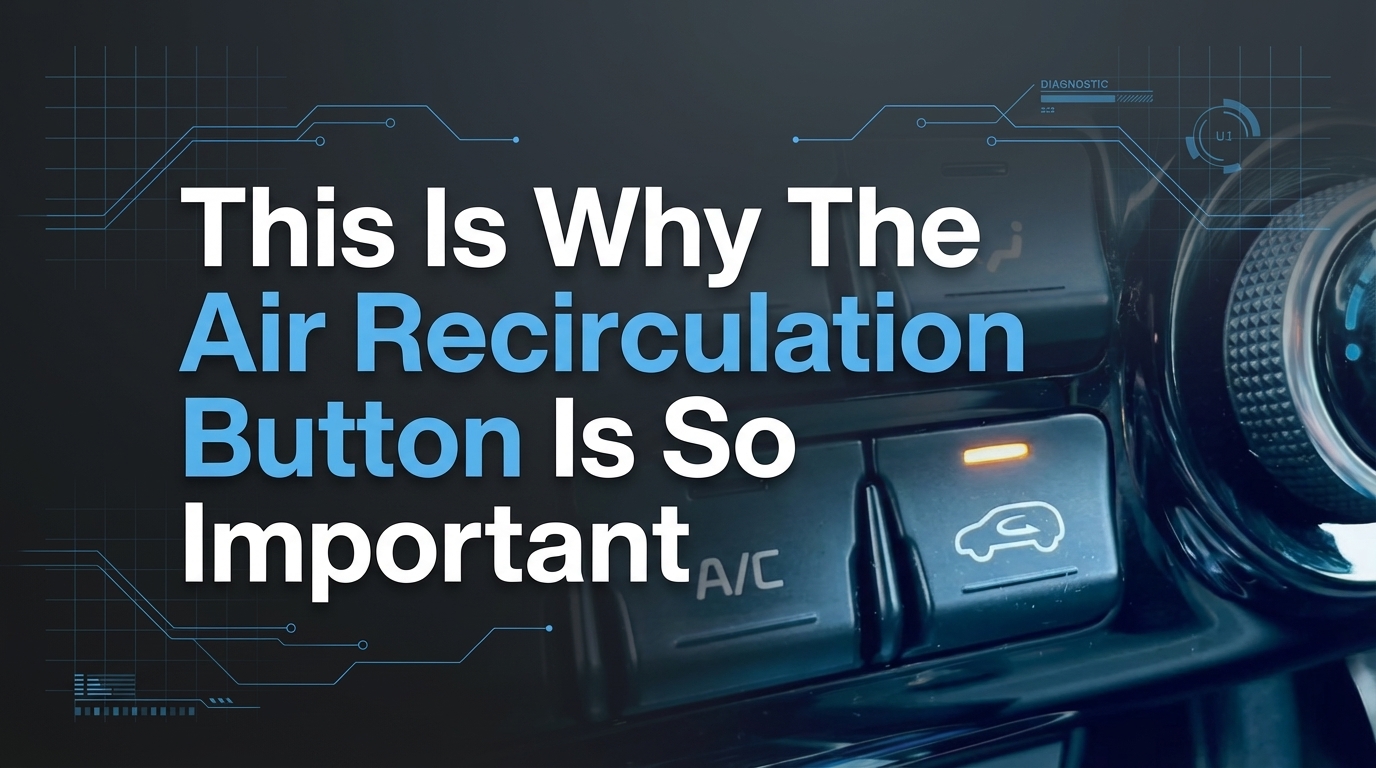
Think of your car's air recirculation button as a simple on-off switch for the outside world. You press it, the little light comes on, and you assume it's making the air colder. That's the common belief. The reality is far more important, and using it wrong can cost you money, comfort, and even safety. I see drivers leave it off for years, treating it like a mystery switch, only to wonder why their AC struggles or their cabin smells like exhaust in traffic.
The truth is, this button is one of the most underutilized tools in your vehicle. It doesn't just cool the air faster. It manages the quality of every breath you take inside your car and directly impacts the efficiency of your entire climate control system. When a customer tells me, "The AC doesn't get cold like it used to," or "It smells funny when I first turn it on," my first question is almost always about how they use the recirculation mode. The answer usually explains the problem.
It's Your First Line of Defense for Cabin Air Quality
When recirculation is off, your car is constantly pulling in outside air through the intake at the base of the windshield. That air passes over the evaporator and heater core and into your cabin. It's fresh, but it's also whatever is outside. In stop-and-go traffic, that means you're pulling in the exhaust fumes from the truck in front of you, along with dust, pollen, and road debris.
Engaging the recirculation button closes that external intake flap. The system now pulls air from inside the cabin, runs it through the cabin air filter, cools or heats it, and sends it back out the vents. You're creating a closed loop. This is critical in heavy traffic, in tunnels, or when driving past industrial areas or farms. You're not just avoiding bad smells. You're significantly reducing your exposure to carbon monoxide and particulate matter. People often say, "I'll roll up the windows, that should be enough." But if recirculation is off, you're still bringing those fumes in through the vents. The button is the real seal.
Related Reading: Why Your Car Interior Smells Different After Long Trips and What It Means
It Makes Your Air Conditioning Work Faster and More Efficiently
This is the practical benefit everyone feels immediately. On a scorching summer day, the interior of your car can easily reach 140°F or more. When you first get in, the air you're trying to cool is that superheated cabin air. If you leave recirculation off, your AC system is fighting a losing battle. It cools a batch of 140°F air, sends it out, then immediately pulls in another batch of 95°F humid outside air, cools that, and repeats. It works incredibly hard and takes forever to make a difference.
Press the recirculation button. Now, the system captures that first batch of air you cool. It recirculates it, cooling it further with each pass. The air it's pulling in is progressively cooler cabin air, not constant hot outside air. The cabin temperature drops dramatically faster. This reduces strain on the AC compressor, saves fuel, and puts less load on the engine. According to the U.S. Department of Energy, using recirculation mode reduces the energy required for cooling, which can improve fuel economy in conventional vehicles. It's the difference between cooling a room with the window open versus closed.
Keep Reading: Does Running the AC in Your Car Use More Fuel?
When You Should Turn It Off
Recirculation is powerful, but it's not meant for constant use. You need to refresh the cabin air periodically. If you leave it on for hours with multiple passengers, the air becomes stale, humidity builds up from breathing, and the windows can fog up because you're trapping moist air inside. The rule of thumb is simple. Use recirculation to quickly achieve your desired temperature or to block out external pollutants. Once you're comfortable, or when you're on the open highway with clean air, switch it off for a few minutes to bring in fresh, dry outside air. This prevents fogging and keeps the cabin feeling fresh. Many modern cars do this automatically in 'Auto' mode, which is why I usually recommend using that setting.
Avoiding the Biggest Mistake in Winter
Here's a scenario I encounter every winter. A driver complains of foggy windows that won't clear. They have the heat on full blast, but the windshield keeps misting up. They tell me, "The defroster doesn't seem strong enough." Almost without fail, the recirculation light is on. This is the worst thing you can do in humid or cold weather. Recirculation traps the moisture from your breath, wet shoes, and damp clothes inside the car. When that warm, moist air hits the cold windshield, it condenses immediately into fog.
The fix is to turn recirculation off. This allows the system to bring in colder outside air, which has a lower absolute humidity. The heater core then warms this drier air, which can absorb the moisture from the cabin interior and clear the windows effectively. Your car's defrost setting will usually force recirculation off for this exact reason. If you're manually controlling the climate, remember this: recirculation for fast cooling and blocking smells; fresh air for defogging and general ventilation.
Pro Tip: Experts Say Most People Use Air Conditioning Wrong And It's Destroying Their Cars Slowly
Start paying attention to that button. Use it intentionally as a shield against pollution and a tool for efficiency. Let it do the heavy lifting when you first cool the car, then let fresh air in to keep the cabin environment ideal. It's a small switch with a direct, immediate impact on your drive. Because "I never touch that button" isn't a habit. It's a missed opportunity to take full control of your car's climate.
Comments (0)
Please login to join the discussion
Be the first to comment on this article!
Share your thoughts and start the discussion