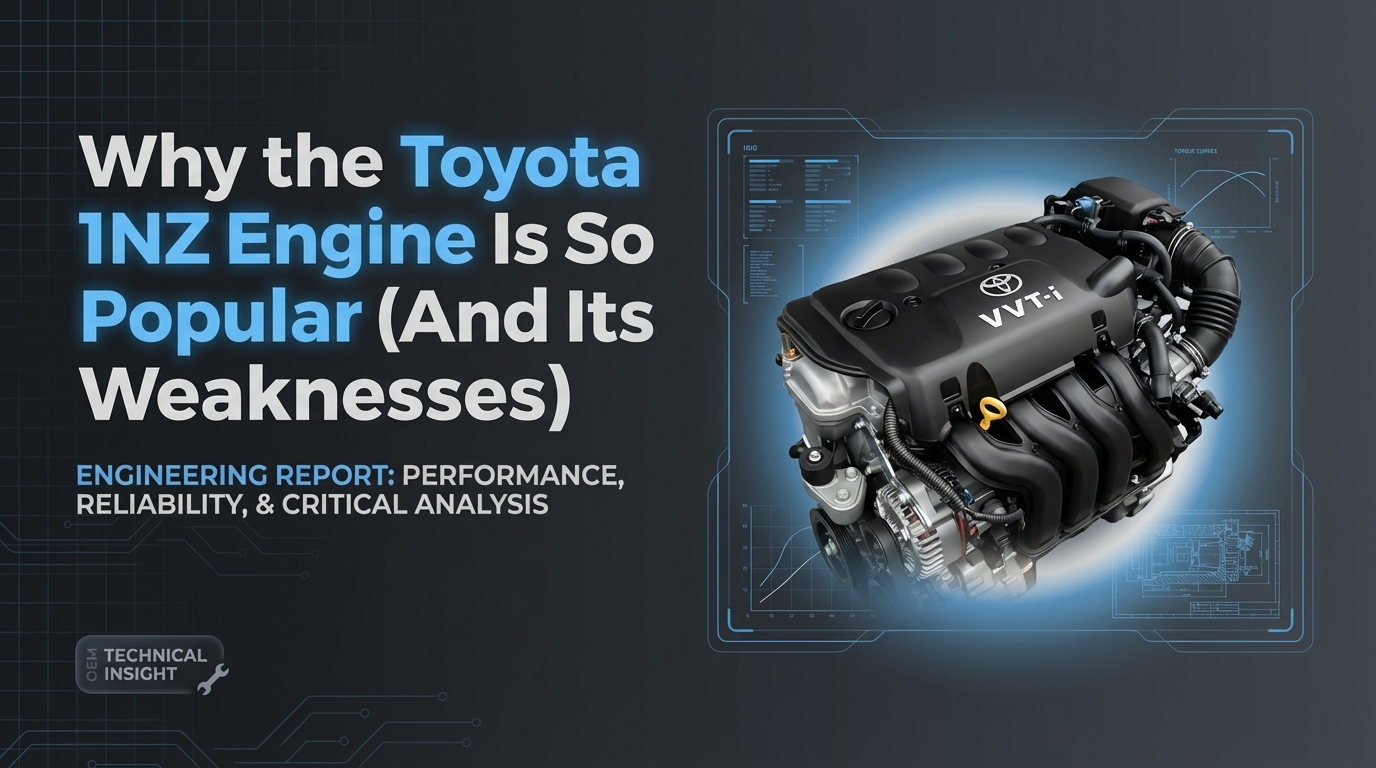
In the world of small displacement engines, few have achieved the legendary status of Toyota's 1NZ. Powering millions of vehicles globally, from the ubiquitous Yaris to the Prius, its reputation for reliability is almost mythical. Owners often say, "It runs forever, I only ever change the oil." That's the reputation. But no engine is perfect, and blind faith can be expensive. Understanding why this engine is so revered, and where it can bite you, is the key to truly owning one.
The Foundation of a Legend
The 1NZ-FE is a 1.5-liter, inline-four cylinder engine. Its popularity isn't about groundbreaking power. It's about a specific, brilliant engineering philosophy: simplicity and durability. Toyota focused on making it robust, easy to manufacture, and incredibly efficient for its era. It features a dual overhead camshaft (DOHC) design and Toyota's VVT-i system, which optimizes valve timing for a balance of power and fuel economy. The block and head are aluminum, keeping weight down, but the cylinder liners are cast iron, providing a durable surface for the pistons. This combination is a big part of its longevity story. For a deeper look at its core architecture, our feature analysis of the 1NZ engine breaks it down further.
Its application is a masterclass in platform sharing. You found this engine in the Toyota Echo, Yaris, Vitz, Platz, and the first-generation Prius. This widespread use meant parts became cheap and mechanics everywhere learned its quirks. The result? An engine that is famously inexpensive and straightforward to maintain. When people claim, "It's bulletproof," they're usually referring to this era of Toyota engineering where over-engineering was the standard.
Why Mechanics Love It
From a technician's bench, the 1NZ is a dream to work on. Everything is accessible. The timing chain is generally robust, often lasting the life of the engine with proper oil changes. Common service items like spark plugs, coils, and sensors are easy to reach. This accessibility translates directly to lower labor costs for owners. Compared to modern, tightly-packaged turbocharged engines, working on a 1NZ feels refreshingly logical. It's a testament to a design where serviceability was a priority, not an afterthought.
The Known Weaknesses You Must Monitor
This is where that owner's mantra, "I only change the oil," can lead to trouble. The 1NZ is reliable, but it is not invincible. Its weaknesses are well-documented and almost entirely related to maintenance neglect or specific high-mileage failure points.
Excessive Oil Consumption
This is the most common and serious issue for higher-mileage 1NZ engines. It's not a small leak you see on the driveway. The engine begins to burn oil internally, sometimes at a rate of a liter every 1,000 kilometers or less. The primary culprit is often the piston rings. They can become gummed up with carbon deposits or simply wear out, allowing oil to seep into the combustion chamber and burn away. You'll notice blue-ish smoke from the exhaust on startup or under acceleration, and your oil level will consistently drop. Ignoring this doesn't just mean topping up oil; it leads to catastrophic engine damage from running low. If you hear a owner say, "It uses a little oil, but it's fine," they are on borrowed time.
The PCV Valve Connection
A clogged Positive Crankcase Ventilation (PCV) valve accelerates this oil consumption problem. This cheap, simple part is designed to recycle blow-by gases. When it fails, it increases crankcase pressure, which can force more oil past the piston rings and valve seals. Replacing the PCV valve is a five-minute, low-cost fix that can sometimes dramatically slow oil consumption. It's the first thing I check. For more on how this system can fail, see our guide on PCV system failures and oil leaks.
Ignition Coil Failures
While the coils are accessible, they are a common point of failure, especially as the engine ages. A failing coil will cause a misfire in its corresponding cylinder. You'll feel a rough idle, hesitation, and a lack of power. The check engine light will usually flash or illuminate with a misfire code like P0301-P0304. The good news is diagnosis is straightforward, and replacement is simple. Using quality OEM or reputable aftermarket coils is key here. This ties directly into broader engine misfire diagnosis principles.
Water Pump and Thermostat Seepage
The water pump on the 1NZ is driven by the timing chain and can begin to weep coolant over time. Similarly, the thermostat housing gasket can develop small leaks. These are rarely sudden, catastrophic failures. Instead, you'll see a slow drop in coolant level over weeks or months and may notice a sweet smell or minor crusting around the pump or thermostat housing. Catching this early prevents overheating, which is critical because even a brief overheat can warp the aluminum cylinder head. Understanding the full causes and solutions for engine overheating is vital for any 1NZ owner.
Making It Last A Lifetime
The prescription for 1NZ longevity is not complicated, but it is non-negotiable. It contradicts the "change only the oil" myth.
- Oil Changes Are Sacred: Use the correct viscosity (typically 5W-30) and change it at 5,000-mile/8,000-km intervals with a good quality filter. This is the single best practice to prevent the oil consumption issue. Debates on engine flushes aside, fresh oil is its best medicine.
- Monitor Fluids Religiously: Check the oil level every other fuel fill-up. Check the coolant level in the overflow tank when the engine is cold. Catching a slow leak early is everything.
- Listen to the Idle: A smooth 1NZ is a happy 1NZ. A rough shake at idle is a message. It could be a dirty throttle body, a failing engine mount, or the start of an ignition coil problem. Don't ignore it. You can diagnose a lot by listening to the idle.
- Address Oil Consumption Immediately: If it starts using oil, don't just top it up. Try a PCV valve replacement first. If that doesn't help, a mechanic can perform a leak-down test to confirm ring wear. There are reputable engine flush products that can sometimes free sticky rings, but severe wear requires mechanical repair.
The Toyota 1NZ engine earned its fame honestly. It's a masterpiece of accessible, durable engineering. But treat it like a disposable appliance, and it will eventually fail. Treat it with the informed respect of a known entity monitor its specific weaknesses, perform proactive maintenance beyond the oil change and it will truly live up to the "million-mile" legend. Its reliability isn't magic. It's the result of good design met with conscientious care.
Pro Tip: Maximizing Engine Lifespan: Expert Maintenance Tips for Longevity
Comments (0)
Please login to join the discussion
Be the first to comment on this article!
Share your thoughts and start the discussion