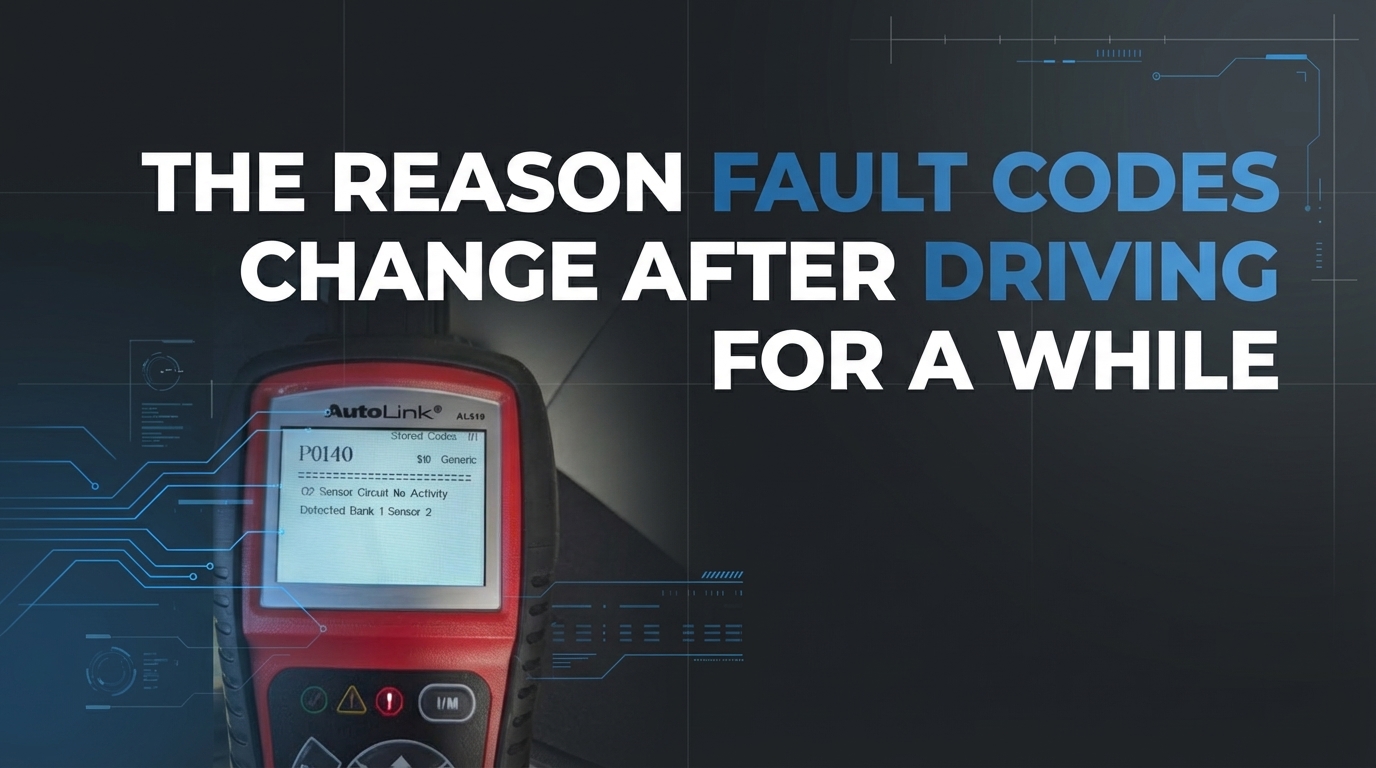
A modern car's computer can monitor over 2000 parameters, but it only throws a code when it's absolutely sure. That certainty often requires a drive cycle. You pull the code, see a P0420 for a catalytic converter, clear it, and the light stays off. You drive for 20 minutes, and boom, it's back. This isn't a glitch. It's the system doing its job, and understanding this process is the key to accurate, cost-effective diagnosis. I hear it constantly in the shop: "I cleared it and it was fine until I got on the highway." That's not the car being difficult. That's the car gathering evidence.
Essential Guide: Demystifying OBD-II Trouble Codes: An In-Depth Look at Automotive Diagnostics
The OBD-II system is not a simple on-off switch. It's a diagnostic protocol governed by strict standards. A key principle is that it must avoid false positives. To prevent a temporary glitch from triggering a permanent light, the system uses "monitors" and requires specific conditions to be met before it confirms a fault. This is why a code can disappear when cleared, only to return after driving. The underlying problem never left. You simply reset the computer's memory, and it needed time to re-run its tests and fail them again. This is fundamental to understanding DTC "Trouble Codes" in the ECU.
Why Driving Triggers the Return of Fault Codes
Think of your car's computer as a detective building a case. Clearing a code is like erasing its notes. It needs to go back out and collect new evidence. This evidence gathering happens during what technicians call a "drive cycle."
The Drive Cycle is a Specific Test Sequence
A drive cycle is a prescribed set of operating conditions that allow the computer to test all its monitored systems. It's not just "driving around." For example, the catalyst monitor might only run when the engine is at full operating temperature, you've been cruising at a steady speed between 50-60 mph for several minutes, and under a light load. The evaporative emissions system test often requires a specific fuel level and a cool-down period after driving. If you clear a code and then only take a short, stop-and-go trip to the store, you likely won't complete the necessary drive cycle to re-trigger the code. The problem is still there, but the computer hasn't been able to verify it yet. This is a core reason why decoding the check engine light requires more than a simple scanner readout.
Pending Codes vs. Confirmed Codes
This is a critical distinction. When a sensor reading is first out of spec, the ECU logs a "pending" or "maturing" code. It stores this code in a separate memory bank. It's a "maybe." The system will then watch that parameter over the next few drive cycles. If the fault recurs consistently under the right conditions, the pending code matures into a "confirmed" or "current" code, and that's when your check engine light illuminates. When you clear codes, you erase both pending and confirmed ones. The system starts its surveillance from scratch. A good scan tool shows you both types, which is invaluable. Seeing a recurring pending code for, say, a misfire on cylinder 3 is a huge clue, even if the light is off. It points directly to an issue like a faulty spark plug or ignition coil before it becomes catastrophic.
What This Means For Your Diagnosis
Understanding this changes your approach from guesswork to strategy. That phrase, "It was fine until I drove it," is the most important clue you can get.
Don't Just Clear Codes and Hope
Clearing a code without fixing the root cause is a temporary fix at best. It's like silencing a smoke alarm without putting out the fire. The light will come back because the condition that triggered it still exists. The drive cycle is simply proving it. Always diagnose the code first. Use it as a starting point for testing. For common codes, resources like our guide on 10 Common DTC Codes can help you understand the likely causes.
Use the Drive Cycle to Your Advantage
After a repair, you often need to complete a drive cycle to turn off the check engine light and, more importantly, to ready the monitors for a state emissions test. You can't just clear the code and pass. The test machine will see the monitors are "not ready." Knowing the general requirements—a cold start, a mix of city and highway driving, periods of steady cruise and deceleration—helps you verify the repair was successful. If the code returns after a proper drive cycle, your diagnosis was incomplete. Maybe you replaced an oxygen sensor when the true issue was a failing fuel pump causing a lean condition.
Pro Tip: The Complete Guide to MAF Sensors: Diagnosis, Maintenance, and More
Recognize Intermittent Faults
Some faults only occur under very specific stress. A classic example is a car that stalls or loses power only when climbing a hill or on a hot day. The code may set in the computer's memory, but if the condition doesn't repeat in the next few drive cycles, the light might go out on its own. The code often remains as a "history" or "pending" code, though. This is where a skilled technician digs into freeze frame data and live data streams to see what was happening the moment the fault occurred. The drive cycle is the test that recreates the stress.
Final Word
The changing fault code is a feature, not a bug. It represents a deliberate, logical process designed to ensure reliability. When a customer tells me "the code changed after I drove it," I know the vehicle is handing me the data I need. It's confirming the fault exists under real-world conditions. Your takeaway is this: a code is the beginning of the conversation, not the end of it. The drive cycle is the computer's way of proving its case. Listen to it. Diagnose the cause, not just the code. Because in the world of automotive repair, the truth always comes out on the road.
Comments (0)
Please login to join the discussion
Be the first to comment on this article!
Share your thoughts and start the discussion