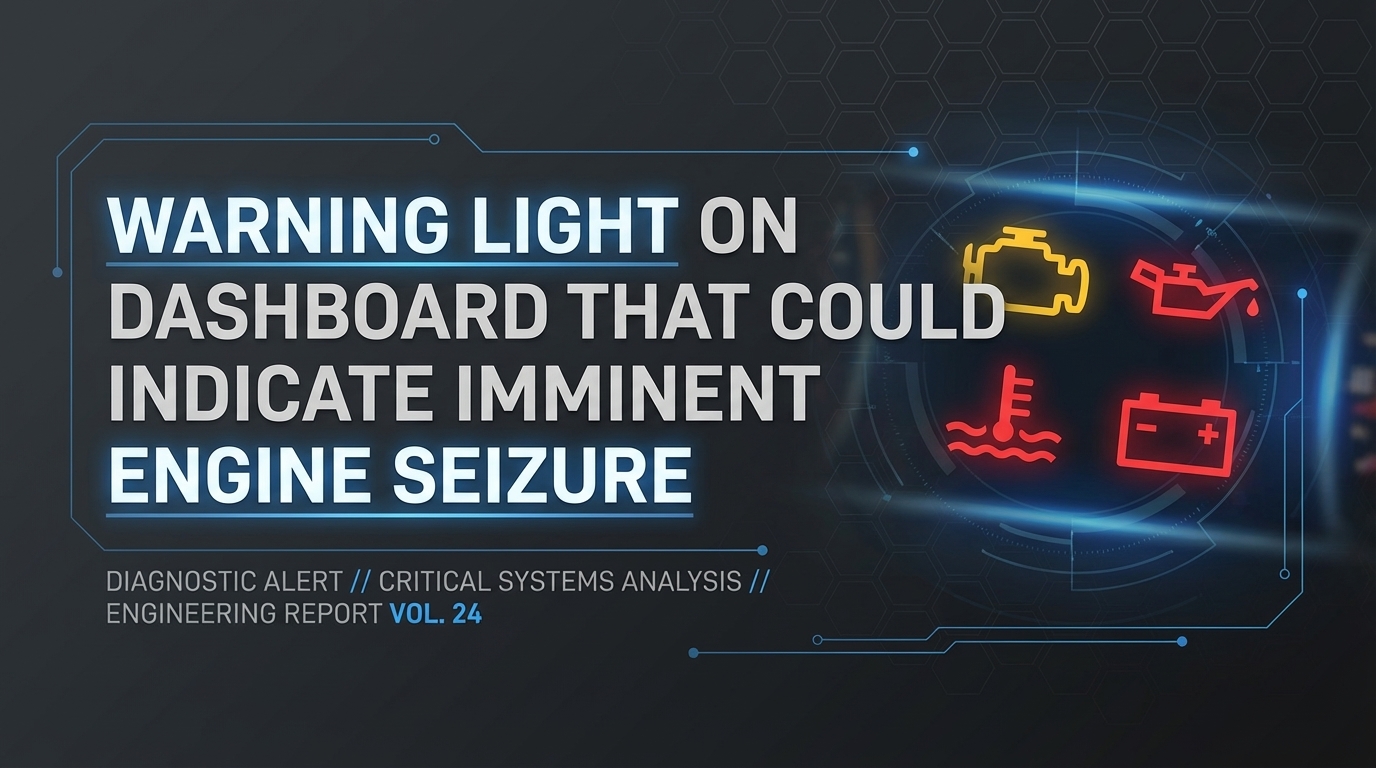
According to data from the National Institute for Automotive Service Excellence (ASE), lubrication system failures are a leading cause of catastrophic engine damage. The warning light for this system is small, often amber, and shaped like an old-fashioned oil can. It doesn't flash. It doesn't beep. It just glows. And in my years in the workshop, I've seen more engines destroyed by a driver's reaction to that single light than almost any other fault.
The most dangerous phrase I hear is, "The light came on, but the engine sounds fine." That logic is how a $50 problem becomes a $5,000 repair in less than 30 minutes of driving. This light isn't a suggestion for next week. It's a real-time alert that your engine's lifeblood is compromised. Ignoring it means you are actively choosing to gamble with the most expensive component in your vehicle.
What The Oil Pressure Light Actually Means
This is critical to understand. The light is not an oil level indicator. It is an oil pressure warning. Modern engines require a constant, high-pressure stream of oil to lubricate bearings, camshafts, and turbochargers. The moment pressure drops below a safe threshold, metal parts begin touching at thousands of revolutions per minute.
The system is simple. An oil pump, driven by the engine, creates pressure. A sensor near the pump monitors it. If pressure falls, the sensor triggers the light. The causes range from simple to severe, but the immediate action required is always the same. Understanding your engine's oil system is the first step in preventing disaster.
Read Also: The Dangers of Overfilling Your Car's Engine With Oil
The Two Immediate Dangers You Face When The Light Glows
Running Dangerously Low on Oil
This is the most common scenario. The engine has burned or leaked oil over time, and the sump is now nearly empty. The pump starts sucking air instead of liquid oil. Air provides zero lubrication and cannot maintain pressure. The light comes on. I've had customers say, "I'll top it up when I get home." The damage occurs in the drive home. Without sufficient oil volume, the pump can't function, and components like the piston rings and bearings are the first to fail from friction and extreme heat.
A Critical Failure in the Oil System Itself
Sometimes the oil level is perfect, but the light is on. This is often more serious. The oil pump could be failing. A plugged oil pickup screen from sludge could be starving the pump. A worn main bearing can create too much clearance, allowing pressure to bleed off. These are internal mechanical failures. Continuing to run the engine, even for a few blocks, accelerates the wear exponentially. The result is usually a seized engine that will not turn over at all.
Essential Guide: Engine Oil Sludge: The Silent Threat to Your Vehicle's Performance
The Only Correct Action to Take Immediately
Your response must be instant and disciplined. There is no room for negotiation.
First, shut off the engine as soon as you can do so safely. Pull over to the shoulder, a parking lot, any safe spot. Do not drive to the next exit. Do not idle while you think about it. Turn the key off. Every second the engine runs with that light illuminated is causing wear that may be irreversible.
Second, check the oil level with the dipstick after the engine has been off for a minute or two. If the level is low, add the correct oil to bring it to the full mark. This simple check can reveal a slow leak or consumption issue you were unaware of. If the level is adequate, do not restart the engine. You have a mechanical fault that requires a tow to a workshop. Trying to drive it will turn a repair into a replacement.
Related Reading: Signs Your Car Needs an Oil Change and Oil Top-Up: Warnings and Solutions
Prevention is straightforward. Make checking your oil level a regular habit, every other fuel stop or once a month. Follow your manufacturer's severe service oil change intervals if you do lots of short trips. And understand that dashboard lights are coded by priority. A red light means stop now. An amber light means investigate urgently. The oil pressure light is one of the few that blurs that line. Treat it as red. Stop the engine. Your wallet will thank you. As the National Institute for Automotive Service Excellence (ASE) emphasizes, proper response to vehicle warnings is a cornerstone of preventive maintenance and safety.

Comments (0)
Please login to join the discussion
Be the first to comment on this article!
Share your thoughts and start the discussion