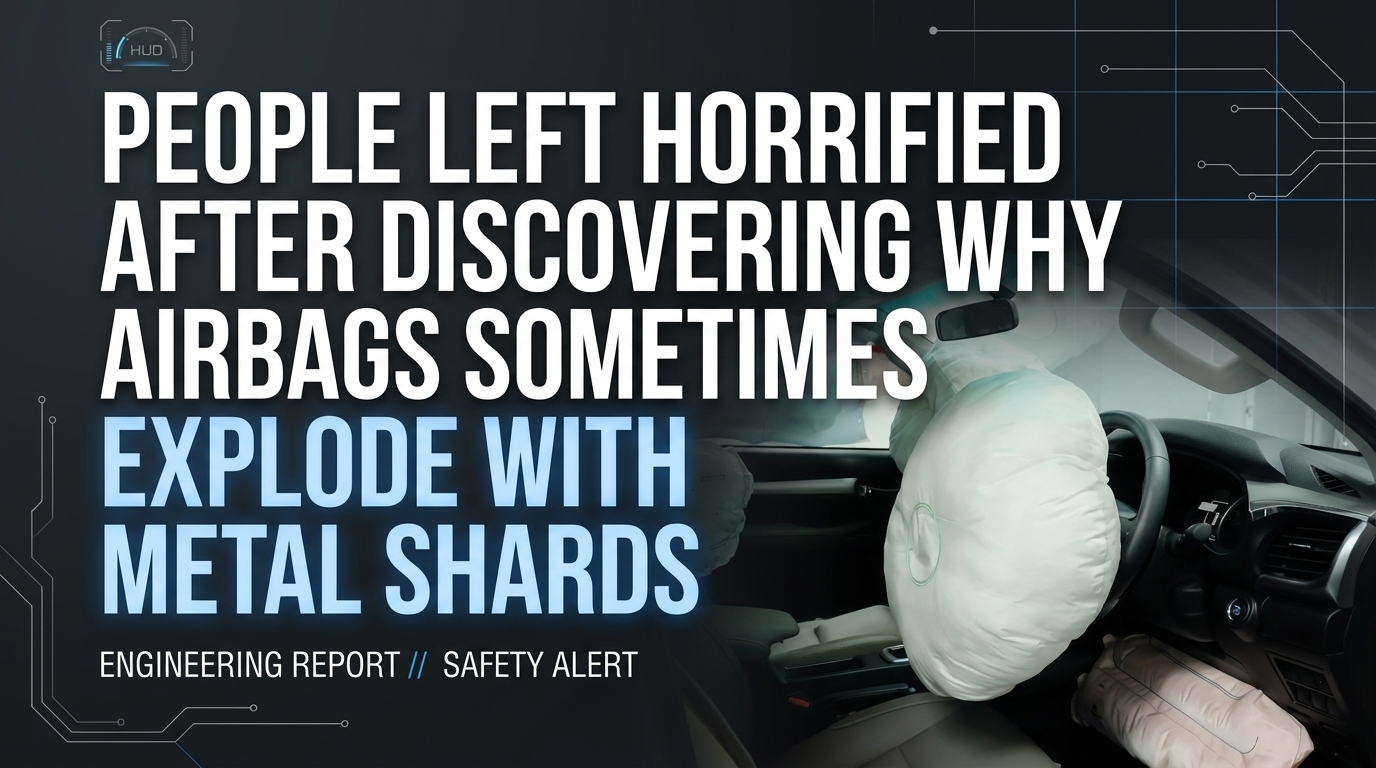
Airbags are supposed to be a life-saving cushion in a crash. The idea that they can explode with lethal metal fragments sounds like a plot from a bad action movie, but it's a real and documented danger. The National Highway Traffic Safety Administration (NHTSA) has overseen recalls for tens of millions of vehicles over the last two decades due to defective airbag inflators. This isn't a small batch of parts. It's a systemic manufacturing flaw that has had tragic consequences.
When I talk to drivers about recalls, I often hear a version of "My car seems fine, so I haven't gotten around to it." That assumption is the most dangerous part of this entire situation. The defect is hidden, silent, and ages like a time bomb. Understanding why these airbags fail so catastrophically is the first step in taking the urgent action required to stay safe.
The Core of the Problem: A Flawed Inflator Design
At the heart of this issue is a specific type of airbag inflator, primarily those manufactured by the now-bankrupt company Takata. To save costs and use a more stable propellant, they switched to using ammonium nitrate. This chemical is highly effective at creating the rapid gas expansion needed to fill an airbag, but it has a critical weakness: moisture.
Over years of exposure to the humidity cycles inside your car, the ammonium nitrate tablets can absorb water. This causes them to degrade and become unstable. During a crash, when the inflator is triggered, this degraded propellant burns too rapidly. Instead of a controlled burn, it becomes a violent explosion. The metal inflator housing, which is not designed to withstand such extreme pressure, ruptures. It's this rupture that sends sharp metal shrapnel flying into the passenger compartment at high speed. This is not a gentle malfunction. It's a violent failure of a safety device at the exact moment you need it most.
Read Also: The Inner Workings of Automotive Airbags: From Sensors to Inflation
Why Age and Climate Are Silent Accelerants
This defect doesn't appear overnight. It's a function of time and environment. Think of it like metal rusting from the inside out. Vehicles in regions with high humidity and frequent temperature swings, like coastal areas, are at the highest risk. The constant cycle of absorbing and releasing moisture accelerates the propellant's degradation.
This is why a car that was "perfectly safe" for five or six years can suddenly become a grave danger in year seven or eight. There is no warning light for this. You won't hear a rattle or see a leak. The first sign of a problem is the airbag deploying in a crash, and by then it's too late. I've had customers tell me, "The recall notice said it was for older models, and mine isn't that old yet." But age is relative to the chemical process happening inside the inflator. Every day that passes increases the risk.
Your Immediate, Actionable Steps
This information is useless without action. You cannot diagnose this yourself, and you cannot fix it. The only solution is replacement with a new, safe inflator. Here is exactly what you need to do, right now.
Check Your Vehicle's Recall Status Immediately
Do not assume your car is not affected. Even if you checked a year ago, check again. Recalls are often expanded as more data comes in. Go to the official NHTSA recall website and enter your 17-character Vehicle Identification Number (VIN). This is the only way to get a definitive, vehicle-specific answer. Your VIN is located on the driver's side dashboard visible through the windshield, or on the driver's side door jamb.
If a Recall is Open, Schedule the Repair Now
Do not delay. Do not tell yourself you'll call next week. The repair is free. The dealership will replace the faulty inflator with a new, safer design. This is not a minor service. It is a critical safety repair. If you're concerned about parts availability, that's a valid point, but getting on the schedule is the first step. The manufacturer is obligated to fix it.
Related Reading: What Happens When Car Safety Systems Fail
Understand the Severity and Stop Driving if Advised
Some recalls, particularly for certain Takata airbags in older models, are so severe that manufacturers explicitly warn against driving the vehicle at all. They may offer free towing to the dealership or a loaner car. Take these warnings with the utmost seriousness. Driving a car under a "do not drive" recall advisory is an unacceptable risk to you and your passengers.
Airbags are a marvel of engineering designed to save lives. A defective one inverts that purpose entirely. The horror stories of metal shrapnel are not urban legends. They are the direct result of a chemical reaction set in motion years ago, waiting for a trigger. Your action today is the only thing that can stop it. Check your VIN. Make the call. This is one piece of car maintenance you cannot afford to put off.
Pro Tip: Airbags Get an Upgrade! ZF's Design Opens Doors for Futuristic Steering Wheels
Comments (0)
Please login to join the discussion
Be the first to comment on this article!
Share your thoughts and start the discussion