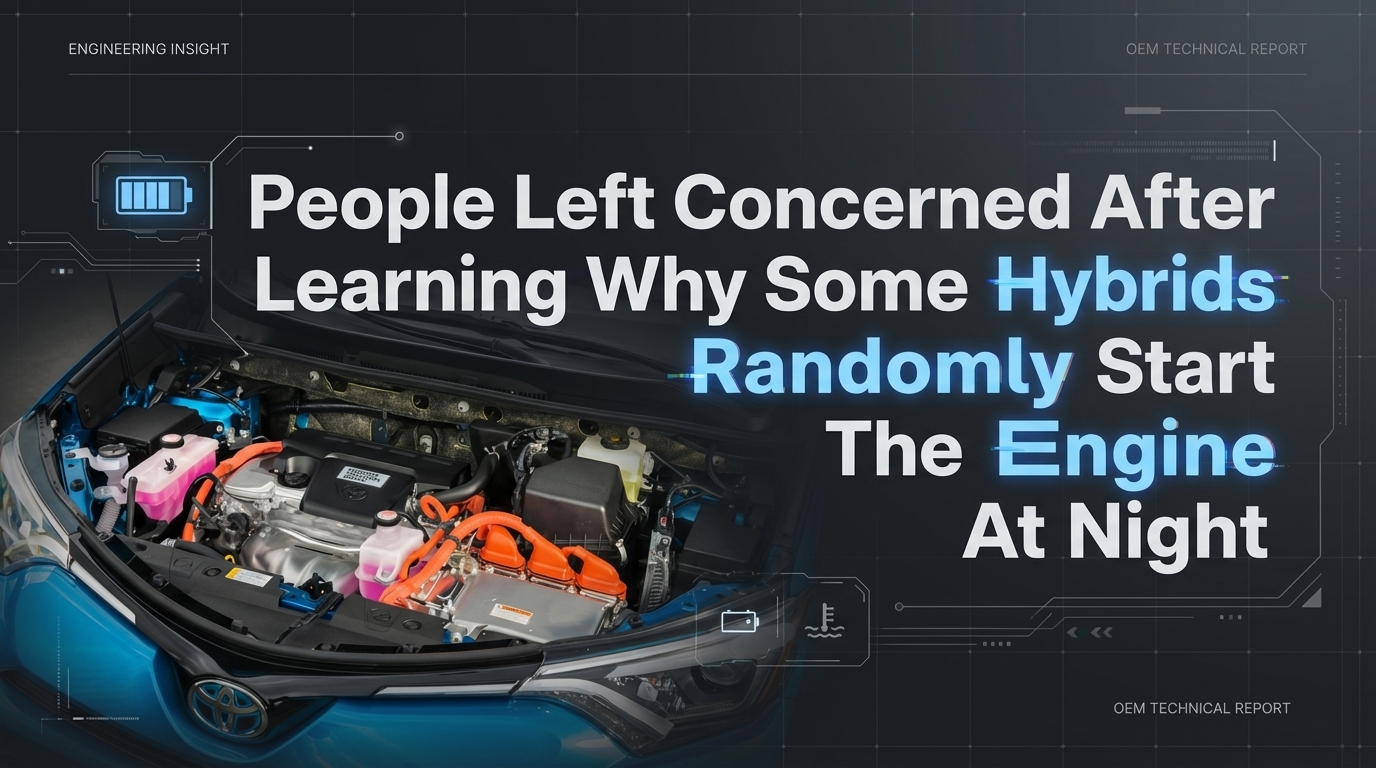
You park your hybrid in the garage, lock up for the night, and settle in. Then, from the silence, you hear it. The unmistakable sound of your car's petrol engine starting up all by itself. It runs for a few minutes, then shuts off. No keys in the ignition. No one in the driver's seat. It's a moment that makes many owners pause and think, "Is something broken?" I hear the concern all the time. "My car is possessed," or "It's never done that before, should I be worried?"
This phenomenon is not a fault. It's a deliberate, programmed function designed to protect the heart of your hybrid vehicle. The surprise comes from the fact that most owners' manuals mention it only in passing, leaving the real-world explanation to mechanics and forums. Understanding why it happens turns a moment of concern into one of appreciation for the complex system working under your bonnet.
It's Not a Glitch, It's Engine Maintenance
The core reason your hybrid engine starts at night is to maintain the health of its internal combustion engine and the entire fuel system. Think of it as your car doing its own preventative maintenance while you sleep.
Modern engines are designed to run. When they sit for extended periods, several issues can begin to develop. Fuel in the lines and injectors can begin to degrade or form varnish. Oil that protects critical components like the cylinder walls can slowly drain away, leaving metal surfaces exposed. Moisture can accumulate inside the engine, leading to potential corrosion. The car's computer is programmed to prevent this.
When the hybrid battery has sufficient charge and the engine hasn't run for a certain number of hours (often a week or more), the system will automatically start it. This circulates fresh oil, runs new fuel through the injectors, and brings the engine up to operating temperature to burn off any condensation. It's the vehicle's way of saying, "I need to stay ready for you." People often tell me, "I only drive short trips on battery, so the engine never gets hot." That's exactly the scenario the system is designed to address.
Related Reading: The Hidden Engine Damage That Happens When You Let Your Car Idle Too Long
Keeping the Big Battery in Check
The second major reason is all about the high-voltage hybrid battery pack. This isn't your standard 12-volt car battery. It's a complex array of cells that powers the electric motor and stores regenerative braking energy.
These lithium-ion or nickel-metal hydride batteries perform best within a specific temperature range. If the vehicle is parked in extreme cold, the system may start the engine to generate heat to warm the battery pack. Conversely, in very hot conditions, it might run the engine to power the cooling system for the battery. This thermal management is critical for long-term battery life and performance.
Furthermore, the 12-volt auxiliary battery that powers the lights, computers, and door locks in your hybrid is charged by the high-voltage system. If the car's computer senses the 12-volt battery charge is getting low after periods of the vehicle being locked with keyless systems monitoring for entry, it may initiate a cycle. The engine starts to turn the generator, which recharges both battery systems. It's a full-circle maintenance routine. You might think, "The car is off, so nothing should be using power," but modern vehicles are never truly completely asleep.
Keep Reading: Should You Warm Up Your Car Engine Before Driving?
When Should You Actually Be Concerned?
Now, how do you tell the difference between normal maintenance and a real problem? The key is in the frequency, duration, and accompanying symptoms.
Normal maintenance cycles are infrequent. You might hear it once every week or two if the car isn't driven regularly. The engine typically runs for only a few minutes, just long enough to reach operating temperature and complete its tasks. It should sound smooth and normal.
Start worrying if the engine starts itself multiple times a day, runs for extended periods (like 10-15 minutes), or sounds rough during the cycle. This could point to issues like a failing 12-volt battery that can't hold a charge, a problem with the battery cooling system, or even a faulty sensor giving the computer incorrect data. A strong smell of fuel after a cycle is also a red flag, potentially indicating a leak or an engine running too rich. If your gut says, "This doesn't seem right," it's worth getting it checked. A simple diagnostic scan can often confirm if the system is operating within its normal parameters or flagging a fault.
Essential Guide: Comprehensive Guide to Diagnosing and Fixing Rough Idle in Your Car
The Practical Takeaway
Your hybrid is smarter than you might give it credit for. That random nightly start is a sign of an advanced vehicle managing its own longevity. It's following programming developed by engineers who understand that preservation is better than repair. The next time you hear it, you can rest easy knowing it's not a ghost in the machine. It's a precisely timed act of self-preservation, ensuring your car is ready and reliable when you need it next.
For more detailed technical insights into how your car's computer manages these complex tasks, resources like Toyota's technical service publications or Popular Mechanics' hybrid technology coverage offer deep dives. But for most owners, knowing the "why" is enough to turn off the porch light and go back to bed.
Pro Tip: Factors Affecting Start-Stop System Functionality in Vehicles
Comments (0)
Please login to join the discussion
Be the first to comment on this article!
Share your thoughts and start the discussion