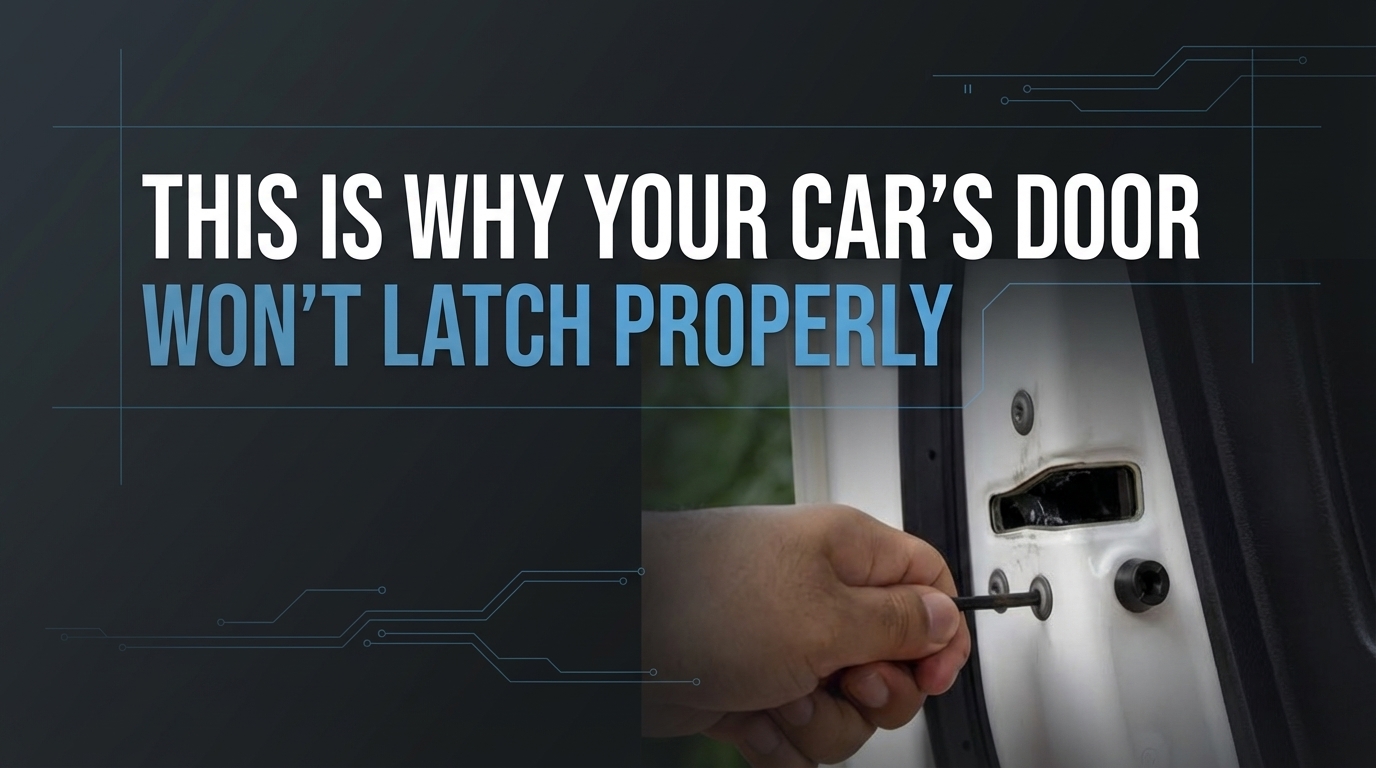
A car door that won't latch properly is more than an annoyance. It's a safety hazard, a security risk, and a problem that rarely fixes itself. I've seen drivers push a door closed with a firm shoulder, hear a weak click, and think, "It's shut enough for now." That's a gamble you should never take. A door that isn't fully latched can fly open during a turn or in a collision, with catastrophic consequences.
The reason this issue is so persistent is that we often misdiagnose it. We blame the latch mechanism itself, when the real culprit is usually something simpler in the chain of events that leads to a secure closure. People tell me, "The handle feels fine," or "It latches on the second try." Those are clues, not solutions. Let's look at the two most common reasons your door refuses to stay shut, starting with the one you can check in thirty seconds.
The Usual Suspect A Misaligned Door
This is the number one cause of latching problems I find in the workshop. Over time, a car's body can settle slightly, or wear in the door hinges can allow the door to sag. When this happens, the striker plate on the car's body and the latch mechanism on the door are no longer in perfect alignment. The latch tries to grab the striker but can't engage fully.
You can spot this yourself. Open the door and look at the striker plate, the U-shaped metal loop on the door frame. Now look at the corresponding wear marks on it. Are they centered, or are they heavily worn on one side? Next, slowly close the door and watch the gap between the door and the body. The gap should be even from top to bottom. If it's wider at the bottom than the top, your door has sagged.
The fix here isn't replacing the latch. It's adjusting the door's position. This involves loosening the bolts on the door hinges or the striker plate and shifting the door minutely until it aligns. It's a precise job. A common phrase I hear is, "It was fine until I parked on that steep hill last week." While a single event can highlight the issue, the misalignment was likely developing slowly for months.
Related Reading: Why Your Car Shakes After Repairs and What It Really Means
A Worn or Frozen Latch Mechanism
If the door is perfectly aligned but still won't latch, the problem is inside the door panel. The latch assembly is a complex set of springs, levers, and rods that can fail in a few key ways.
The first is simple wear. The internal springs that provide the tension to pull the latch closed can fatigue. The metal pawl that actually hooks the striker can become rounded. When this happens, you might get a partial latch, or you'll need to slam the door repeatedly to get it to catch. I often hear, "I have to lift the handle while I close it." That's a classic sign of internal wear.
The second, especially in colder climates, is a frozen or gummed-up mechanism. Road grime, old grease, and moisture can get inside the latch and freeze or turn into a sticky paste. This prevents the parts from moving freely. If your door suddenly won't latch on a cold morning, this is a likely cause. A professional cleaning and re-lubrication with the correct grease can often restore function without needing a full replacement.
Keep Reading: How to Track Electrical Problems in Your Car with Clear Beginner-Friendly Steps
Don't Overlook the Remote Culprits
Sometimes, the issue feels mechanical, but its origin is elsewhere. A weak battery or a failing door lock actuator can mimic a bad latch. Modern doors often have a "soft-close" feature or an electronic signal that confirms the door is shut. If the car's battery is low, these systems may not have the power to fully engage the latch or may send a false "door ajar" signal to your dashboard.
Similarly, if you hear the actuator motor whirring but the door doesn't lock, that internal mechanism might be binding and preventing the latch from moving into its fully closed position. Before you condemn the latch, check for related electrical issues. A scan tool can often check for door ajar switch codes, giving you a clearer direction.
What to Do Right Now
Start with the simple check. Look at the door alignment and the striker plate for uneven wear. Try lubricating the latch and striker with a small amount of white lithium grease, not WD-40, which can attract more dirt. If the problem persists, or if you have to slam the door violently, stop.
This is not a problem to ignore. A door that isn't securely latched compromises the structural integrity of your vehicle in a side-impact collision. It's a primary safety system. Have a professional diagnose it. The repair is often quicker and less expensive than people fear, especially if it's a simple adjustment. Don't settle for "It's mostly closed." Your safety depends on a firm, definitive click every single time.
Essential Guide: This Is Why Your Car’s Door Locks Keep Flickering

Comments (0)
Please login to join the discussion
Be the first to comment on this article!
Share your thoughts and start the discussion