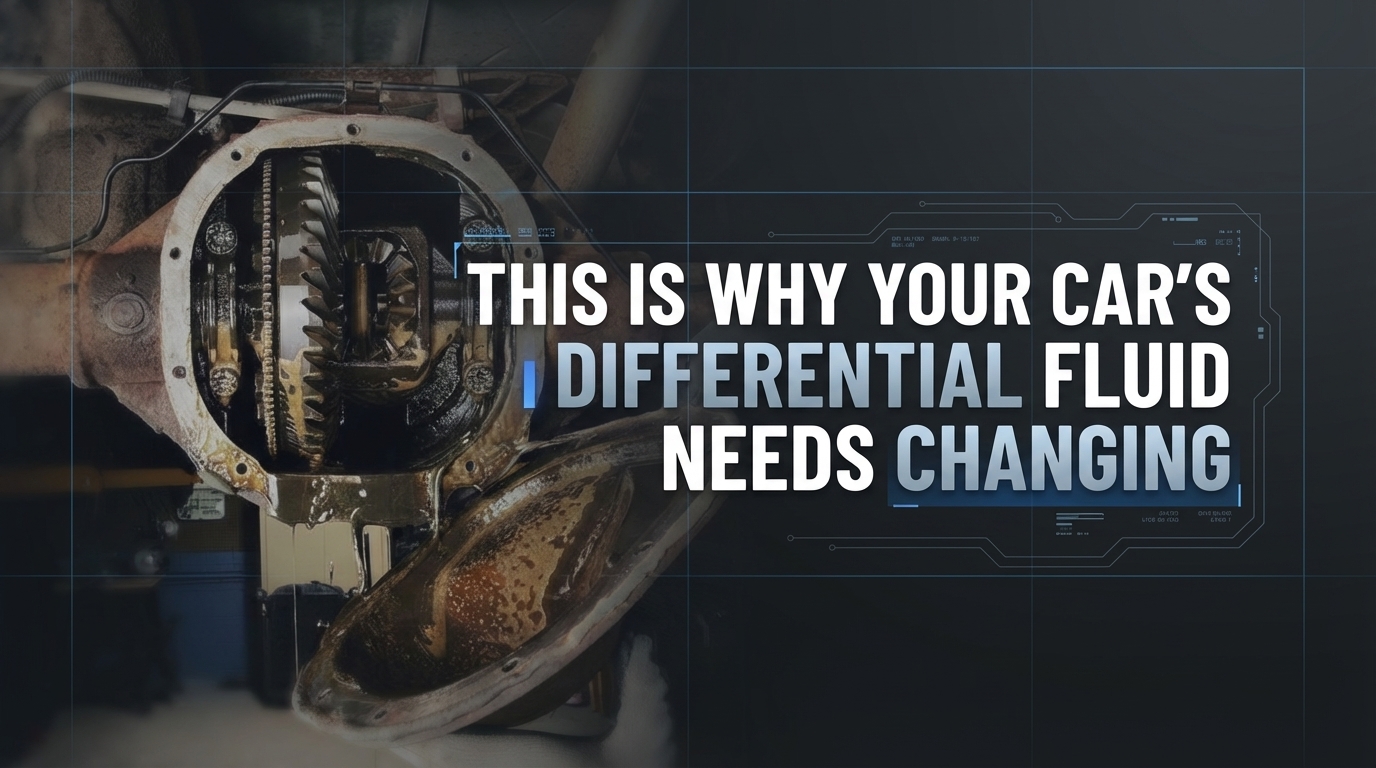
Your car's differential is one of the most overworked and overlooked components under the vehicle. A study by the Society of Automotive Engineers highlights that differential fluid degrades faster than many other lubricants due to extreme pressure and shear forces, yet it remains the most frequently skipped service item on maintenance schedules. I see the results in the shop every week. A customer comes in with a howling noise from the rear end, and when I ask about the last differential service, I get the classic shrug. "I change my engine oil regularly," they say.
What the Differential Does and Why Its Fluid Fails
Think of the differential as the final negotiator between your engine and your wheels. When you turn a corner, the outside wheel must travel farther and faster than the inside wheel. The differential allows this to happen smoothly. Inside, a set of hardened gears, called the ring and pinion, mesh under tremendous force. The fluid in there has three critical jobs: lubricate these gears to prevent metal-on-metal contact, cool them down from friction heat, and protect the surfaces from wear under extreme pressure.
This fluid doesn't last forever. Over time, heat breaks down its chemical additives. Metal particles from normal wear contaminate it. Moisture can enter through the breather vent, especially if you drive through deep puddles, and this water causes the fluid to lose its lubricating properties and promotes corrosion. The fluid gets dirty, thin, and acidic. It stops doing its job. This is when you start to hear the first warnings.
The Sounds and Feelings of a Starved Differential
The failure isn't silent. It announces itself. The most common symptom is a whining or howling noise that changes with vehicle speed. It's not engine RPM dependent. You'll hear it most clearly at a steady 50 to 80 km/h, and it might fade when you let off the accelerator. People often describe it as a "drone" or say, "It sounds like a plane is following me."
Another sign is a chattering or binding feeling during slow, tight turns, like in a parking lot. This is often caused by worn-out friction modifiers in limited-slip differentials. You might feel the car hop or shudder. I've had drivers tell me, "My car feels like it's fighting itself when I turn." That's a perfect description. If you ignore these noises, the final stage is a loud clunk or bang from the rear, followed by a complete loss of drive. That's the sound of teeth breaking off the ring gear.
Related Reading: Signs of Low Differential Fluid: Understanding the Importance, Effects, and Fluid Recommendations
The Practical Guide to Service Intervals and Fluid Choice
Forget the myth of "lifetime fluid." In the automotive world, "lifetime" usually means the warranty period, not the life of the car. Most manufacturers now specify an interval, often between 50,000 and 100,000 kilometres. My professional advice is more conservative. For severe service towing, frequent off-road use, or lots of stop-and-go driving change it every 50,000 km. For normal highway use, 80,000 km is a safe maximum. Checking it annually is a smart habit.
The right fluid is non-negotiable. Using the wrong type can destroy a limited-slip differential in short order. You must consult your owner's manual. The specifications are precise: viscosity (like 75W-90) and a performance standard (like API GL-5). Many modern differentials, especially in trucks and performance cars, require a fluid with specific friction modifiers for the limited-slip clutch packs. Using a standard gear oil here will cause chatter and rapid wear. I keep a chart in my bay because the consequences of a guess are too expensive.
Deep Dive: Unlocking the Power of Differential Lock: Traction, Problems, and Solutions
What a Professional Service Actually Involves
This isn't a top-up job. The fluid must be completely drained and replaced. The process is straightforward but messy. The vehicle is lifted level. The fill plug is removed first a critical step to ensure you can actually refill it later. Then the drain plug is removed, and the old, often metallic-smelling fluid drains out. The housing is cleaned, plugs are reinstalled with new seals, and fresh fluid is pumped in until it runs out of the fill hole. The total cost is typically a fraction of what you'd pay for even minor transmission work, making it one of the best value preventative services you can do.
During this service, a good technician examines the drained fluid and the magnetic drain plug. Shiny silver flakes indicate normal wear. Chunky brass or bronze particles point to worn thrust washers or spider gears. Large, jagged steel chunks mean catastrophic damage is already underway. This inspection turns a simple service into a vital diagnostic check.
Connecting the Dots to Your Whole Drivetrain
A failing differential doesn't exist in a vacuum. The strain from a poorly lubricated diff transmits back through the driveshaft and can affect the transmission output shaft. Vibration and unusual loads can prematurely wear transmission components and even related systems. Furthermore, a leaky differential seal, which often prompts the discovery of low fluid, is a common issue. If you see dark, thick oil leaking from the centre of your rear axle or front transaxle, address it immediately. Letting it run low is what causes the damage we've discussed.
Essential Guide: What’s Dripping Under My Car? Identify Fluid Leaks By Colour
Your differential is a workhorse. It asks for very little. A few litres of specific fluid every few years is a cheap insurance policy against a repair that can easily exceed $2,000. Listen to your car. That new whine isn't the radio. It's a reminder. Schedule the service, use the exact fluid your manual specifies, and you'll get hundreds of thousands of kilometres of quiet, reliable service from a component most people never think about. That's how you maintain a vehicle properly.
Comments (0)
Please login to join the discussion
Be the first to comment on this article!
Share your thoughts and start the discussion