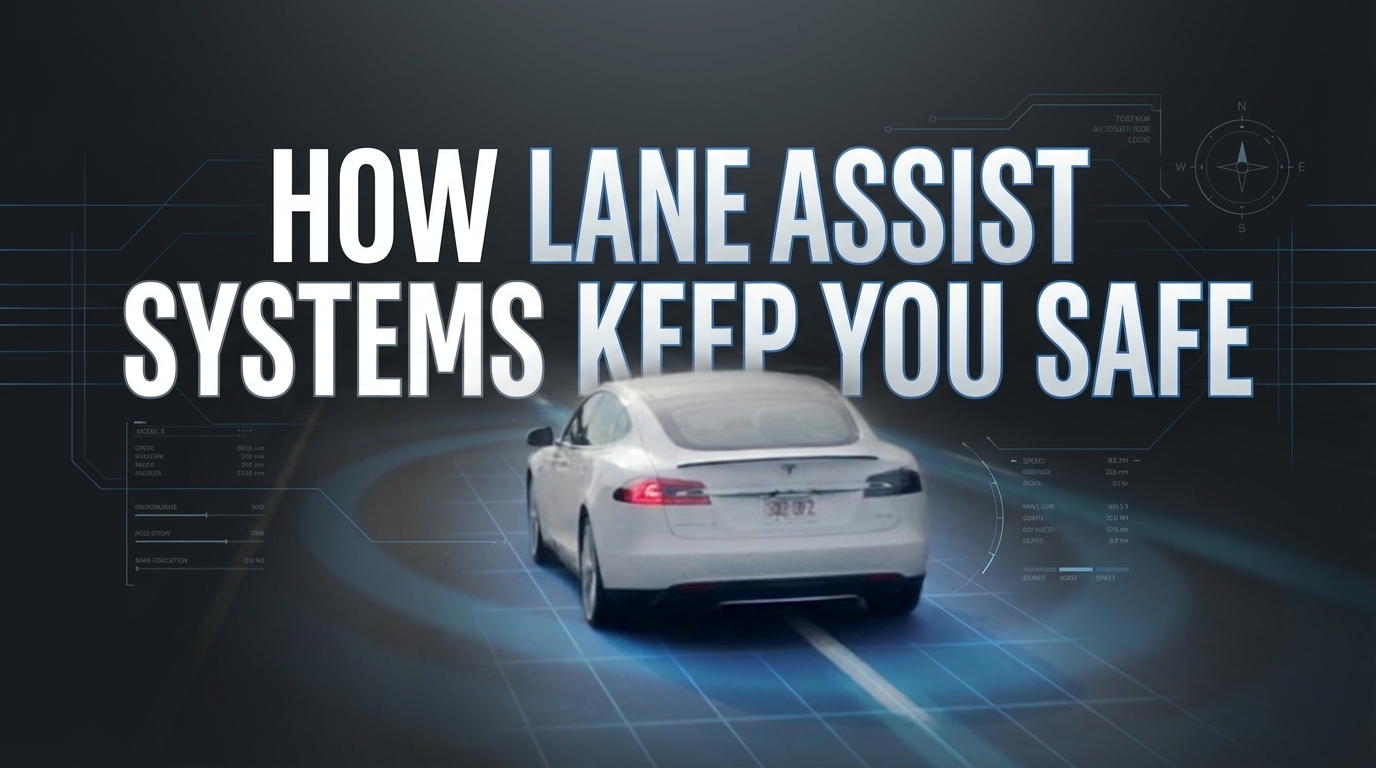
According to a 2024 study by the Insurance Institute for Highway Safety, vehicles equipped with lane departure warning and lane-keeping assist systems are involved in 21% fewer single-vehicle, sideswipe, and head-on crashes. That's a significant number of collisions prevented by a system many drivers treat as a nagging beep. I hear it all the time: "I turned it off, it's annoying." I understand the impulse, but that decision overlooks a sophisticated safety net that works tirelessly, often in ways you don't even notice. Let's pull back the curtain on how these systems actually function to keep you updated.
More Than a Buzzer: The Two-Tiered Approach
Most modern lane assist isn't one system. It's a layered strategy. First, Lane Departure Warning (LDW) acts as the alert. Using a camera mounted behind the windshield, it scans the road ahead for lane markings. If you start to drift without a turn signal activated, it warns you. This could be an audible beep, a steering wheel vibration, or a visual alert on the dashboard. It's reactive. It tells you a mistake is happening.
The second layer, Lane Keeping Assist (LKA) or Lane Centering Assist (LCA), is proactive. This is where the car takes measured action. Using the same camera data, the system's computer calculates the correction needed. It then sends a command to the electric power steering system to apply a gentle counter-torque, nudging the vehicle back toward the center of the lane. It's not auto-pilot. It's a cooperative system designed to catch inattention or momentary distraction. The driver is always meant to be in control, but now they have a vigilant co-pilot.
The Critical Role of the Forward-Facing Camera
Everything hinges on that camera's ability to "see." It's typically mounted high on the windshield, near the rearview mirror. It processes a live video feed, using software to identify the contrast between the road surface and lane markings. This is why the system can struggle or disengage in heavy rain, snow, fog, or when facing direct glare from the sun. Faded, missing, or overlapping lane lines also confuse it. People say, "It works great on the highway but not on my country road." That's exactly why. The system is only as good as the visual data it receives.
Read Also: How safe are self-driving or autonomous driving cars?
What It Feels Like and When It Steps Back
A properly functioning LKA should feel like a subtle guiding hand. You might feel a slight resistance in the steering wheel, followed by a smooth recentering. It shouldn't feel like a fight or a jerky tug. If it does, that's a sign the system may need calibration, especially after a windshield replacement or a front-end alignment.
These systems are also programmed with important limitations for safety. They will typically disengage if you take your hands off the wheel for more than a few seconds. They deactivate at low speeds, usually below 40-45 mph. And crucially, they are a driver aid, not a replacement for alert driving. As the NHTSA emphasizes, the driver remains responsible for safe operation of the vehicle at all times.
Maintaining the System's "Eyes"
Your role in keeping lane assist reliable is straightforward but vital. Keep the windshield clean, especially the area in front of the camera housing. A smudge or bug splatter directly in the camera's field of view can blind it. Be aware that system performance will vary with road conditions. It's a fantastic aid on clear, well-marked interstates. It's less effective, and you should be more engaged, on winding backroads or in poor weather. This is when I hear, "I guess the car doesn't want to drive today." The system isn't failing. It's wisely recognizing its limits and handing full control back to you, the human.
Essential Guide: What Happens When Car Safety Systems Fail
Integrating With Your Car's Other Safety Nets
Lane assist rarely works in isolation. It's part of a suite of technologies often called Advanced Driver Assistance Systems (ADAS). It frequently communicates with adaptive cruise control to help maintain a set speed and distance while staying centered. More advanced versions can even provide gentle steering support during an evasive maneuver initiated by automatic emergency braking systems. This integration creates a cohesive safety web, where multiple systems share sensor data to build a better picture of the road and potential hazards.
A Tool, Not a Chauffeur
The final word is this. Lane keeping assist is an exceptional tool for reducing driver fatigue and correcting minor drift. It is not autonomous driving. Its purpose is to intervene in those critical seconds when your attention lapses. Turning it off permanently because of an occasional beep on a poorly marked road removes a layer of protection that has proven, statistically, to save lives and prevent crashes. Use it. Understand its limits. But let it do its job of watching the lane lines so you can focus more on the bigger picture of safe driving.
Related Reading: Slippery Roads: The Ultimate Guide to Safe Driving
Comments (0)
Please login to join the discussion
Be the first to comment on this article!
Share your thoughts and start the discussion