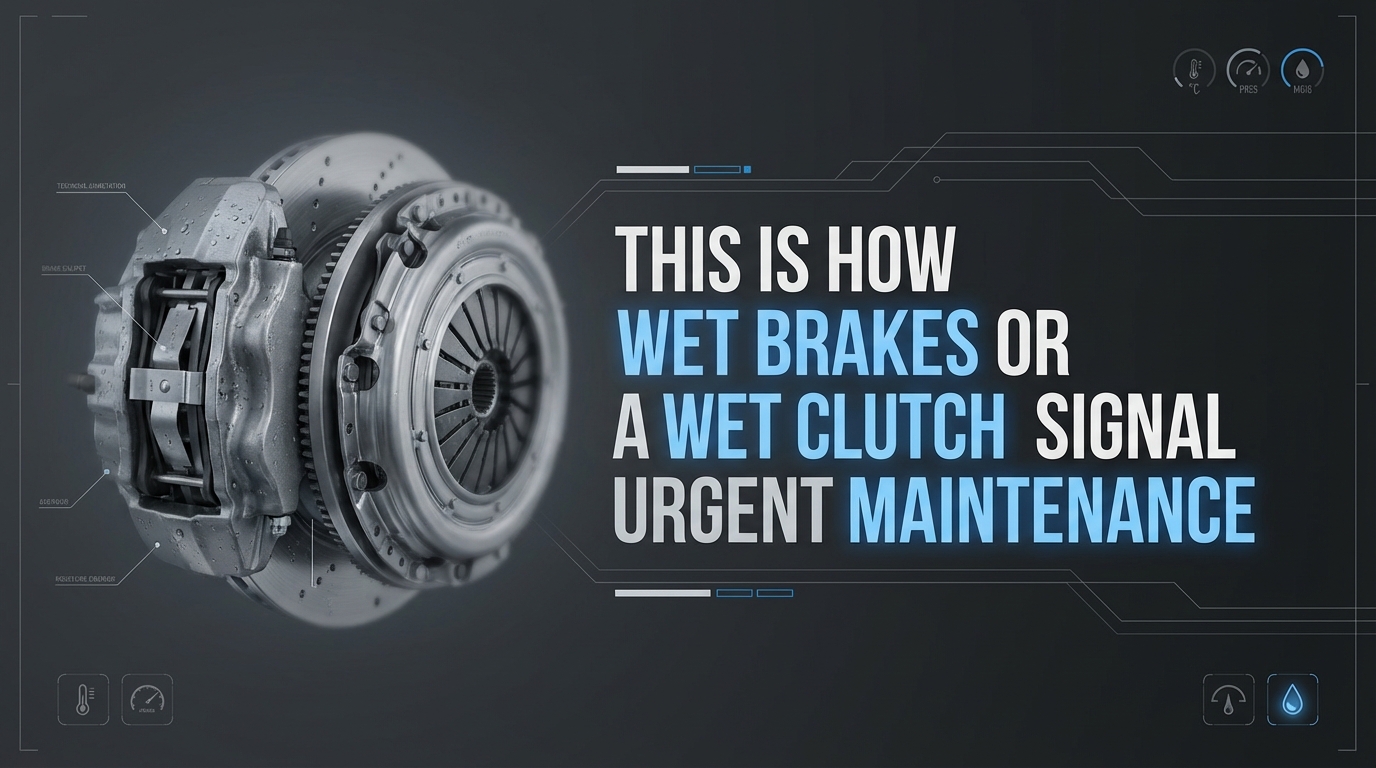
Think a little water never hurt anything? A study by the National Highway Traffic Safety Administration (NHTSA) found that wet-weather driving conditions contribute to a significant percentage of accidents, and compromised braking performance is a key factor. That spongy brake pedal after a car wash or that sudden clutch slip in a downpour is not a quirk. It is a direct signal from your vehicle that something is wrong. I have heard the phrase, "It's just a bit damp, it'll dry out." That assumption is where small annoyances turn into urgent, expensive repairs. Water inside your brake or clutch system is an intruder, and it will not leave on its own.
Your brakes and clutch operate on a simple principle: hydraulic pressure. When you press the pedal, you move fluid through sealed lines, and that fluid pressure activates the components that create friction. This system is designed to be sealed against the elements. The moment water contaminates the hydraulic fluid, everything changes. Water does not compress like brake fluid or clutch fluid. More critically, it boils at a much lower temperature. Under normal braking, your components get hot. When that heat hits water in the lines, it vaporizes into gas. Gas compresses. The result is a brake pedal that sinks to the floor with little resistance or a clutch that engages halfway down its travel. This is not a maybe. It is physics.
Read Also: When to Replace the Brakes: A Comprehensive Guide for Drivers.
How Water Gets In and What It Does
Contrary to popular belief, driving through a deep puddle is rarely the main culprit. The entry points are more subtle. A worn or perished brake fluid reservoir cap seal can let in moisture from humid air. A compromised clutch master cylinder seal does the same. The most common cause, however, is old, neglected hydraulic fluid. Brake fluid and clutch fluid are hygroscopic. They absorb moisture from the air over time through the reservoir. This is why fluid changes are time-based, not just mileage-based. That "little bit damp" feeling is often the result of fluid that has absorbed so much water its boiling point has plummeted. According to AutoZone, moisture-contaminated brake fluid can boil at temperatures as low as 160°F (71°C), far below the 400°F+ (204°C+) boiling point of fresh DOT 4 fluid. Under hard braking, that fluid turns to vapour instantly.
The Immediate Symptoms You Cannot Ignore
Do not wait for a total failure. These signs mean you need to act now.
- A Spongy or Sinking Brake Pedal: This is the classic sign. You press the pedal and it feels soft, mushy, or travels further than normal before the brakes bite. It may firm up after a few pumps, but that is a temporary fix as you are merely compressing the air and vapour.
- Clutch Pedal Engages at a Different Point: One minute the clutch grabs right off the floor, the next you have to lift it almost all the way. This inconsistent engagement point is a dead giveaway of air or vapour in the clutch hydraulic line.
- Reduced Stopping Power: The car simply takes longer to stop. You press the pedal, feel resistance, but the vehicle does not slow down as aggressively as it should. This is a direct result of the system not building full pressure.
- A "Fading" Feeling Under Repeated Use: You are driving down a long hill, using the brakes moderately. With each application, the pedal gets softer and goes lower. This is the heat building and vaporizing the contaminated fluid. This is an emergency.
Essential Guide: Brakes: The Complete Guide to Troubleshooting Sticking Brake Caliper
The Action Plan: Fixing Wet Brakes or a Wet Clutch
This is not a "let it dry" situation. The water is mixed with the fluid. You must remove the contaminated fluid entirely. For a confident DIYer with the right tools, a complete brake or clutch hydraulic system flush is the required repair. You will need new, sealed containers of the correct DOT-rated brake fluid, a helper, clear tubing, and a catch bottle. The process involves systematically bleeding each brake caliper or the clutch slave cylinder until fresh, clear fluid flows without any air bubbles. It is meticulous work. If any part of the system, like a caliper or master cylinder, was already corroded from the moisture, it may fail during the flush and require replacement.
For most people, this is a job for a professional. The cost of a professional brake fluid flush is minor compared to the cost of a brake system failure. A technician will also inspect the entire system for corrosion and wear caused by the water contamination. They have the equipment to perform a pressure flush that is more thorough than manual bleeding. Tell them exactly what happened. "My brakes got spongy after driving in heavy rain" or "My clutch is acting up and feels wet." This history points them straight to the hydraulic system.
Prevention is Simpler Than the Cure
Stop the problem before it starts. Adhere to your vehicle manufacturer's recommended brake fluid service interval, typically every 2 years. This is not an upsell. It is a critical moisture management service. Check your clutch and brake fluid reservoir levels and condition regularly. The fluid should be clear to amber. If it looks dark, cloudy, or murky, it is past due for a change. Finally, if you must drive through deep water, test your brakes immediately afterward by applying light, steady pressure while driving slowly in a safe area. The friction heat generated can help evaporate minor surface moisture on the rotors, but it will not fix fluid contamination.
Pro Tip: The 30-60-90K Maintenance Schedule Explained: What Your Dealer Won't Tell You
Your brakes and clutch are systems of absolute integrity. They work, or they do not. Water in the hydraulics is a definitive step toward "do not." That vague, spongy feeling is the only warning you may get before a steep hill or an emergency stop demands everything the system has. Listen to it. Address it immediately. Because "it'll dry out" is a theory. A firm, responsive pedal is a fact. Trust the fact.
Comments (0)
Please login to join the discussion
Be the first to comment on this article!
Share your thoughts and start the discussion