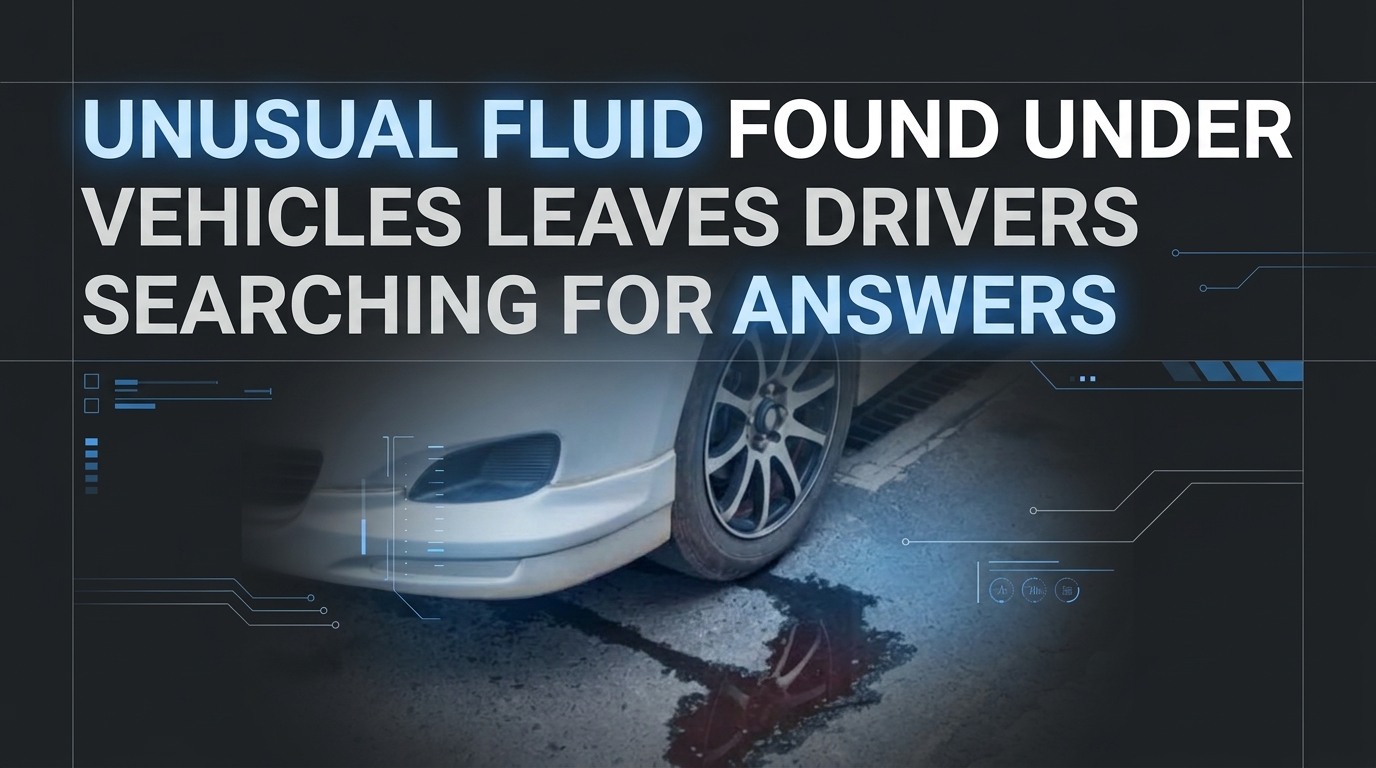
The colour of the liquid tells you more than almost anything else. It is the quickest way to separate a minor annoyance from a serious problem.
A photo of a strange liquid pooling under a parked car can send a chill through any driver. You walk out to the parking lot, see that dark or colourful stain on the asphalt, and your mind races through every worst-case scenario. It is a moment that makes people nervous, and for good reason. Here is the reality. That puddle is not always a disaster. It is often a clear signal from your vehicle, a message written in fluid. The trick is knowing how to read it. I have seen drivers panic over a harmless drip while ignoring a slow leak that was quietly destroying their engine. Understanding what is dripping and why is one of the most useful skills a car owner can develop.
Reading the Colour Code
Bright Green, Orange, or Pink
This is coolant. Modern antifreeze comes in these bright shades so you can spot it easily. If you see a puddle with this colour, it means your cooling system has a leak. That could be a loose hose clamp, a cracked radiator, or a failing water pump. Coolant leaks do not fix themselves. They get worse. Driving with low coolant is one of the fastest ways to overheat an engine, and as we have covered in Engine Overheating: Causes and Solutions for Modern Cars, the damage can be permanent in under a minute.
Clear or Light Yellow and Oily
This is usually brake fluid. It feels slippery between your fingers, and it has a distinct chemical smell. Brake fluid leaks are not something to gamble with. A small drip today can turn into a complete loss of braking pressure tomorrow. I have heard people say, "It's only a drop or two. The brakes still work fine." That logic stops working when you need to stop suddenly. Check the fluid level in the reservoir immediately. If it is low, get the system inspected before you drive again.
Reddish Brown or Dark Brown and Thick
Transmission fluid or power steering fluid. Transmission fluid is usually reddish when fresh and turns darker with age and use. A leak here means a seal or a line has failed. This is How A Slipping Transmission First Reveals Itself Long Before Total Failure explains why ignoring a transmission leak can lead to a rebuild that costs thousands. Power steering fluid behaves similarly. If your steering feels heavier or makes a whining noise, that puddle is telling you something.
Clear and Watery
This one is usually nothing to worry about. Water dripping from the exhaust or from under the dashboard on the passenger side is normal condensation from the air conditioning system. It is the result of the AC dehumidifying the cabin air. If the puddle is clear, odourless, and appears after you have been running the AC, it is harmless. No action needed.
Where the Puddle Is Matters
The location of the drip under the car gives you another piece of the puzzle.
Front Centre
A puddle near the front of the engine bay often points to the water pump, radiator, or coolant hoses. If it is near the driver or passenger side front wheel, suspect the power steering system or brake lines.
Rear Half of the Car
If the liquid is near the back, think fuel tank or exhaust system. Fuel has a strong odour and evaporates quickly. A fuel leak is a fire risk. Do not start the car. Have it towed to a shop. If the liquid is oily and near the rear differential on a rear wheel drive vehicle, it could be a leaking axle seal.
Under the Engine Oil Pan
Oil leaks are common as engines age. A few drops on the ground after parking is not an immediate crisis, but it should be monitored. Check the oil level regularly with the dipstick. If you are adding oil between changes, the leak is significant enough to address. Drivers Are Accidentally Destroying Their Cars By Trusting This Common Assumption highlights how many people ignore small oil leaks until the engine runs dry.
What to Do When You See the Puddle
Do not panic. Do not ignore it either. Here is the practical sequence I recommend to every driver who calls me about this.
First, park on a clean, dry surface if possible. Let the car sit for a few hours so the puddle has time to form fully. Place a piece of cardboard or a white paper plate under the suspected area. This catches the drips and makes it easier to see the colour.
Second, pop the bonnet and check your fluid levels. The coolant reservoir, the brake fluid reservoir, the engine oil dipstick, and the transmission dipstick if your car has one. Low levels confirm a leak is active. Normal levels suggest the drip might be from a recent spill or residual fluid from a previous service.
Third, look at the ground. If the puddle grows quickly while the engine is running, the leak is pressurised and needs immediate attention. If it is a single small spot that does not return after you wipe it away, it may be harmless condensation or a very slow seep that can wait for your next service appointment.
For a detailed breakdown of what each fluid looks like and how to identify it, What’s Dripping Under My Car? Identify Fluid Leaks By Colour is a resource I keep bookmarked myself.
Final Word
A puddle under your car is not a mystery. It is a direct message about the health of your vehicle. Colour tells you the system. Location tells you the component. Size tells you the urgency. When you learn to read these three signals, you stop guessing and start knowing. That is the difference between a driver who catches a problem early and one who finds out the hard way why that drip mattered.
Keep Reading: Why Cars That Take Longer To Start In The Morning Are Often Headed Toward Costly Repairs
Comments (0)
Please login to join the discussion
Be the first to comment on this article!
Share your thoughts and start the discussion