The engine oil pump sits at the bottom of the engine, submerged in the oil pan. It draws oil through a pickup tube and pushes it through a filter before sending it into the main oil gallery. That gallery acts like a central highway, branching off into smaller passages that lead to every bearing surface and moving component.
If you think engine oil is just something you top up when a light comes on, you are missing what is actually happening under the bonnet. That dark liquid is the single most important substance your engine needs to survive. It does not merely lubricate. It cleans, cools, seals, and protects every moving part inside a metal box that operates at temperatures exceeding 200 degrees Fahrenheit. The moment you turn the key, a pump forces oil through a network of passages at high pressure. It reaches the crankshaft, the connecting rods, the camshaft, and the valve train within seconds. Without this flow, metal rubs against metal at thousands of revolutions per minute. The result is not a noise. The result is rapid, permanent destruction. I have seen engines seized from a single missed oil change, and the owner always says the same thing: "I thought it still had oil in it."
How Oil Circulates and Why It Matters
Here is what most drivers do not consider. The oil does not simply coat parts. It fills microscopic gaps between the crankshaft journals and their bearings. This creates a thin hydrodynamic wedge that prevents metal to metal contact entirely. As long as that wedge exists, the engine runs smoothly. The moment it disappears, scoring begins.
According to data from the Car Care Council, low oil levels contribute to a significant percentage of preventable engine failures. That is why checking the dipstick is not an old fashioned habit. It is a direct line of sight into whether your engine has the hydraulic support it needs to survive the next drive. If the oil is low, the pump can lose suction. Air gets drawn into the system. Pressure drops. And the parts that depend on that pressure start to suffer.
The Cooling Role of Circulating Oil
Most drivers assume the cooling system alone handles engine temperature. That is not accurate. While the radiator and coolant manage overall engine temperature, the oil is responsible for removing heat from the hottest internal components. The pistons, for example, do not have direct coolant contact. They rely on oil splashing onto their undersides to carry heat away. Some modern engines even use piston oil jets that spray a directed stream of oil onto the bottom of each piston to manage extreme thermal loads.
If the oil level drops or the oil degrades, that cooling capacity diminishes. The engine runs hotter internally than the dashboard gauge suggests. I have heard a driver say, "The temperature gauge is normal, so the engine is fine." That gauge measures coolant temperature, not piston temperature. By the time the coolant gauge moves, internal damage may already be in progress.
Cleaning and Suspending Contaminants
Every combustion event produces byproducts. Soot, unburned fuel, moisture, and microscopic metal particles are generated continuously. The oil circulates through the engine and picks up these contaminants, suspending them in the fluid so they do not settle on critical surfaces. The oil filter catches the larger particles, but the oil itself must carry the smaller ones until the next change.
This is why oil turns dark. It is not a sign of failure. It is a sign that the oil is doing its job. The problem begins when the oil becomes saturated and can no longer hold those contaminants in suspension. Sludge forms. Sludge blocks oil passages. And blocked passages starve bearings of lubrication. The silent threat of engine oil sludge is that it builds slowly, without warning lights, until a bearing fails and the engine knocks.
Modern synthetic oils resist breakdown longer than conventional oils, but they still have limits. The recommended oil change interval from your manufacturer accounts for the oil's ability to continue suspending contaminants effectively. Exceeding that interval by thousands of miles is a gamble. I have seen engines opened at 10,000 miles past the recommended change, and the oil pan looked more like a tar pit than a lubrication system.
What Happens When Circulation Stops
Loss of oil circulation is not gradual. It is immediate and catastrophic. The most common cause is simply running the engine with insufficient oil. A leak goes unnoticed. A seal fails. The driver checks the oil only after hearing a noise. By then, the damage is done.
When circulation stops, the oil pressure warning light illuminates. That light is not a suggestion. It means the pump has lost its prime or the oil level is too low to maintain pressure. The correct response is to shut the engine off immediately. Continuing to drive, even for a few seconds, accelerates wear exponentially. A bearing that spins without oil generates enough friction heat to weld itself to the crankshaft in under a minute.
Another overlooked cause is a clogged oil filter. If the filter becomes blocked and the bypass valve fails, oil cannot pass through to the engine. The pump still runs, but nothing reaches the bearings. This is why using a quality filter matters. The critical need for oil filter maintenance is not about changing the filter itself. It is about ensuring the oil path remains open under all conditions.
Thick or incorrect viscosity oil can also restrict circulation, especially in cold weather. If the oil is too thick for the ambient temperature, the pump struggles to move it through narrow passages. The engine may start, but the oil does not reach the top end quickly enough. That delay causes wear on the camshaft and valve train during every cold start. Choosing the right viscosity for your climate and driving conditions is not optional. It is a direct factor in how long your engine lasts.
What You Can Do Today
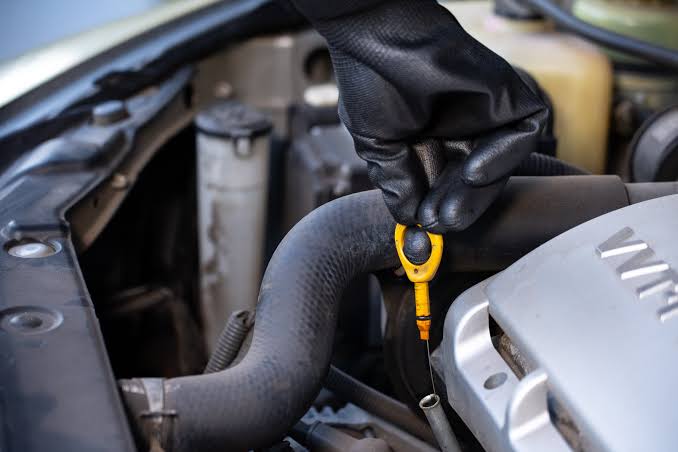
Check your oil level once a week. Not once a month. Not when the reminder pops up. Weekly. It takes thirty seconds. Pop the bonnet, pull the dipstick, wipe it, insert it again, and read the level. If it is low, top it off with the correct grade. If it is dark and gritty, schedule a change.
Listen to your engine when it is idling. A healthy engine with proper oil circulation sounds smooth. If you hear a ticking or tapping that gets louder as you accelerate, that is often a sign of low oil pressure or worn components. Do not dismiss it with "It has always made that noise." It has not. Engines change over time, and the sounds they make are the only way they can tell you something is wrong before it breaks.
Stick to the oil change schedule in your owner's manual. That schedule is based on engineering data, not marketing. If you drive in severe conditions, which includes stop and go traffic, extreme temperatures, or towing, shorten the interval. The oil works harder in those conditions. Treat it accordingly.
For a deeper understanding of what happens when oil breaks down internally, read about whether an engine oil flush helps or harms modern cars. It is a topic that divides opinions, but the facts are clear once you understand how oil behaves under heat and pressure.
Your engine is a precision machine. It relies on a continuous, pressurized flow of clean oil to function. Every time you drive, that oil is circulating, cleaning, cooling, and protecting. Treat it as the critical resource it is. Check it. Change it. And never ignore the warning signs. Because the alternative is an engine that stops circulating oil permanently, and that is a repair bill you do not want.

Comments (0)
Please login to join the discussion
Be the first to comment on this article!
Share your thoughts and start the discussion