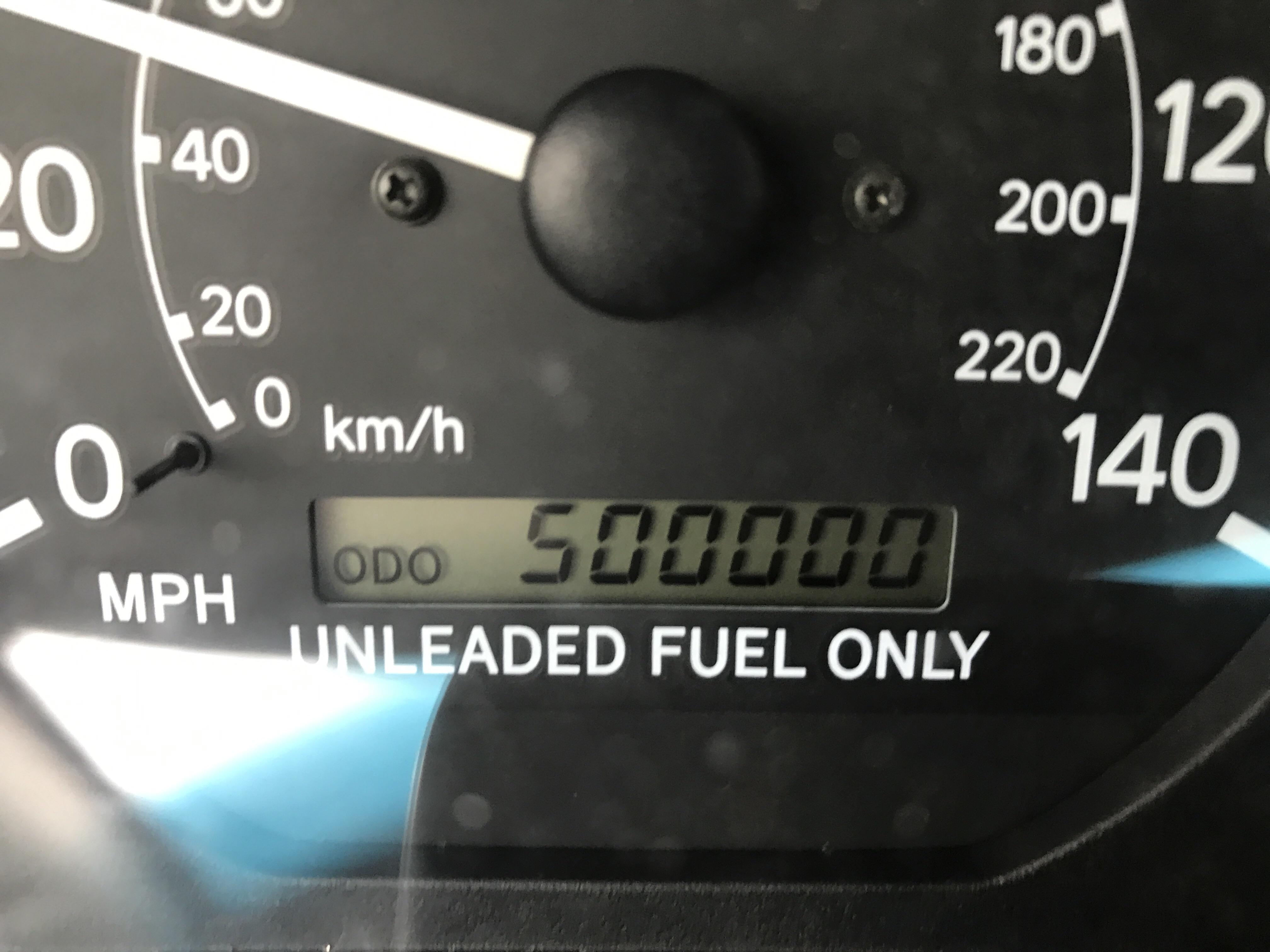
Only 1% of vehicles in America will ever reach 200,000 miles. But there's a small group of owners who don't stop there. They keep going. They push their vehicles to 300,000, 400,000, and even beyond 500,000 miles.
When MBB's 2008 Honda Ridgeline RTL rolled over 500,000 miles in early 2025, his wife told him she'd still rather drive it than any other vehicle they'd owned in 17 years. After daily commutes, cross-country road trips, and Utah winters with enough road salt to preserve a woolly mammoth, that truck still purrs.
Here's how he actually did it.
The Oil Change Reality
Most people have heard the "change your oil every 3,000 miles" advice so many times it feels like gospel.
MBB did something different. He followed Honda's Maintenance Minder system religiously and let the dealer handle every single oil change. When the system said change it, he changed it. That approach delivered 500,000 miles on the original engine.
Modern synthetic oils and engine management systems have changed the game. For most modern vehicles, experts recommend oil changes every 5,000 to 7,500 miles with conventional oil and 7,500 to 10,000 miles with full synthetic. High-mileage vehicles running synthetic blends typically need changes every 3,000 to 5,000 miles under severe driving conditions.
The brand of oil? It matters less than you think. The real game-changer is using any quality oil on a proper schedule.
The Timing Belt Decision
MBB replaced his timing belt four times over 500,000 miles. He pushed each one to about 120,000 miles instead of the recommended 100,000. He knew he was taking a chance.
Should you follow that example? Absolutely not.
A timing belt replacement costs between $500 and $1,200. If that belt fails on an interference engine, the valves collide with the pistons. You're looking at bent valves, damaged cylinder heads, and potentially catastrophic engine damage costing $3,000 to $8,000.
Most manufacturers recommend timing belt replacement between 60,000 and 100,000 miles, or every 5 to 7 years. Even if your mileage is low, timing belts degrade over time.
What Actually Failed After 500,000 Miles
Here's what broke on MBB's Ridgeline after half a million miles:
- One alternator (complete failure)
- One power steering pump (got noisy)
- Four or five sets of brake pads
- One set of struts
- A few valve adjustments
- Leather seat surfaces (cracked)
That's it. No transmission rebuild. No engine overhaul. The original engine and transmission made it the full distance.
The surprising part? What didn't fail. The transmission, the engine internals, the differential. Those are the expensive catastrophes everyone fears with high-mileage vehicles.
The Rust Battle
MBB washes his Ridgeline constantly during Utah winters. He's vigilant about it. He still developed rust bubbles over both rear fender wells.
Rust doesn't care about your maintenance schedule.
The most effective rust prevention methods include regular washing (especially the undercarriage), annual rust-proofing applications like Fluid Film or Krown, immediate paint chip repair, and proper undercoating.
If you live where they salt roads, you will eventually get rust. The question is how much and how fast.
The Biggest Mistake Owners Make
The most common mistake is deferred maintenance on the assumption that “it's not worth it anymore.”
One mechanic put it bluntly: “Most cars break down well before 500,000 miles, primarily from a lack of maintenance as the car gets older and isn't 'worth' doing basic maintenance on.”
That mentality creates a self-fulfilling prophecy. Owners skip an oil change because "it's not worth spending money on this old car." The engine develops sludge. Components wear faster. Eventually something fails, confirming their belief that old cars aren't worth maintaining.
Other critical mistakes include ignoring warning lights, delaying timing belt replacement, using incorrect tire pressure, neglecting transmission fluid changes, and failing to replace aging coolant hoses.
Would He Buy The Same Car Again?
MBB's answer is clear: he's keeping it. It's not worth anything as a trade-in. He'll drive it until they take away his keys, then maybe a grandchild will get it.
His wife still prefers it over every other vehicle they've owned. After 17 years and 500,000 miles, that's the most telling endorsement.
The vehicles most likely to reach 500,000 miles share common characteristics: simple mechanical design, proven powertrains, wide parts availability, and owner commitment. Honda Accords, Toyota Camrys, Toyota Corollas, and certain pickup trucks dominate the 500,000-mile club.
But the vehicle itself is only half the equation. The other half is you. Your maintenance discipline. Your willingness to fix small problems before they become catastrophic. Your commitment to the long game.
Most people trade vehicles every few years, perpetually making payments. The alternative path exists. Buy quality. Maintain it properly. Keep it running. Save the difference.
MBB proved it works. The question is whether you're willing to follow through when everyone else is shopping for something newer.
Comments (0)
Please login to join the discussion
Be the first to comment on this article!
Share your thoughts and start the discussion