Car repair costs jumped 15% year-over-year in 2025, the largest single-year increase ever recorded according to CNN and USA Today.
I've been in this industry long enough to know that most of those expensive jobs didn't start as expensive problems. They started as small symptoms that got the wrong treatment, or no treatment at all. The shortcut at the centre of nearly every one of those stories is the same: skipping a proper diagnosis.
It happens more than you'd think. A warning light comes on. The driver heads to a parts store for a free OBD code scan, gets a fault code printed on a slip of paper, buys the suggested part, fits it, and drives away. The light comes back on a week later. They're frustrated, out of pocket, and still have the original problem, now layered with a new one. That free scan wasn't a diagnosis. It was a starting point that got mistaken for a finish line.
The average total repair cost in the first half of 2025 climbed above $4,700 according to AutoBlog industry data. A proper professional diagnostic fee from a qualified technician runs between $122 and $179 on average, according to RepairPal. The math is not subtle.
A Fault Code Tells You What Failed. It Does Not Tell You Why.
This is the distinction that quietly destroys engines every single week. An OBD-II scanner reads fault codes stored in your vehicle's engine control module. Those codes identify a system or component that reported an out-of-range condition. They do not pinpoint a root cause.
Take an oxygen sensor code. The code logs a failed sensor reading. What it doesn't tell you is whether the actual sensor is faulty, whether there's an exhaust leak skewing the reading, whether a vacuum leak is creating a lean fuel mixture, or whether a failing catalytic converter is the real culprit sending false data upstream. Replace the sensor based on the code alone and you've spent $150 to $300 on a part that wasn't the problem. The underlying fault continues. The engine continues to suffer.
RepairPal technicians have pointed out that a single vehicle speed sensor fault code, the P0503, has 41 diagnostic steps spanning 11 pages in a professional shop manual, and that's after the code has been retrieved. Reading the code is step one of a long process. Drivers who treat it as the final answer end up replacing parts on a hunch, and hunches are expensive. As RepairPal states directly: “It really is less expensive to pay a qualified technician for a proper diagnosis than it is to replace components based on a hunch of what might be wrong.”
I've seen drivers replace three or four parts over several months, spending $600 or $700 in total, chasing a problem that a $150 diagnostic fee would have identified in a single afternoon.
The Misfire That Drivers Keep Driving Through
An engine misfire is one of the most misunderstood warning signs on the road. The car still moves. It feels a little rough on acceleration. "It's been doing that on and off, probably nothing serious." So the driver keeps going, day after day, waiting for a convenient time to get it looked at.
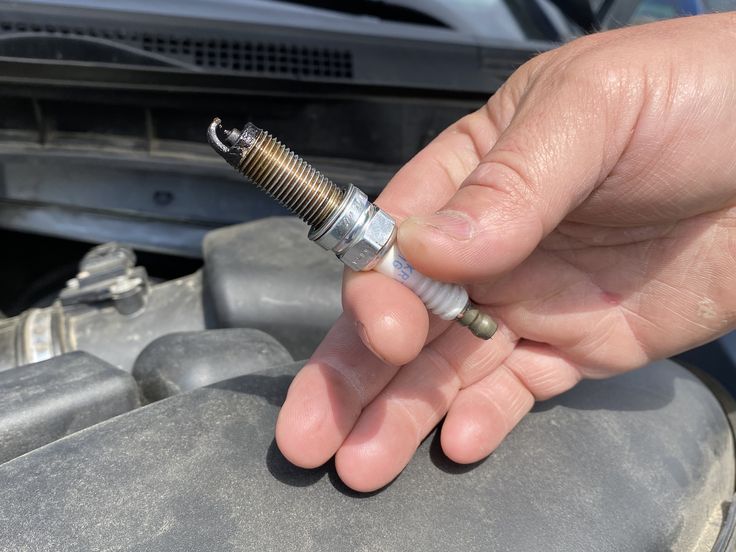
Here's what's happening inside the engine during that time. A misfire occurs when one or more cylinders fails to complete the combustion cycle, due to a weak spark, insufficient fuel, or a mechanical failure such as a failing injector, worn ignition coil, or damaged piston ring. When a cylinder misfires repeatedly and runs lean, meaning too much air with not enough fuel, internal engine temperatures spike abnormally. That heat causes physical scoring of the piston walls and cylinder surfaces. Unburned fuel passes through the exhaust system and begins saturating and destroying the catalytic converter.
A catalytic converter replacement runs between $2,164 and $2,483 on average according to RepairPal. Continued misfiring can seize an engine entirely, with repair costs ranging from $3,000 to over $10,000 depending on extent of damage. The original misfire fix, whether it's a spark plug set at $80, an ignition coil at $200, or even a fuel injector service, sits far below any of those numbers.
According to CarAdvise, a misfire will not resolve itself. The damage compounds with every drive cycle. And the longer it runs without proper diagnosis to identify the specific failing component, the wider the damage spreads across the exhaust and internal engine systems.
"The engine feels a bit off but it still gets me where I'm going" is a statement I hear before the catastrophic failure conversations. Never after.
Skipping diagnosis to save $150 is one of the most reliably expensive decisions a car owner can make. Your engine is communicating something specific when a warning light or symptom appears. Respecting that communication with a proper professional assessment is not overcaution. It is the most direct route to a repair that actually fixes the problem and protects everything downstream.
Book the diagnostic. Get the full picture. Then fix the right thing.
Comments (0)
Please login to join the discussion
Be the first to comment on this article!
Share your thoughts and start the discussion