According to a 2023 report by the U.S. Department of Energy, a single misfiring spark plug can reduce your car's fuel efficiency by up to 30%. That's a staggering amount of money literally burning away with every mile. Yet, the part responsible is often ignored until it causes a breakdown.
I see it constantly in the shop. A car comes in with a complaint about poor fuel economy or a rough idle. The owner is convinced it's something major, like the fuel pump or a sensor. They'll say something like, "It's never been this thirsty before." After a quick check, the culprit is almost laughably simple: worn spark plugs. These small, inexpensive parts are the absolute heartbeat of your engine's combustion, and when they're tired, they turn your vehicle into a fuel-guzzling nightmare. The worst part? The decline is so gradual most drivers never notice until their wallet feels it.
The Silent Efficiency Killers
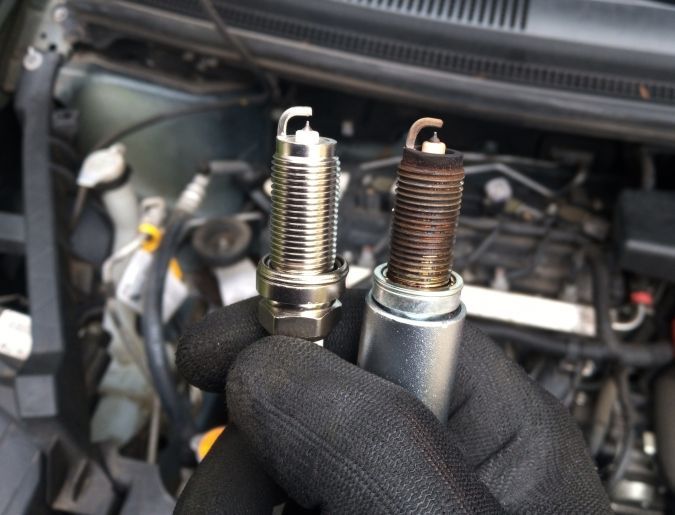
Spark plugs have one job: ignite the air-fuel mixture in the cylinder at the precise moment. When they're new, they do this with a strong, clean spark. Over tens of thousands of miles, the electrodes wear down, the gap widens, and carbon builds up. The spark becomes weaker, less reliable, and can even fail completely on some cycles.
This is where the fuel waste begins. An incomplete or missed combustion means that unburned fuel gets sent straight out the exhaust. You paid for that gasoline, and it did nothing but pollute. The engine control unit (ECU) tries to compensate, often altering the fuel trim, but it can't fix a weak spark. The result is a steady, significant drop in miles per gallon. You might feel it as a slight hesitation when accelerating or a rougher idle at stoplights, but many simply adapt their driving to it, thinking, "It's just getting older."
How Worn Plugs Rob You Blind
Let's break down the mechanics. A proper spark ensures a complete, powerful burn that pushes the piston down with maximum force. A worn plug creates a weak, inconsistent spark. This leads to several problems:
Misfires: This is the most direct cause of fuel waste. The fuel in that cylinder doesn't ignite. The U.S. Department of Energy notes that incomplete combustion is a primary source of energy loss in gasoline engines.
Poor Performance: To mask the misfire and rough running, you may subconsciously press the accelerator harder to get the same response. This dumps even more fuel into an already inefficient system.
Catalytic Converter Damage: Dumping unburned fuel into the exhaust system overheats and can destroy the catalytic converter, a repair that costs thousands. AutoZone lists damaged plugs as a common cause of converter failure.
Why Drivers Overlook Them
Spark plugs are the definition of "out of sight, out of mind." Buried deep in the engine, they work perfectly until they don't. Unlike a flat tire or a dead battery, their failure is a slow creep, not a sudden event. The check engine light may not even illuminate until the misfire is severe and constant.
This leads to the most common justification I hear: "They were replaced 80,000 miles ago, so they should be fine." That's the trap. Modern "long-life" plugs have extended service intervals, but they are not lifetime parts. The interval is a maximum, not a guarantee. Driving habits, fuel quality, and engine condition all affect their lifespan. Waiting for a definitive failure is the most expensive way to manage them.
The Simple Check and Fix
You don't need to be a mechanic to stay ahead of this. First, know your service interval. Consult your owner's manual; it's not a suggestion. For most modern cars, it's between 60,000 and 100,000 miles. If you're near or past that mark, it's time for action.
Second, listen and feel. A rough idle, especially when the engine is cold, is a classic sign. So is hesitation during acceleration or a general lack of power when merging onto a highway. If your fuel economy has dipped noticeably over the past few months, spark plugs are the first place to look.
Replacing spark plugs is one of the most cost-effective maintenance items you can do. The parts are relatively inexpensive, and the labour, while varying, is straightforward for a professional. The difference is immediate. You'll feel a smoother, more responsive engine, and you'll see the improvement at the pump within a few tanks. Firestone Complete Auto Care confirms that fresh plugs restore engine efficiency and performance.
Don't fall into the trap of thinking a small part can't have a big impact. In the world of automotive efficiency, the spark plug is a giant. Ignoring it is a direct decision to burn extra fuel with every trip you take.
Comments (0)
Please login to join the discussion
Be the first to comment on this article!
Share your thoughts and start the discussion