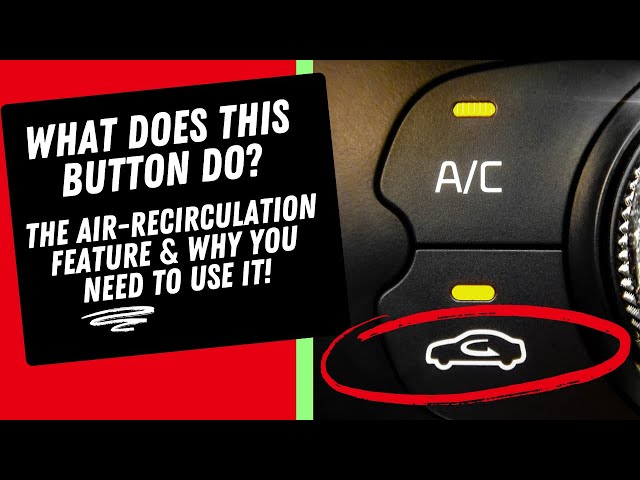
Modern cars are packed with buttons, but one tiny symbol has left drivers scratching their heads for years. It's the button with the arrow looping around the inside of the car. I hear it all the time in the shop: "What does this button actually do?" followed by a confident, "I think it's for defogging." It's not. This single button controls your car's climate system in a way that can save fuel, clear your windows faster, and make your cabin more comfortable. Most people are using it wrong, or not at all.
The Real Purpose of the Recirculation Button
That button is your air recirculation control. When activated, it closes an exterior flap in your HVAC system, causing the car to recirculate the air already inside the cabin instead of pulling in fresh air from outside. It's not a defroster. It's a climate management tool with three very specific, powerful jobs.
1. Isolating Your Cabin from Outside Air
This is its primary function. When you drive behind a diesel truck, through a tunnel, or past a farm, hitting that button is your instant shield. It prevents those outside odors and pollutants from entering your cabin. The AAA emphasizes that using recirculation can significantly improve in-cabin air quality in heavy traffic or polluted areas. It's a simple but effective filter bypass.
Think of it this way. Your cabin air filter works on incoming air. If you stop incoming air, you stop new pollutants. People say, "I just roll up the windows." That helps, but your HVAC system is still pulling air from outside the vehicle unless you press this button.
2. Maximizing Cooling Efficiency in Hot Weather
This is where the button saves you money and improves performance. On a scorching day, the air inside your car is often cooler than the 95°F air outside. When you turn on the A/C with recirculation off, you're asking the system to cool down a constant stream of hot, fresh air. It works too hard.
Engage recirculation. Now, the A/C is cooling the already-cooled cabin air. It reaches your desired temperature faster and maintains it with less effort. This reduces compressor load, which can save fuel. The U.S. Department of Energy notes that A/C use can increase fuel consumption significantly, so using recirculation to lighten its load is a smart move.
3. Maximizing Heating Efficiency in Cold Weather
The same principle applies in winter, but for heat. Once your heater has warmed up the cabin air, recirculation keeps that warm air cycling. It doesn't have to constantly re-heat freezing air from outside. Your heater core works less, and the cabin stays cozy more consistently. This is especially useful on long, cold highway drives.
When You Should Never Use the Recirculation Button
This is the critical part everyone misses. Using this button incorrectly can be dangerous. There are two clear situations where it must be turned off.
When Your Windows Are Fogging Up
This is the most common mistake. Fog forms on the inside of your windows when warm, moist cabin air hits the cold glass. If you have recirculation on, you are trapping all that human moisture from breath and damp clothes inside the car. You're recycling the problem.
The fix is to turn recirculation OFF. This brings in drier outside air (even if it's cold), which the heater can warm up. Dry air absorbs the moisture on the glass. Combine this with your defroster setting, which typically automatically turns off recirculation and directs air to the windshield. Consumer Reports explicitly advises against using recirculated air to clear fog because it prolongs the issue.
For Extended Driving with Passengers
Recirculation is for short-term isolation. If you drive for more than 15-20 minutes with it constantly on, especially with multiple people in the car, carbon dioxide levels can build up. This can lead to drowsiness and reduced alertness. The system needs to periodically refresh the air. Most modern cars will automatically switch recirculation off after a set time for this reason. If yours doesn't, make it a habit to switch it off every so often to bring in fresh oxygen.
How to Use It Like a Pro
Stop thinking of it as a mystery button. Start using it with intent.
Summer A/C Use: Start with recirculation ON to cool the cabin rapidly. Once comfortable, you can switch it off if the outside air quality is good. Use it on and off to balance cooling power with air freshness.
Winter Heating & Fog Defense: Start with recirculation OFF to combat window fog. Once the windows are clear and the cabin is warm, you can try turning it on to retain heat. The moment fog reappears, turn it off immediately.
Odor Defense: See a problem ahead? Press the button preemptively. It's your instant barrier. I hear drivers say, "I can handle the smell." Maybe. But why would you? The button exists for this exact scenario.
Your car's manual holds the final word. For example, the Toyota Camry manual clearly illustrates the recirculation button symbol and explains its use for cooling and isolating outside air and odors. A quick check of your own manual can clarify any vehicle-specific behaviors.
Final Word
That tiny button is a powerful tool, not a decoration. It gives you direct control over the source of your cabin air. Use it to cool and heat efficiently, and to block pollutants. Never use it to clear foggy windows. It's that simple. Mastering this one control makes you a more informed driver, saves your climate system work, and keeps your cabin environment exactly how you want it.
Because "I just leave it on auto" is a choice. But understanding what the car is doing on your behalf is true control.
Comments (0)
Please login to join the discussion
Be the first to comment on this article!
Share your thoughts and start the discussion