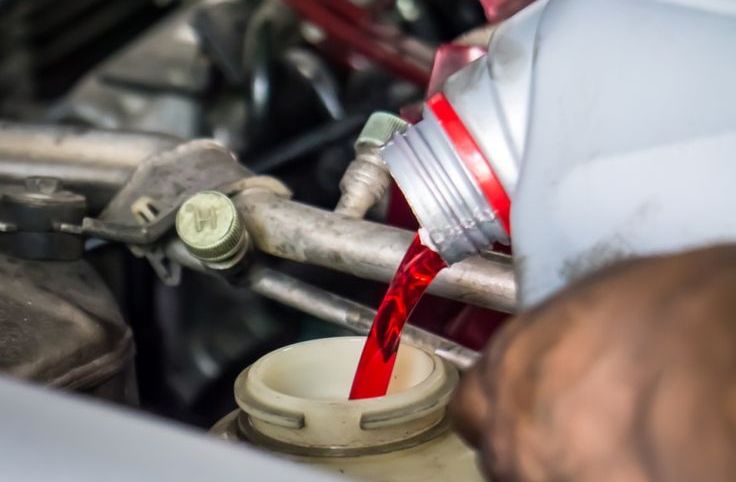
In 2022, the American Automobile Association (AAA) reported that engine failure was the single most expensive roadside repair, with an average cost of $2,500 to $4,000 per incident. That's a staggering bill for a problem that often starts with a simple, repeated driver habit. I hear the same phrase in my shop every week: "I just topped it off last month." That's the statement that makes me pause. Because consistently needing to add oil or coolant isn't normal vehicle maintenance. It's your engine's desperate cry for help, and ignoring it is the single most common mistake that leads to catastro
The Silent Killer: Ignoring Chronic Fluid Loss
Your engine is a sealed, pressurized system. Fluids like engine oil and coolant are not meant to be consumed or disappear. If your oil level drops between changes, it's leaking or burning. If your coolant reservoir is constantly low, it's leaking or being burned in the combustion chamber. Neither scenario is sustainable. The damage is cumulative and often invisible until a critical component fails. A study by Consumer Reports identifies chronic oil leaks as a leading contributor to premature engine wear and failure. Driving with low oil, even for short trips, starves bearings and turbochargers of lubrication, generating heat and friction that metal cannot withstand for long.
Oil Consumption: More Than Just a Topping-Up Problem
Modern engines should not burn a quart of oil every 1,000 miles. Yet, many drivers accept this as "normal for an older car." It's not. It's a symptom of worn piston rings, valve guide seals, or PCV system failure. When oil enters the combustion chamber and burns, it leaves behind carbon deposits. These deposits foul spark plugs, clog catalytic converters, and can lead to pre-ignition—a condition where fuel detonates uncontrollably, creating shockwaves that can shatter pistons. The National Highway Traffic Safety Administration (NHTSA) maintains databases on component failures, and lubrication issues are a frequent root cause. The fix starts with a proper diagnosis, not a case of oil in the boot.
Coolant Loss: The Fast Track to a Warped Cylinder Head
This is the mistake I see destroy engines with shocking speed. Coolant doesn't evaporate from a sealed system. A disappearing coolant level means it's escaping. The most dangerous leak is an internal one, like a failing head gasket or a cracked engine block or head. In this case, coolant seeps into the combustion chamber or oil passages. When coolant mixes with oil, it creates a sludge that cannot lubricate. Bearings spin and fail in minutes. More directly, if coolant enters the combustion chamber, it can cause hydro-lock. Since liquid doesn't compress, attempting to start an engine with coolant in a cylinder can bend a connecting rod or crack the piston. CarParts.com details how overheating from coolant loss is the primary cause of blown head gaskets, a repair often exceeding $2,000. "It wasn't smoking," a customer will say. Internal leaks rarely smoke visibly until it's far too late.
The Actionable Diagnosis: Stop Guessing, Start Testing
You cannot manage what you do not measure. Topping off fluids without finding the source is financial suicide for your engine. Here is the professional, step-by-step approach.
Step 1: Verify and Locate the Leak
For oil: Clean the engine bay thoroughly. Use a degreaser on the valve cover, oil pan, timing cover, and around the oil filter. Once clean, place a large piece of white cardboard under the engine overnight. The location and colour of the drip will pinpoint the source—front, rear, side. For coolant: Pressure test the system. A cooling system pressure tester, which you can often rent from an auto parts store like AutoZone's Loan-A-Tool program, pressurizes the system without the engine running. You'll see the leak immediately at a hose, radiator, water pump, or heater core.
Step 2: Test for Internal Engine Failure
If no external leak is found, the fluid is going inside the engine. For suspected internal coolant leaks, use a block tester. This is a chemical test that draws air from the coolant expansion tank. If combustion gases are present in the coolant (a sure sign of a head gasket breach), the fluid changes colour. For oil consumption, a leak-down test or compression test performed by a technician can assess the health of piston rings and valves. Don't rely on guesswork. These tests provide definitive answers.
The Final, Non-Negotiable Rule
If your temperature gauge needle moves into the red, or your oil pressure warning light comes on and stays on, you have seconds to make a decision. The correct decision is to shut off the engine immediately and have the vehicle towed. Driving an overheating engine for "just one more mile" to get off the highway is how a $200 repair becomes a $5,000 engine replacement. AAA's guidance is unequivocal: continuing to drive can cause irreversible damage. The metal inside your engine is precision-machined to thousandths of an inch. When it overheats, it expands, warps, and welds itself together. This isn't a scare tactic. It's metallurgy.
Your engine is not asking for much. It needs clean oil at the proper level and sufficient coolant at the correct mixture. Monitoring these two fluids religiously is the cheapest insurance policy you will ever own. When you hear yourself say, "It's been using a little bit," that's your cue. Investigate. Find the source. The alternative is standing in a shop, looking at a quote that reads "engine replacement required," and realizing a simple check could have prevented it all.
Comments (0)
Please login to join the discussion
Be the first to comment on this article!
Share your thoughts and start the discussion