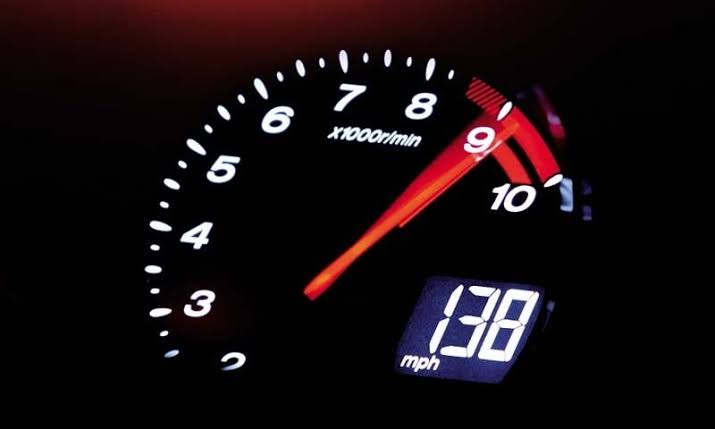
Modern engines are designed to handle high speeds, but the physics inside them change dramatically. A Formula 1 engine can see piston speeds exceeding 40 meters per second, according to Mercedes-AMG High Performance Powertrains. Your street car isn't a race car, but the principles are the same. When you push the throttle hard, you're asking for a controlled explosion to happen thousands of times a minute. Everything inside that metal block is moving faster, getting hotter, and working under immense stress. I hear drivers say, "It's built for it, so it's fine." That's true, but only if every si
The Ballet of Moving Parts Under Extreme Stress
At idle, your engine is a symphony of controlled, slow-moving parts. At 6,000 RPM, it's a heavy metal concert. Each piston completes a full cycle up and down its cylinder 100 times every single second. The connecting rods are reversing direction at the top and bottom of each stroke with forces that can exceed several tons. The valves are slamming open and shut with millisecond precision. The crankshaft is spinning at a dizzying speed, held in place by main bearings that are lubricated by a thin film of oil under extreme pressure.
This is where maintenance shows its value. A slight imbalance, a tiny bit of extra friction from old oil, or a weak component becomes a massive problem at these speeds. The margin for error shrinks to almost nothing. "I just changed the oil 5,000 miles ago" is a common phrase. At high RPM, those 5,000 miles matter. The oil is shearing, breaking down from heat and mechanical stress. Its ability to maintain that critical protective film between parts is diminished. Using the correct oil viscosity, as specified in your owner's manual, is not a suggestion. It's an engineering requirement for this exact scenario.
Heat: The Invisible Enemy You Can't Ignore
Combustion temperatures can soar past 2,500 degrees Fahrenheit. At high speed, you're creating that fire more often. The cylinder walls, piston crowns, and exhaust valves absorb a staggering amount of thermal energy. The cooling system, now your engine's best friend, has to work overtime to reject this heat. The thermostat is wide open, the water pump is spinning fast, and the radiator is dumping heat into the air as quickly as possible.
This is a fragile balance. A slightly clogged radiator, a weak water pump impeller, or coolant that's past its service life can't keep up. The engine temperature starts to climb. Unlike a slow overheat in traffic, a high-speed overheat is catastrophic and rapid. Aluminium cylinder heads can begin to warp in minutes, leading to a blown head gasket. You might not see the gauge climb in time. The first sign is often a sudden loss of power, or worse, a loud knock from detonation as the fuel ignites from heat and pressure alone, not the spark plug.
Breathing and Fuel: The Need for Precision
An engine is an air pump. The faster it runs, the more air it needs to breathe in and exhaust it needs to push out. At high RPM, the intake and exhaust systems become critical bottlenecks. The camshaft profile dictates how long the valves stay open. The intake manifold design affects how air flows into the cylinders. The exhaust system must scavenge spent gases efficiently. Any restriction here strangles power and builds up destructive heat in the combustion chamber.
Similarly, the fuel system must deliver a precise spray of gasoline at the exact right moment. Fuel injectors pulse wider open to flow more volume. The fuel pump must maintain high pressure in the rail. If there's a slight clog in an injector or the pump is wearing out, the engine will run lean at high speed. That means too much air, not enough fuel. Lean mixtures burn hotter and can quickly melt a piston or an exhaust valve. The computer tries to compensate, but it has limits. This is why high-performance driving exposes weak fuel pumps and dirty injectors that never show up during a gentle commute.
The Critical Role of Lubrication and Pressure
Oil is not merely a lubricant at high RPM. It's a hydraulic fluid, a coolant, and a cleaning agent. The oil pump must maintain pressure to force oil into every narrow gallery and bearing clearance. A healthy oil pressure reading is a sign of a strong pump and good clearances. As RPM increases, oil pressure should rise steadily. If it fluctuates or drops, it's a major red flag. It could mean a worn pump, bearings with too much clearance, or oil that's too thin and broken down.
The oil itself is subjected to incredible shear forces as it's squeezed between rotating parts. This shear can cause multi-grade oil to temporarily thin out. That's why the correct high-temperature viscosity rating on your oil bottle is so important. It ensures the oil can still do its job when the engine is hottest and spinning fastest. Using a generic oil to save a few dollars is a gamble with high stakes during high-speed operation.
What This Means for You as a Driver
High-speed driving isn't inherently bad for a well-maintained engine. Engineers test these limits. But it acts as the ultimate diagnostic test. Issues you can ignore at 2,000 RPM become urgent at 6,000 RPM.
Before any spirited driving, your checklist is short but non-negotiable. Check your oil level and condition. It should be at the full mark and not black or thin. Confirm your coolant level is correct in the overflow tank. Inspect for any visible leaks, especially from hoses and the water pump. Listen for unusual noises at idle. A slight tick or rattle will become a roar under load.
Most importantly, pay attention to how the engine responds. It should pull smoothly and strongly to the redline. Any hesitation, loss of power, unusual vibration, or knocking sound means you need to back off immediately. Persisting with a knocking engine, even for a few seconds, can destroy it. The phrase "it started making a noise but then it went away" is often the prelude to a very expensive repair bill.
Respect the redline. It's there because beyond that point, the valve springs may not close the valves fast enough, leading to valve float and possible collision with the pistons. That's a game-over scenario. Modern engines have rev limiters, but they are a last resort, not a target.
An engine at high speed is a masterpiece of engineering operating at its design limits. Your job is to ensure it has every resource it needs to survive there. Cool, clean oil. A full, efficient cooling system. Clean air and fuel. Get those right, and the symphony inside will play on. Neglect them, and the music stops very abruptly.
Comments (0)
Please login to join the discussion
Be the first to comment on this article!
Share your thoughts and start the discussion