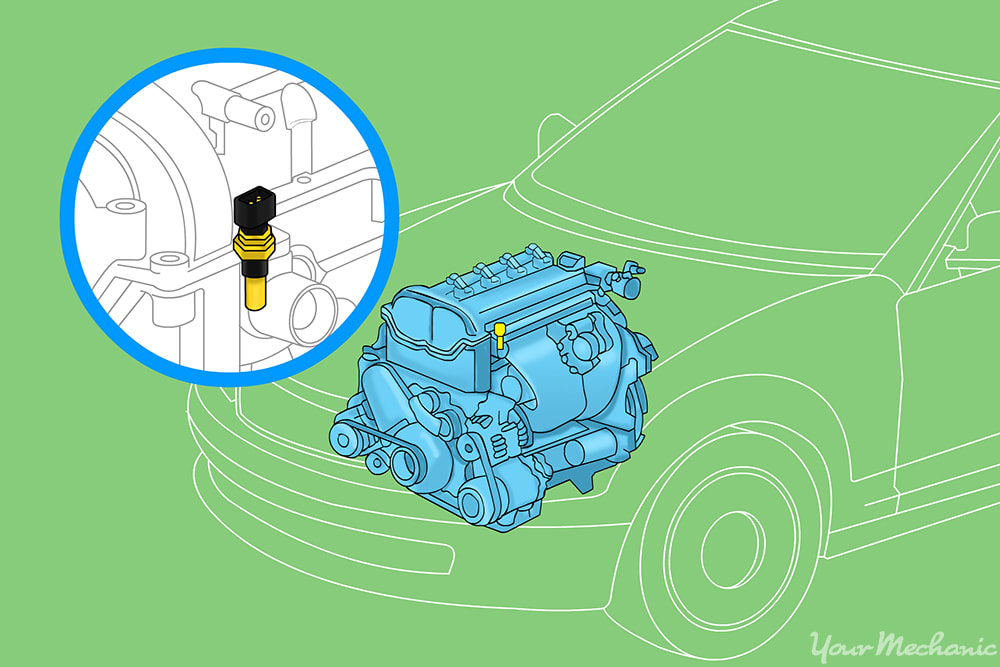
Your engine's temperature sensor is one of the smallest, cheapest parts under the hood. It's also one of the most critical. According to data from the AAA Automotive Research Center, cooling system issues are a leading cause of mechanical failure. I can tell you from the workshop, a failed temperature sensor is a direct path to that failure. It doesn't just give a wrong reading. It sends your car's computer into a state of confusion that can damage the engine from the inside out.
I hear the same phrase all the time. "My temperature gauge is acting weird." That's your first clue. This little sensor, often called the Engine Coolant Temperature (ECT) sensor, is the primary source for that gauge. Its job is simple: tell the engine control unit (ECU) exactly how hot the coolant is. The ECU uses that single data point to make massive decisions. When that data is wrong, every decision is wrong.
How a Bad Sensor Lies to Your Engine
Think of the ECU as a pilot flying blind. The temperature sensor is its only altimeter. If it reads too high or too low, the pilot will make drastic, incorrect adjustments.
A failed sensor typically does one of three things: it reads permanently cold, permanently hot, or gives a sporadic, fluctuating signal. Each scenario triggers a specific, damaging chain reaction.
The Engine Stuck in "Cold Start" Mode
This is a common failure pattern. The sensor fails in a way that tells the ECU the engine is always cold, even when it's fully warmed up. The ECU responds by commanding a rich fuel mixture, thinking it needs to help a cold engine run. You'll notice the symptoms immediately.
Your fuel economy will plummet. I've seen cars drop to 60% of their normal MPG. The engine may run rough, idle poorly, and produce black smoke from the tailpipe from all the unburned fuel. This constant rich condition isn't just wasteful. It dumps raw fuel into the exhaust, which can overheat and destroy the catalytic converter. That's a repair that costs thousands. People say, "It's running like a pig and drinking gas." They're right. The computer is drowning the engine in fuel based on a lie.
The Engine Thinks It's Overheating
The opposite failure is just as bad. If the sensor fails and sends a signal indicating extreme heat, the ECU goes into a protective panic mode. To try and cool a non-existent overheating condition, it will often command the cooling fans to run at full speed all the time. More critically, it may drastically retard ignition timing and enrich the fuel mixture in a misguided attempt to lower combustion temperatures.
The result is a massive loss of power. Your car will feel sluggish, unresponsive, and may even stall. You might pull over, check the actual coolant, and find it's perfectly cool. "The fans are screaming but the engine's cold," is the confused report I get. The ECU is crippling performance based on faulty data, leaving you with a car that's safe but practically undriveable.
The Sporadic and Unpredictable Failure
This is the most dangerous mode. The sensor works intermittently, sending correct and incorrect signals in rapid succession. The gauge needle may dance around. The ECU is constantly switching between fuel maps, confusing the idle air control valve, and turning the cooling fans on and off erratically.
This chaos prevents any system from stabilizing. Drivability becomes a nightmare. The engine may surge, hesitate, and stall at random. According to troubleshooting guides from AutoZone, this erratic behavior is a classic sign of a failing ECT sensor or its wiring. The computer can't find a stable operating point, so the whole vehicle feels broken.
The Direct Consequences You Can't Ignore
Beyond the drivability issues, the wrong air/fuel mixture from a bad sensor has long-term consequences. A permanently rich mixture washes oil off cylinder walls, increasing engine wear. It also leads to excessive carbon deposit buildup on valves, pistons, and spark plugs. A lean mixture caused by a false hot reading can increase combustion temperatures enough to contribute to pre-ignition or detonation, which can damage pistons and rings.
Perhaps the worst outcome is that it masks a real problem. If your engine is actually overheating due to a coolant leak or a stuck thermostat, but the failed sensor is reporting a normal temperature, you will have zero warning. The first sign of trouble could be the steam pouring from under the hood and the sound of metal warping. By then, the damage is done.
Diagnosing and Fixing It the Right Way
Don't guess. The symptoms overlap with many other problems. The professional move is to test the sensor. This is a straightforward job with a multimeter. You check the sensor's resistance across its terminals at different temperatures and compare it to the manufacturer's specifications. A CarParts.com guide notes that a dead sensor will often show an open circuit (infinite resistance) or a short (no resistance).
Always inspect the wiring and connector first. Corrosion, frayed wires, or a loose connection can mimic a bad sensor. I've fixed many "bad sensors" by simply cleaning the connector pins. If the sensor tests bad, replacement is usually simple. It's often located near the thermostat housing. You must refill the cooling system properly afterward to avoid introducing air pockets.
The final step is clearing any stored fault codes. The ECU will likely have stored a P0115-P0118 series code for the ECT circuit. After replacement, a quick drive cycle will confirm the fix. The gauge will read steadily, the fans will operate normally, and that sluggish, fuel-drinking behavior will vanish.
This small sensor holds disproportionate power. It informs the brain of your engine. When it lies, the brain makes bad choices that cost you money, performance, and potentially the engine itself. Trust the symptoms. Test the component. It's a thirty-dollar part that protects a thirty-thousand-dollar investment.
Comments (0)
Please login to join the discussion
Be the first to comment on this article!
Share your thoughts and start the discussion