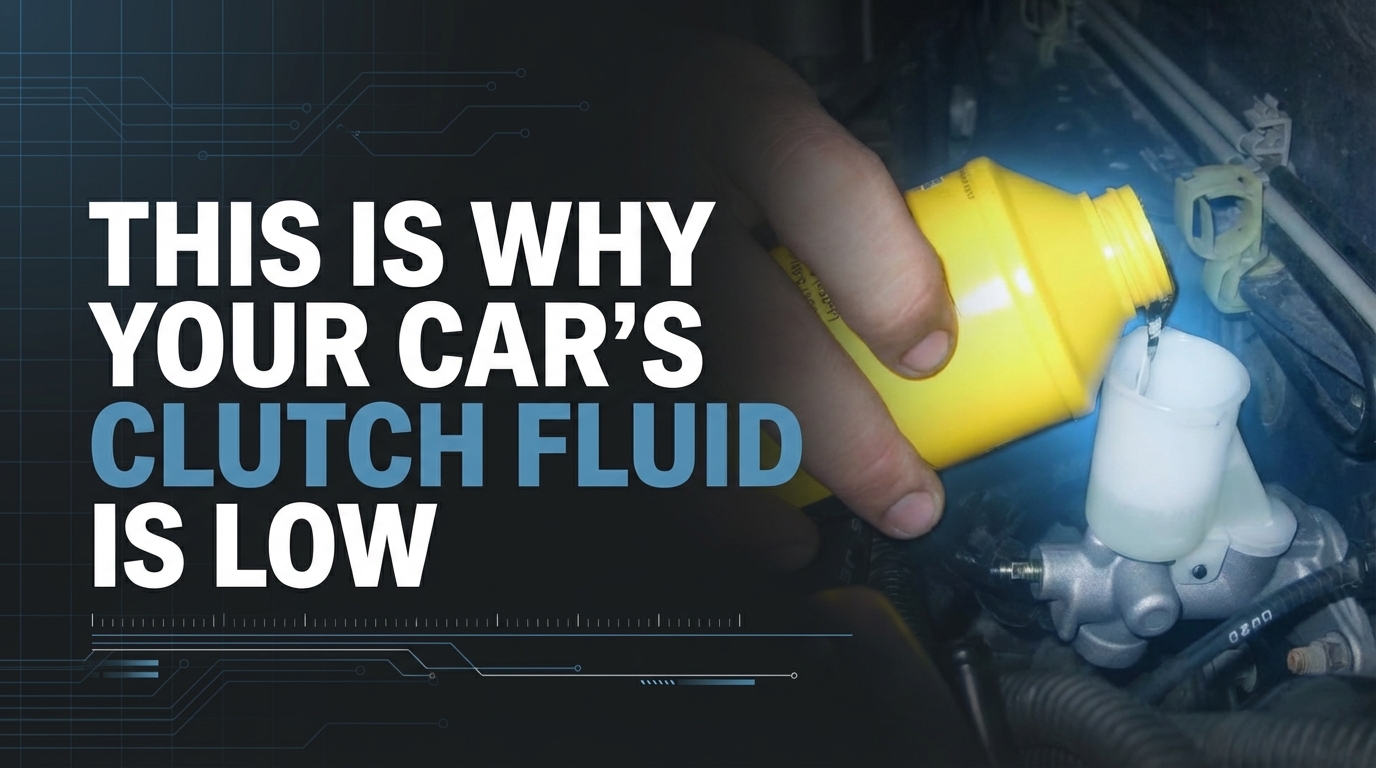
I see it all the time in the shop. A customer comes in with a clutch pedal that feels soft or goes to the floor. They check the reservoir and it's low. They top it up, maybe once, maybe twice. Then they say the line I hear every week: "I keep adding fluid, but it keeps disappearing." That's not normal maintenance. That's a symptom. A hydraulic clutch system is a sealed circuit. If the fluid level is dropping, it's leaking out. Period. The real question is where, and what it's going to cost you if you ignore it.
The Two Places Your Clutch Fluid Is Going
Your clutch hydraulic system has two main components: the master cylinder, mounted on the firewall and connected to your pedal, and the slave cylinder, mounted on or inside the transmission and connected to the clutch fork. They are linked by a metal or reinforced plastic line. Fluid loss means a failure in one of these three parts. Let's break them down.
The Master Cylinder Leak
This is a common failure point. The master cylinder contains a piston with seals. Over time, those seals wear out. When they fail, brake fluid (which is what clutch fluid typically is) leaks out of the back of the cylinder, down the pushrod, and into the vehicle's interior. It often drips onto the carpet behind the pedals, which can go unnoticed for a long time.
What you'll see and feel: A low reservoir is your first clue. You might feel the pedal getting progressively softer. The telltale sign is fluid on the carpet under the dash on the driver's side. It's not always a huge puddle. It can be a slow seep that just makes the carpet damp and sticky. I've had customers say, "I thought I spilled my drink." They didn't. That fluid is corrosive and will damage paint and carpet. If you see it, you need a new master cylinder.
The Slave Cylinder Leak
This one is trickier because you often can't see it. The slave cylinder is buried at the transmission bellhousing. There are two types: external and internal. An external slave cylinder is bolted to the outside of the transmission. When it leaks, you might see fluid dripping from the bottom of the bellhousing. An internal slave cylinder, however, lives inside the bellhousing. When it leaks, the fluid drips directly into the clutch housing itself.
What you'll see and feel: Again, a low reservoir. You'll likely see no external leak with an internal slave. The fluid contaminates the clutch disc, causing it to slip or chatter when you engage it. You'll hear a customer say, "My clutch is slipping, and it smells burnt." That smell is often the clutch disc coated in hydraulic fluid, burning away. This leak means replacing both the slave cylinder and the clutch kit. It's a bigger job.
The Hydraulic Line Leak
Less common, but it happens. The metal or flexible line connecting the master to the slave can corrode, crack, or have its fittings come loose. This will cause a visible leak along the line's path, usually somewhere under the car.
What you'll see and feel: A rapid fluid loss and a very obvious puddle under the car, roughly in the center. The pedal will go to the floor quickly. This is a clear failure you cannot miss.
What Happens If You Only Top It Up
This is the critical mistake. Adding fluid is a temporary fix that addresses nothing. You are treating a symptom, not the disease. Every time you depress the clutch pedal with air in the system (which enters as the fluid level drops), you are introducing more air. Air compresses; fluid does not. This leads to a spongy pedal, poor clutch disengagement, and eventually, a complete loss of function.
Worse, if the leak is from an internal slave cylinder, you are slowly poisoning your clutch disc. The repair bill escalates from a simple cylinder replacement to a full clutch job. The cost difference is significant. According to repair cost data from CarParts.com, replacing a master or slave cylinder can range from $200 to $600 in parts and labour. A full clutch replacement, which becomes necessary if contamination occurs, typically starts around $1,200 and can go much higher.
Continuing to drive risks being stranded when the pedal finally stays on the floor and you cannot shift gears. I've towed cars for that exact reason.
The Professional Diagnostic Approach
Don't guess. Diagnose. Here's the fast, logical order I follow.
First, check the master cylinder. Look for wetness at the back where the pushrod enters, and check the driver's side footwell carpet. Clean the area and place a white paper towel under the pedal overnight. Any fluid spots confirm the leak.
Second, if the master is dry, look under the car. With the engine off and the area clean, have someone press the clutch pedal repeatedly while you watch the slave cylinder area and the hydraulic line. Use a flashlight. Look for fresh drips. If you see fluid coming from the bellhousing weep hole or around an external slave, you've found it.
Third, if there are no external leaks but the fluid level keeps falling and the clutch is acting up, suspect an internal slave cylinder leak. This usually requires a professional assessment.
The fix is always the same: replace the leaking component, thoroughly bleed the hydraulic system to remove all air, and refill with fresh, clean fluid specified by your manufacturer. Never use old or contaminated fluid. If the clutch is contaminated, it must be replaced. There is no cleaning it.
Your clutch hydraulic system is simple and robust, but it is not serviceable. It works or it fails. Low fluid is its way of telling you it has failed. Listen to it. "I'll just top it off" is the phrase that turns a $300 repair into a $1,500 one. Act on the first symptom, not the last.
Comments (0)
Please login to join the discussion
Be the first to comment on this article!
Share your thoughts and start the discussion