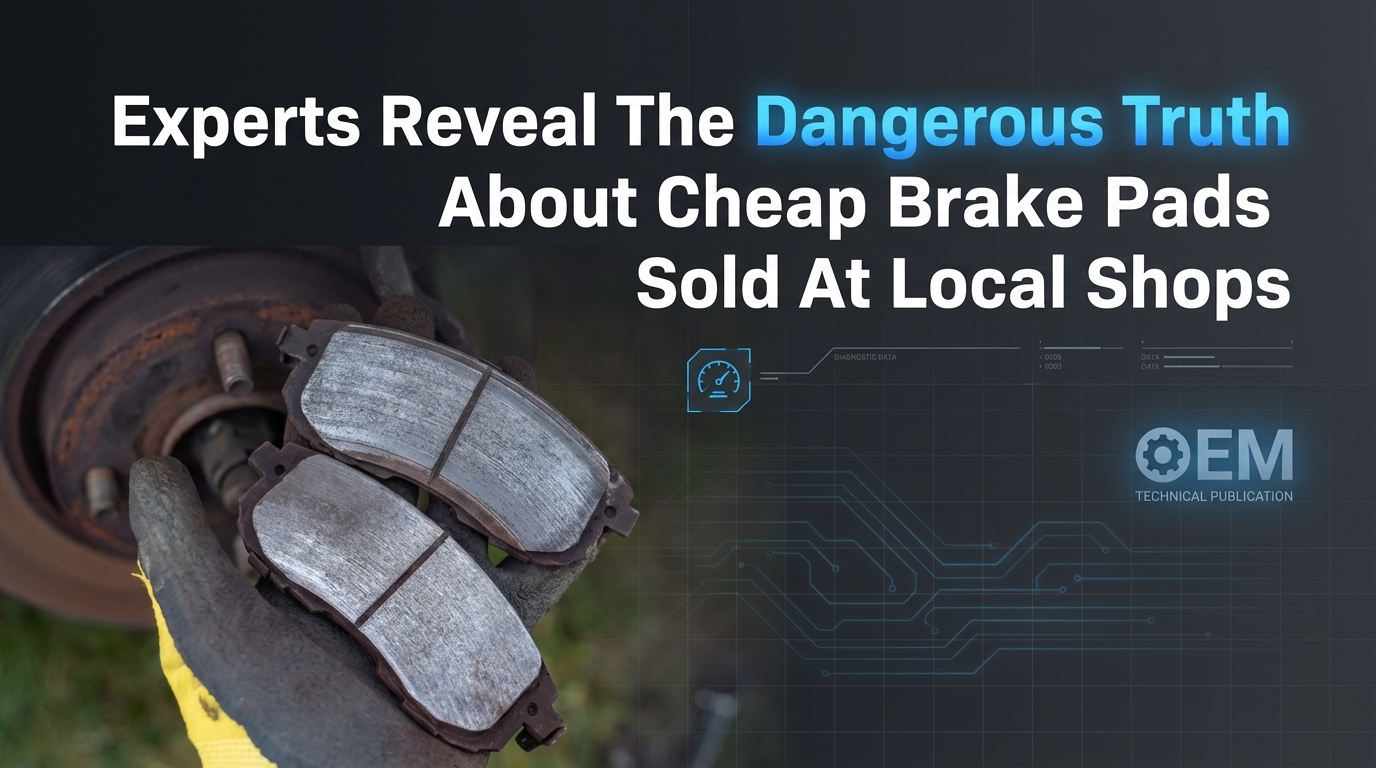
I see them every week in my shop. A car comes in with a new set of brake pads from a local discount shop, and the owner is complaining about noise, vibration, or a pedal that feels like mush. They always say the same thing: "I saved a hundred bucks." That statement makes me cringe. The truth is, cheap brake pads are a gamble where the stakes are your safety and your wallet. A 2023 study by the National Highway Traffic Safety Administration found that brake-related problems were a factor in 22% of all vehicle crashes caused by mechanical failure. That's not a small number. It's a direct line be
What You Are Actually Buying
Cheap pads are not simply a budget version of a quality part. They are a different product with different priorities. Cost is the primary driver, not performance or longevity. To hit that low price point, manufacturers cut corners in three critical areas: friction material composition, structural integrity, and quality control.
I've cut open cheap pads. The friction material is often filled with excessive amounts of abrasive fillers and metal particles. These are hard on your rotors, causing them to wear out two to three times faster than with a quality ceramic or semi-metallic pad. You save $50 on pads now, but you're guaranteeing a $300 rotor replacement job in 10,000 miles. The math never works in your favor.
The Hidden Cost of Noise and Vibration
This is the most common complaint. "My brakes squeal like a banshee ever since I got them changed." Noise is not a minor annoyance. It's a symptom of poor engineering. Quality pads use shims, chamfers, and specific friction formulations to dampen vibration. Cheap pads skip these features. The result is high-frequency vibration that you hear as a squeal and feel as a shudder in the steering wheel or pedal.
That vibration transfers directly into your brake calipers and suspension components. Over time, it accelerates wear on slide pins and can even lead to premature wheel bearing failure. The shop might say, "All brakes make some noise." That's a deflection. A properly installed, quality brake job should be virtually silent in normal driving.
The Dangerous Performance Gap
Brake pads are rated by the Friction Materials Standards Institute (FMSI) for their coefficient of friction (the "grip" factor). This rating appears as a two-letter code like "EF" or "GG" on the box. Cheap pads often have inconsistent or unverified ratings.
Here is the real-world danger. In repeated hard stops, or during an emergency braking situation, cheap friction material can overheat and fade. The pedal goes to the floor. The stopping power vanishes. A driver told me, "I pressed the pedal and it kept going." That is fade. Quality pads are engineered with heat-resistant compounds to maintain a stable friction level from cold to extremely hot. In a panic stop, that consistency is what stops your car predictably.
Wet weather performance is another critical divider. Quality pads are designed to resist water and recover bite quickly. Cheap pads can glaze over, leaving a slippery film on the rotor that drastically increases stopping distance on a rainy day.
How to Spot a Quality Brake Job
You do not need to be an expert to make a smart choice. Ask specific questions and look for specific things.
First, ask for the brand and the specific friction code. Reputable brands like Akebono, Bosch, Wagner, or OEM suppliers publish their specifications. If the shop cannot or will not tell you the brand, walk away.
Second, look at the hardware. A quality brake pad kit includes new anti-rattle clips, shims, and lubricant. If the installer reuses your old, corroded hardware to save time, the pads will not seat correctly. Noise and uneven wear are guaranteed.
Finally, listen to the warranty. A lifetime warranty on a $25 brake pad is a marketing trick, not a guarantee of quality. It means the manufacturer expects to replace them often. A reputable shop will stand behind their work with a solid parts and labor warranty because they trust the components they install.
The Professional's Bottom Line
Brakes are not an area for compromise. The few dollars you save upfront are erased by rotor damage, comebacks for noise, and the intangible risk of compromised performance when you need it most. I tell my customers to think of brakes as an insurance policy. You are investing in predictable, reliable stopping power for you and your family.
Because "they stop the car" is not good enough. How they stop the car, every single time, in all conditions, is what matters. That reliability never comes in a discount box.
Comments (0)
Please login to join the discussion
Be the first to comment on this article!
Share your thoughts and start the discussion