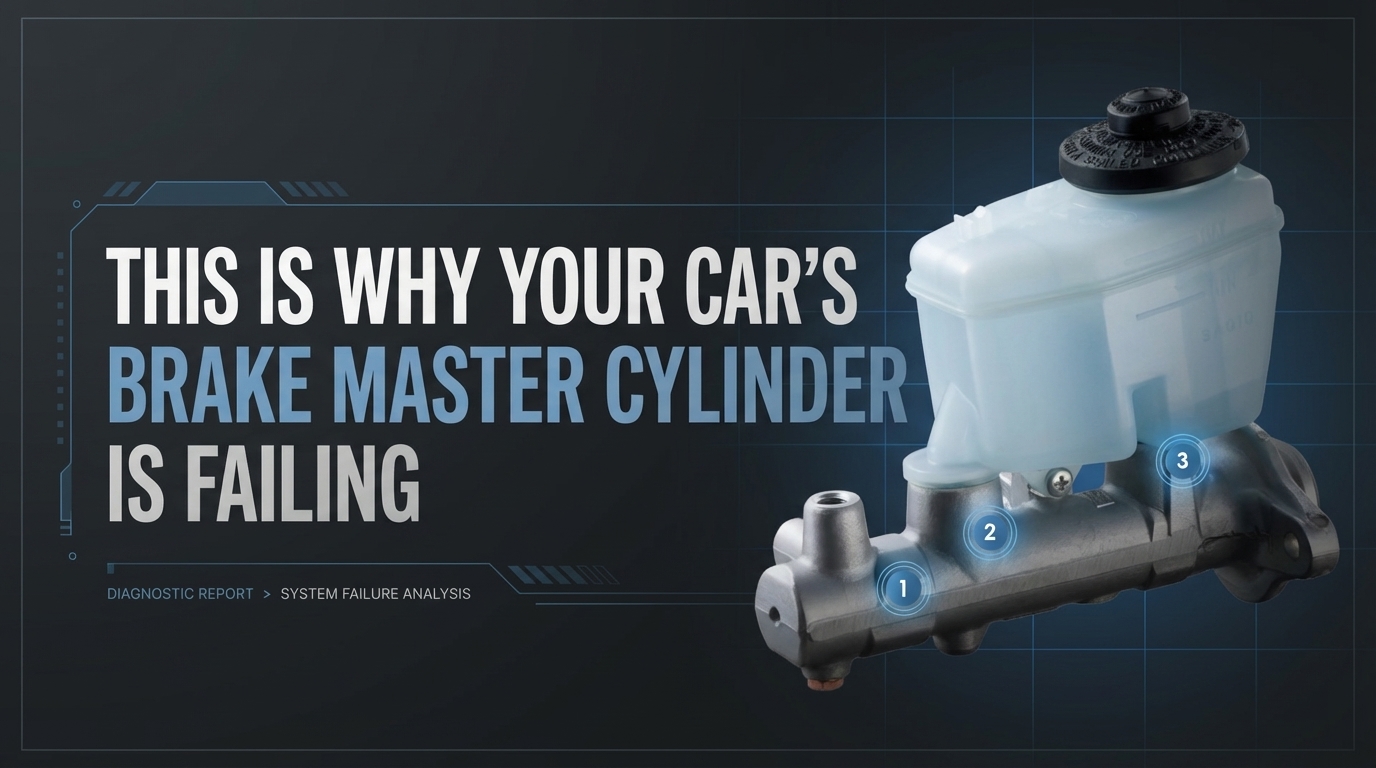
Your car's brake master cylinder is the single most critical hydraulic component in your entire braking system. It's the heart of the operation. Yet, it's often the part drivers know the least about until it fails. I've seen the aftermath too many times: a driver with that familiar, shaken look saying, "The pedal just went to the floor." That moment of sudden, terrifying loss is almost always preceded by a slow, silent decline that went unnoticed. Understanding why this component fails isn't just technical knowledge. It's a matter of safety.
The Master Cylinder's Job and Its Silent Demise
Think of the master cylinder as a simple, powerful syringe. When you press the brake pedal, you push a piston inside this cylinder. That piston forces brake fluid under immense pressure through lines to each wheel's caliper or drum. This hydraulic pressure is what clamps your brakes and stops the car. It's a beautifully simple system, but its failure is rarely simple or sudden.
The cylinder contains seals, typically made from rubber compounds like EPDM or nitrile. These seals are in constant contact with brake fluid, which is hygroscopic. That means it absorbs moisture from the air over time. This is the root of nearly every failure I diagnose. The moisture in the fluid lowers its boiling point, promotes internal corrosion, and most critically, attacks and degrades those internal seals. It's a slow chemical attack you cannot see.
People often tell me, "The brakes felt a little soft for a while, but they still worked." That's the warning. A soft, spongy, or slowly sinking pedal is the master cylinder crying out. It's telling you the seals are no longer holding pressure perfectly. Fluid is slowly leaking past them internally. You're losing hydraulic efficiency with every press.
How Contaminated Brake Fluid Destroys From Within
This is the primary killer. The National Highway Traffic Safety Administration (NHTSA) includes brake fluid in its recommended regular checks for a vital reason. Most manufacturers specify a 2 to 5 year fluid change interval, but I've seen reservoirs that haven't been touched in a decade. The fluid turns from clear amber to dark, murky coffee. This isn't just dirty. It's acidic and corrosive.
The moisture contamination causes two specific, destructive events inside the master cylinder bore. First, it causes corrosion and pitting on the smooth interior wall of the aluminium or cast iron cylinder. Even microscopic pits can tear at the rubber seals as the piston moves. Second, the degraded fluid chemically breaks down the seals themselves. They harden, crack, and lose elasticity. Once a seal hardens, it cannot flex to maintain a tight seal against the cylinder wall. Pressure bleeds off. The pedal sinks.
I hear the phrase, "I've never had to change brake fluid before." That's true, until the day you do. And by then, the damage is often done.
External Leaks and Physical Wear
While internal seal failure is the stealthy culprit, external leaks are the obvious one. These usually occur at the rear of the cylinder where the piston shaft meets the brake booster, or at the fluid reservoir connections. A slow drip here will saturate the booster and paint the firewall under the hood with fluid. Any leak is a critical failure point. It introduces air into the system and leads to a total loss of pressure.
Physical wear is another factor. The master cylinder piston cycles thousands of times over the life of the car. The bore can develop a slight wear pattern. Modern braking systems with ABS modules can cause fluid to surge back toward the master cylinder at a high frequency during activation. This can accelerate wear on the primary seal over many years. It's a fatigue failure.
What You Can Do to Prevent Catastrophic Failure
You are not powerless here. Prevention is straightforward, inexpensive, and the single best thing you can do for your braking system's health.
Test Your Brake Fluid and Change It Religiously
Do not guess. Use a brake fluid test strip or a digital tester to check the moisture content. These are inexpensive tools. Any reading above 3% moisture means the fluid is contaminated and should be replaced. Even without a tester, look at the fluid in the reservoir. If it's dark, it's past due. Follow your vehicle manufacturer's severe service schedule for fluid changes, which is often the 2-year mark. This isn't an upsell. It's a cylinder saver. AutoZone's repair guides clearly outline the dangers of contaminated fluid and the flush procedure.
Listen to Your Brake Pedal
Your foot is a precision diagnostic tool. Pay attention to the pedal's feel every single day. A pedal that slowly sinks to the floor when you hold steady pressure at a stoplight is a classic sign of internal seal failure. A pedal that feels mushy or travels farther than it used to before the brakes bite is a major red flag. Do not dismiss this with the thought, "It still stops." That confidence fades fast when the seal finally lets go completely.
Inspect for External Leaks
During routine oil changes or when checking under the hood, take 10 seconds to look at the back of the brake master cylinder, where it mounts to the brake booster. Look for any wetness, drips, or accumulated grime. Check the area under the fluid reservoir. A clean, dry cylinder is a healthy cylinder.
The master cylinder is a component that asks for very little but gives everything. Ignoring it leads to the most frightening failure a driver can experience. You don't need to know how to rebuild one. You need to know how to care for it. Test your fluid. Change it on time. And most importantly, trust the feedback your brake pedal gives you. That subtle change in feel isn't your imagination. It's the first, and last, warning you'll get.
Comments (0)
Please login to join the discussion
Be the first to comment on this article!
Share your thoughts and start the discussion