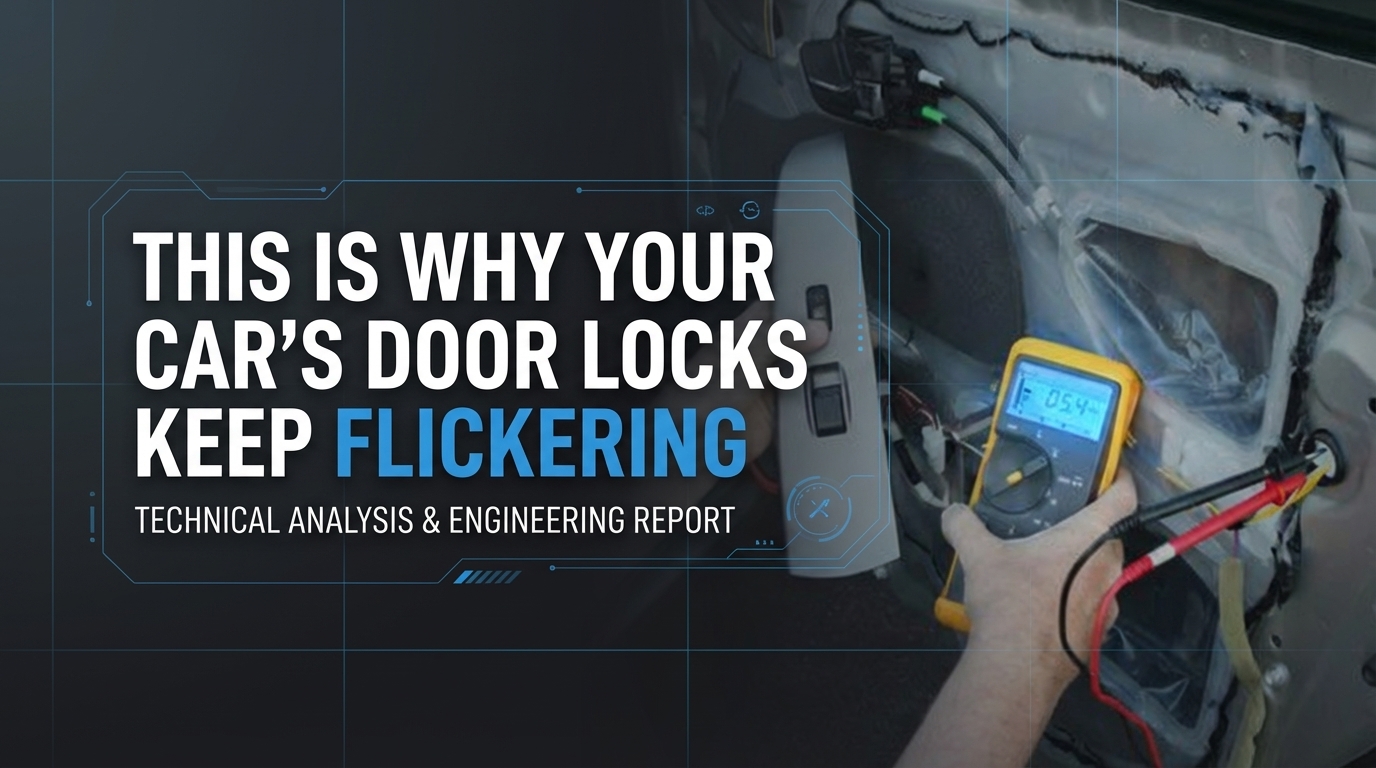
You see it from the corner of your eye. A faint, rhythmic flicker of the red door lock indicator on your dashboard. It's subtle, maybe only when you hit a bump or turn a corner. Your first thought is probably, "It's a loose connection. It'll sort itself out." I've heard that exact phrase in my shop more times than I can count. The problem is, that flicker is your car's electrical system trying to tell you something specific, and ignoring it rarely ends well.
Flickering door lock lights are almost never about the lock switch itself. They are a classic symptom of an electrical gremlin, a sign that the power supply to your vehicle's body control module or door lock actuators is unstable. This isn't a minor cosmetic issue. It's a warning that the system responsible for securing your vehicle is operating on shaky ground. Understanding the two most common causes can save you from a frustrating no-start situation or, worse, a car that won't lock when you walk away.
The Ground Connection You Never Think About
This is the number one culprit I find when diagnosing flickering interior lights, erratic power windows, and yes, flickering door lock indicators. Every electrical component in your door needs a clean path back to the vehicle's chassis to complete its circuit. This is called a ground.
Over years of slamming, exposure to moisture, and temperature swings, the ground point for your door's wiring harness can become corroded or loose. It's often a simple bolt behind the door panel or under the kick plate. When this connection is poor, the electrical current tries to find another path, causing voltage to fluctuate wildly. The door lock actuator, which requires a precise voltage pulse to move, gets confused. The control module sees this instability and the indicator light flickers in response.
I can't tell you how many times a customer has said, "The locks work if I press the button a few times." That intermittent operation is the textbook sign of a bad ground. The fix is usually straightforward: locating that ground point, cleaning the metal surfaces of all corrosion, and re-tightening the connection securely. It's a 30-minute job that can solve what seems like a complex electrical mystery.
A Failing Door Lock Actuator Drawing Too Much Power
Sometimes, the flicker points directly to the component at the end of the line. Inside each of your doors is a small electric motor called the door lock actuator. When you press the button, it receives a signal and moves a mechanical linkage to lock or unlock the latch.
These actuators have a finite lifespan. As they age, the small plastic gears inside can wear down or the motor itself can begin to fail. When it struggles to move, it draws an excessive amount of electrical current, known as a high amp draw. This sudden surge can cause a brief voltage drop across the whole door circuit. Your vehicle's body control module detects this abnormal power fluctuation and the dashboard indicator light flickers as a result.
You'll often notice other symptoms alongside the flicker. The lock for that particular door may be slower than the others, make a grinding noise, or stop working entirely while the others still function. This is a clear pattern. As one AutoZone guide on power accessory diagnosis notes, a single slow or non-operational lock actuator is a common failure point that can affect the system's feedback. Replacing the faulty actuator is the definitive repair here.
Don't Overlook the Body Control Module Itself
While less common than ground or actuator issues, the computer that commands everything is worth considering if the simple fixes don't pan out. The Body Control Module (BCM) is the brain that interprets your switch press and sends the lock/unlock signal. It also monitors the system for faults.
If the BCM develops an internal fault or its power supply is interrupted, it can send erratic signals or misinterpret feedback from the doors. This can manifest as all door lock indicators flickering in unison, often accompanied by other strange behaviors like interior lights acting up or keyless entry failing. Diagnosing a BCM issue requires professional scan tools to check for communication codes and power supply integrity. It's not a guess-and-replace part. A proper diagnosis at a qualified shop, referencing technical service bulletins from manufacturers like Toyota or Ford for known issues, is the smart path forward.
What You Should Do Next
Start with the simple observation. Does the flicker happen with one specific door, or all of them? If it's one door, the problem is almost certainly isolated to that door's ground or actuator. If all indicators flicker together, your attention should shift toward a common power or ground source for the BCM, or the module itself.
For a single-door issue, the first and easiest check is the ground connection. This might require removing the door panel, so if you're not comfortable, this is where a trusted technician earns their keep. For a widespread flicker, checking the battery terminals and main chassis grounds under the hood is a good first step before any computer diagnosis.
That little flicker is a conversation. Your car is saying the electrical path to your locks is compromised. Listen to it. Addressing a corroded ground or a tired actuator now is a minor fix. Waiting until you hear "my door won't lock at all" turns it into a security problem and a more expensive repair.
Comments (0)
Please login to join the discussion
Be the first to comment on this article!
Share your thoughts and start the discussion