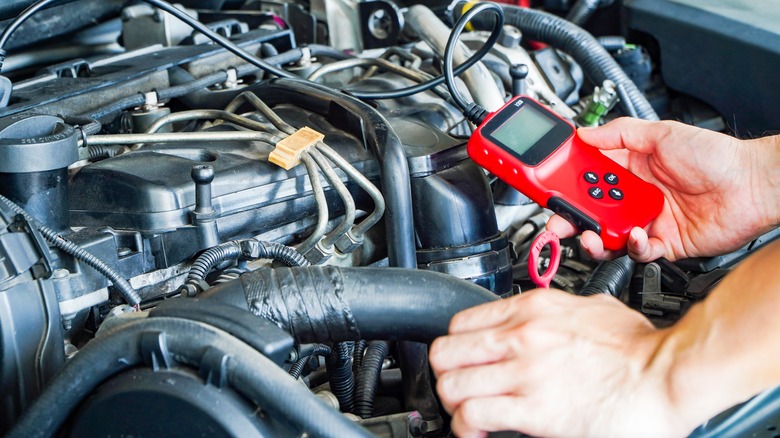
Modern cars have over 100 million lines of code. That is more than a fighter jet. With that much software, the idea that a car might "remember" a past problem is not science fiction. It is a daily reality in my workshop.
I hear the same phrase from frustrated customers all the time. "I fixed it, but the car still thinks it's broken." They replaced the sensor, cleared the code, and yet the warning light returns or the engine runs rough. The assumption is that the fix was incomplete. Sometimes, that is true. But often, the vehicle's computer is not holding a grudge. It is following a strict, logical protocol that most drivers never see. The memory is not a ghost. It is a process.
What "Memory" Actually Means in Your Car's Computer
Your car's Engine Control Unit (ECU) does not have feelings. It has data tables and diagnostic routines. When we talk about memory, we are usually discussing two specific, non-volatile forms of data storage: Diagnostic Trouble Codes (DTCs) and Adaptive Learning Tables.
Clearing a trouble code with a scan tool is like erasing an error message from a computer's log. It removes the alert, but it does not reset the underlying conditions that triggered it. More importantly, it does not reset the engine's learned adaptations.
Adaptive Memory The Real Performance Profile
This is the core of the issue. Your ECU is constantly learning and adjusting to keep the engine running efficiently. It monitors driving habits, fuel quality, sensor tolerances, and even wear on components like the throttle body. It then stores these adjustments in its adaptive memory.
For example, as a Mass Air Flow (MAF) sensor gets dirty over 20,000 miles, it sends slightly inaccurate readings. The ECU notices the engine running a bit lean or rich and compensates by adjusting fuel trim. It "learns" this new, incorrect baseline to keep the car running smoothly. This is why a driver might say, "It's been a little sluggish for months, but no light."
Now, you install a brand new, perfectly clean MAF sensor. The ECU is still using its old, compensated fuel trim tables based on the faulty sensor. The result? The engine runs poorly with the new part because the computer's memory is wrong. It needs to relearn. This is not a fault. It is the system working as designed, but with outdated information. AutoZone's guide on ECU operation explains this adaptive strategy in detail.
Pending Codes and Drive Cycles The Hidden Ledger
Beyond the "Check Engine" light, the ECU stores "pending" or "maturing" codes. These are faults it has detected once or twice, but not enough times consecutively to illuminate the warning lamp, as defined by the vehicle's specific monitor readiness criteria. Think of it as a probation period for a fault.
You might fix the actual problem, but that pending code can remain in memory until the car completes a full OBD-II drive cycle. This is a specific sequence of driving conditions (cold start, city driving, highway cruising) that allows all the ECU's self-tests to run. If you clear the codes and don't complete the cycle, you haven't proven the fix to the computer's satisfaction. The "memory" of the fault is in its uncompleted test log.
Actionable Steps To Ensure a True Reset
So, you have replaced the part. The code is cleared. How do you make sure the car truly forgets the old problem and learns the new normal? Follow this sequence.
1. Perform a Proper Battery Reset (The Nuclear Option)
Disconnecting the battery for 15-30 minutes is the most thorough way to clear volatile adaptive memory. This forces the ECU to start from factory default tables when power is restored. It is a hard reset.
Important: This will also erase radio presets, clock settings, and window auto-learn positions. On some modern cars, it may require a relearn procedure for the throttle body or idle control. Consult a service manual. The trade-off is a clean slate. After reconnecting, start the car and let it idle for 5-10 minutes so the ECU can begin relearning base idle and airflow.
2. Execute a Directed Relearn with a Scan Tool
For many systems, especially after replacing a throttle body, electronic parking brake, or window motor, a simple code clear is not enough. Many professional-grade scan tools have "relearn" or "adaptation" functions for specific components.
This tool tells the ECU, "A new part is installed, please run its calibration routine." The tool will guide you through steps like turning the steering wheel lock-to-lock or pressing the accelerator in a specific pattern. This is the definitive way to overwrite the old memory with a fresh calibration.
3. Complete a Full Drive Cycle
This is the final, critical step. You must prove the fix to the car's diagnostics. After clearing codes, drive the car. Do not expect it to be perfect immediately. It needs data.
A typical drive cycle involves: starting the engine cold and idling for 2-3 minutes, driving at steady city speeds (20-30 mph) with light acceleration for 5 minutes, then highway driving at a constant 55-65 mph for 10 minutes, followed by a few gentle stops. This sequence allows the oxygen sensor, catalyst, and EVAP system monitors to run their tests. Only when all monitors show "ready" is the cycle complete and the old fault truly erased from the diagnostic memory.
When the "Memory" is a Red Flag
Sometimes, the car remembering a fault is a vital clue. If you clear a code for a failing oxygen sensor, drive 50 miles, and the identical code returns, that is not memory. That is a current, active fault. The new sensor could be defective, or the problem could be a wiring issue or exhaust leak the code does not directly identify.
The pattern is key. A recurring code immediately after a fix points to an incorrect diagnosis. As one veteran technician told me, "The computer has a better memory than we do. It's telling you the same story twice. Listen."
Cars do remember. But it is a clinical, data-driven memory. Your job after a repair is not to argue with it, but to guide it through a proper reset and relearn process. Clear the codes, reset the adaptations, complete the drive cycle. That is how you turn a car's memory from a persistent ghost into a clean record of a job done right.
Because in the end, the computer's memory is just a logbook. Make sure the latest entry says "fixed."
Comments (0)
Please login to join the discussion
Be the first to comment on this article!
Share your thoughts and start the discussion