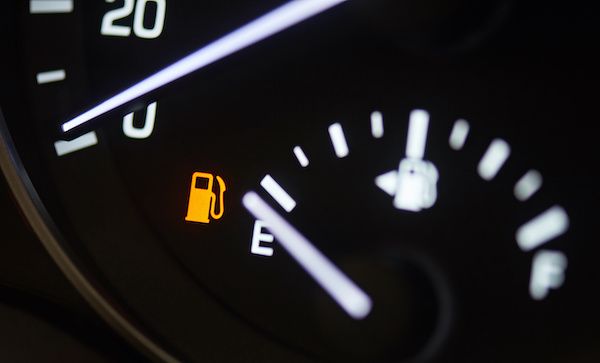
According to a 2025 report from the U.S. Department of Energy, the average driver wastes about 30 gallons of fuel per year due to preventable mechanical issues. That's a full tank of gas, gone, for no reason. The real kicker? Many of these problems are silent. Your car feels normal, but your wallet gets lighter with every trip.
I see it all the time in the shop. A customer comes in for an oil change, and we find a simple, inexpensive part under the hood that's been quietly sabotaging their fuel economy for months. They're always surprised. "But it drives fine," they say. That's the point. The most expensive problems aren't always the loudest ones. They're the ones you learn to live with.
One device, in particular, is a notorious culprit for this stealthy fuel theft. It's not complex or high-tech. In fact, it's one of the simplest components on your engine. When it fails, it doesn't always trigger a glaring warning light. Instead, it sends your engine management system into a constant state of guesswork, and guessing is inefficient. That device is your Mass Air Flow (MAF) sensor.
How a Dirty MAF Sensor Wastes Your Fuel
Think of your engine as a chef. To make the perfect meal (combustion), it needs an exact recipe of air and fuel. The MAF sensor is the scale that precisely measures the "air" ingredient. It sits in the intake hose, right after the air filter, and tells the engine computer exactly how much air is flowing in.
Here's where it goes wrong. Over time, this sensor gets coated with a thin film of dirt, oil vapor, and debris that slips past the air filter. It's still working, but it's reading incorrectly. A dirty MAF sensor typically under-reports the amount of air entering the engine. The computer, trusting this bad data, responds by injecting less fuel than is actually needed for a clean burn.
The result is a lean condition. Your engine runs poorly, feels sluggish on acceleration, and may even stall. To compensate, the computer enters a fail-safe mode, dumping in extra fuel to protect the engine from damage. This is called "running rich." You're now burning excess fuel to make up for a sensor that's lying. You'll hear drivers rationalize the sluggishness with phrases like, "It's just getting old," or "Must be the cheaper gas I used." Meanwhile, their fuel economy has dropped 10, 15, even 20 percent.
The Oxygen Sensor Feedback Loop Making It Worse
This is where a second, related device gets involved and compounds the problem. Your engine has oxygen sensors (O2 sensors) in the exhaust stream. Their job is to analyze the exhaust gases and tell the computer if the fuel mixture was too rich or too lean after combustion. It's a quality control check.
When the MAF sensor sends bad data, the O2 sensors detect the resulting imbalance. They send frantic correction signals to the computer, which then constantly adjusts the fuel trim. This creates a tug-of-war. The MAF says one thing, the O2 sensors say another, and the computer is stuck in the middle, making constant, inefficient adjustments. The system is never stable, and instability wastes fuel.
This conflict can sometimes trigger a check engine light for fuel trim or O2 sensor codes. But often, especially in the early stages, the computer's adjustments stay within a broad "acceptable" range. No light comes on. The inefficiency continues unchecked. This is a classic case of the vehicle's systems working against each other, and you pay for it at the pump.
Simple Diagnosis and the Fix You Can Do Yourself
You don't need a fancy scanner to suspect a dirty MAF sensor. The symptoms are clear: a noticeable drop in miles per gallon, hesitation when you press the accelerator from a stop, and a general lack of power, especially when the engine is under load like climbing a hill. The car feels lazy.
The good news is that cleaning a MAF sensor is one of the easiest and most cost-effective maintenance tasks you can perform. You need a can of CRC Mass Air Flow Sensor Cleaner, a screwdriver, and about 10 minutes. Never use carburetor cleaner, brake cleaner, or compressed air, as these can destroy the delicate sensor elements.
Here is the practical move. Locate the sensor on the intake hose, disconnect its electrical plug, and remove the two screws holding it in. Gently spray the cleaner directly onto the thin wire or plate inside the sensor's housing. Let it air dry completely for 15 minutes before reinstalling. That's it. This simple act can restore accurate airflow readings and often brings fuel economy and throttle response back to normal immediately. The AutoZone repair guides provide excellent visual steps for this process if you need them.
If cleaning doesn't solve the issue, replacement is the next step. A quality MAF sensor from a reputable brand is crucial. While the part isn't the cheapest, compare its cost to the hundreds of dollars in fuel it wastes annually. It's an investment that pays for itself quickly.
Your car's efficiency depends on accurate information. When a simple sensor like the MAF starts telling lies, every system downstream pays the price. You won't always get a warning light. The only alert you get is a sinking fuel gauge and a vehicle that doesn't feel quite right. Trust that feeling. A clean sensor is a smart sensor, and a smart sensor saves you money every single mile.
Comments (0)
Please login to join the discussion
Be the first to comment on this article!
Share your thoughts and start the discussion