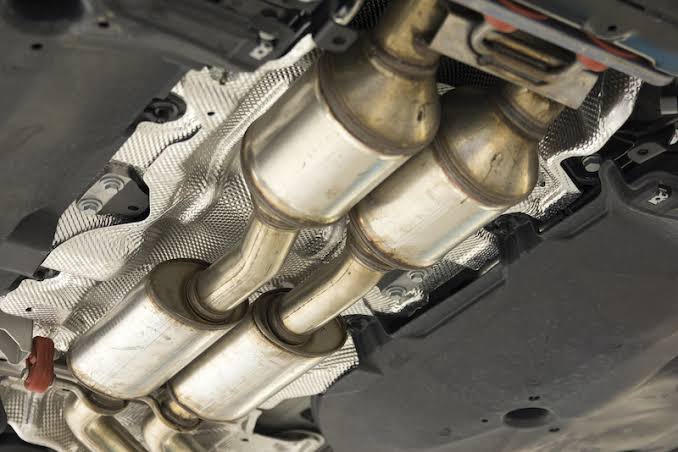
A loose heat shield is one of the most common noises on the road, and it's also one of the most ignored. Drivers often think, "It's only a rattle, it's not hurting anything." I hear that line in the shop all the time. The truth is, that thin piece of metal is there for a critical reason, and ignoring its distress call can lead to consequences far beyond an annoying sound.
Heat shields protect your vehicle's undercarriage from extreme exhaust temperatures. When they come loose, they don't simply rattle. They can shift, bend, and ultimately fail. On the highway, where wind forces and vibrations are highest, a failing heat shield can become a serious hazard. It can lead to a sudden, unexpected stall that leaves you stranded in a dangerous spot.
Let's break down why that rattle is a warning you cannot afford to dismiss and what you should do about it.
It's Not Just a Noise, It's a Failing Component
The first mistake is treating the rattle as a mere nuisance. A heat shield is a functional part of your vehicle's thermal management system. Its primary job is to protect fuel lines, brake lines, electrical wiring, and the vehicle floor from the intense heat of the exhaust, which can exceed 1,000 degrees Fahrenheit. Manufacturers don't add these parts for fun; they are essential for safety and reliability.
When a heat shield's mounting bolts corrode or break, the shield begins to vibrate. That's the rattle you hear. People say, "It's been like that for months." That's the problem. Each mile of driving fatigues the metal further. What starts as a slight tap can evolve into a violent shaking. This constant movement can work the shield loose enough to droop down or shift position. Once it's out of place, it's no longer doing its job effectively, and it's on borrowed time.
How a Loose Shield Can Cause a Stall
This is where the real risk lies. A heat shield doesn't cause a stall directly. It creates a chain of events that leads to one. There are two primary failure paths I see regularly.
Interference with Moving Parts
A large, loose section of heat shielding around the catalytic converter or resonator can droop low enough to contact the driveshaft or a half-shaft. At highway speeds, this contact isn't a gentle rub. It's a violent, sudden impact. The driver might hear a horrific grinding or banging noise, followed immediately by the engine stalling as the driveline binds or a critical sensor is damaged. In some cases, a shield can even wrap around a rotating shaft, acting like a brake and forcing the engine to quit. This is not a gradual failure; it's instantaneous and leaves no time for a safe, controlled stop.
Overheating Critical Components
The other, more insidious path involves the heat shield's absence. If it detaches completely and falls off, the components it was protecting are now exposed to direct exhaust heat. This can cause fuel in the lines to vaporize, creating vapor lock that starves the engine of fuel, especially under load. It can also melt plastic wiring harnesses or damage oxygen sensors. The result is the same: the engine loses power and stalls. You might get a warning like rough running or hesitation first, similar to issues discussed in this article on idle problems, before it quits altogether.
What You Should Do Immediately
If you hear a metallic rattle from underneath your car that changes with engine speed or road bumps, you need to act. Do not fall into the "I'll get to it later" trap. The repair is almost always simple and inexpensive if addressed early.
First, have the vehicle inspected on a lift. A technician can identify which shield is loose, usually around the exhaust manifold, catalytic converter, or along the exhaust pipe. Often, the fix is as simple as replacing a few corroded clamps or bolts. In other cases, a section may need to be secured with high-temperature hose clamps or, if too corroded, replaced entirely.
Ignoring it because "the car still drives fine" is a gamble with poor odds. The cost of a simple re-securing job is minimal. The cost of a tow from the highway, plus repairing damage caused by a failed shield, is exponentially higher. Furthermore, driving without a heat shield can be a fire risk if parked over dry grass or leaves.
Your car communicates problems long before they become critical. That rattling heat shield is speaking clearly. Listen to it, and take action before it has the final say on your next highway trip.
Comments (0)
Please login to join the discussion
Be the first to comment on this article!
Share your thoughts and start the discussion