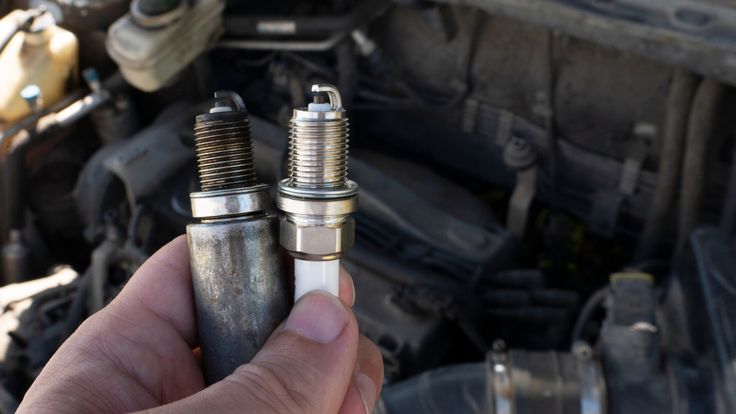
According to data from the U.S. Department of Energy, a single misfiring spark plug can reduce a car's fuel efficiency by up to 30 percent. That's a staggering amount of money literally burning away unnoticed. Yet, most drivers will never see a check engine light for it until the problem is severe.
We obsess over tyre pressure and oil changes, but there's one critical engine element that silently dictates your fuel economy more than any other. When it fails, it doesn't scream for attention. It just quietly siphons fuel from your tank and cash from your wallet. I've seen it happen in hundreds of vehicles where the owner's only complaint was, "My fuel bill is getting out of hand."
The culprit is the oxygen sensor, or O2 sensor. Your car likely has at least two. This small component, screwed into your exhaust system, is your engine's primary source of information about its own combustion efficiency. It tells the engine computer whether the fuel mixture is too rich or too lean. When it starts to fail, the consequences for your fuel consumption are direct and expensive.
How a Failing O2 Sensor Wastes Your Fuel
Think of the O2 sensor as the engine's taste tester. It samples the exhaust gases and reports back to the computer, which then adjusts the fuel injector pulses in real time. This closed-loop feedback is what keeps your engine running efficiently under all conditions.
A worn-out sensor gets lazy. Its response time slows down. It can become contaminated by oil ash or silicone, or its internal heater circuit can fail. Instead of sending accurate, rapid-fire data, it sends sluggish, incorrect readings. The engine computer, operating on bad information, makes poor decisions. Most commonly, it defaults to adding more fuel than the engine needs, a condition known as running rich. This is a primary reason for a system too rich diagnosis. You're burning extra fuel with zero performance benefit, and the exhaust often smells strongly of gasoline.
This is where I hear the common driver assumption: "It's an old car, it's supposed to use more fuel." That's a myth that costs people thousands. Age alone doesn't cause massive fuel economy drops. Degraded sensors and neglected maintenance do.
The Silent Symptoms You're Probably Ignoring
The check engine light will eventually come on for a failed O2 sensor, but the fuel-wasting phase often begins long before that. You need to watch for subtler signs.
First, monitor your fuel economy. A sudden, unexplained drop of 2-4 miles per gallon is a major red flag. Many modern cars have a real-time MPG display. If you see the average steadily trending downward without a change in your driving habits, take note. This is one of the clearest fuel usage signs that something is wrong.
Second, pay attention to how the engine feels. A faulty O2 sensor can cause a rough idle, slight hesitation during acceleration, or even a feeling of the engine "surging" at a constant speed. People dismiss this as, "It's always had a little shake," or "Must be bad fuel." It's rarely the fuel itself, though old fuel can cause problems. More often, it's a sensor telling the computer to constantly hunt for the right fuel mixture.
Practical Steps to Diagnose and Fix It
You don't need to be a mechanic to be proactive. Start with the simplest step: get a code scan. Even if the check engine light is off, a pending code related to the O2 sensor or fuel trim may be stored. Many auto parts stores offer free scans.
If a code points to the O2 sensor, replacement is usually the fix. They are wear items. Most manufacturers recommend inspection or replacement between 60,000 and 100,000 miles. Don't fall into the trap of thinking, "If it ain't broke, don't fix it." By the time it's "broke" enough to turn on the light, it's been wasting fuel for months.
When replacing, use a quality sensor. The difference between a cheap generic part and a proper OEM-spec sensor can be the difference between a fix that lasts and a quick return to poor fuel economy. This is a critical component for your engine's long-term health and efficiency.
Related Reading: Is Using Sport Mode All the Time Bad for the Engine or Just Using More Fuel?
Prevention Is Cheaper Than the Cure
The best way to avoid this stealthy fuel thief is through awareness. Include O2 sensor health in your mental maintenance schedule. When you hit that 60,000-80,000 mile mark, ask your technician to check the sensor's data during a service. They can view its response rate and voltage swings with a scan tool to see if it's getting slow.
Also, address engine problems that can contaminate and kill O2 sensors quickly. A burning oil leak or a coolant leak into the combustion chamber will coat a new sensor in deposits in short order. Using the wrong type of fuel system cleaner can also cause issues, so it's wise to understand what fuel injector cleaners can and cannot do.
Your driving style matters too. Consistent short trips where the engine never fully warms up can shorten sensor life. Conversely, understanding the risks of driving at excessively low RPMs can help you operate the engine in a more efficient range, reducing strain on the entire system.
Don't wait for a warning light to tell you your fuel economy is suffering. That light is a last resort. By the time it glows, you've already paid for the new sensor several times over at the pump. Pay attention to your car's behaviour and your fuel receipts. They're the most honest diagnostics you have.
Comments (0)
Please login to join the discussion
Be the first to comment on this article!
Share your thoughts and start the discussion