Most drivers think they understand automatic transmissions. They feel the shift points, hear the engine note change, and assume that's how all automatics work. But a growing number of cars on the road today operate on a completely different principle. The CVT, or Continuously Variable Transmission, is the most common automatic in many modern vehicles, yet its unique operation is often misunderstood. This leads to confusion, frustration, and sometimes, premature wear when drivers treat it like a conventional gearbox.
I hear the comments all the time. "It sounds like it's slipping," or "The engine revs are weird, it feels broken." These are common first impressions from drivers new to CVTs. The reality is, a CVT isn't broken. It's working exactly as designed, and that design is brilliant for efficiency. Understanding the core mechanism is the first step to appreciating it and, more importantly, maintaining it properly. Let's demystify how it actually works and what that means for you behind the wheel.
It Doesn't Have Gears, It Has a "Continuum"
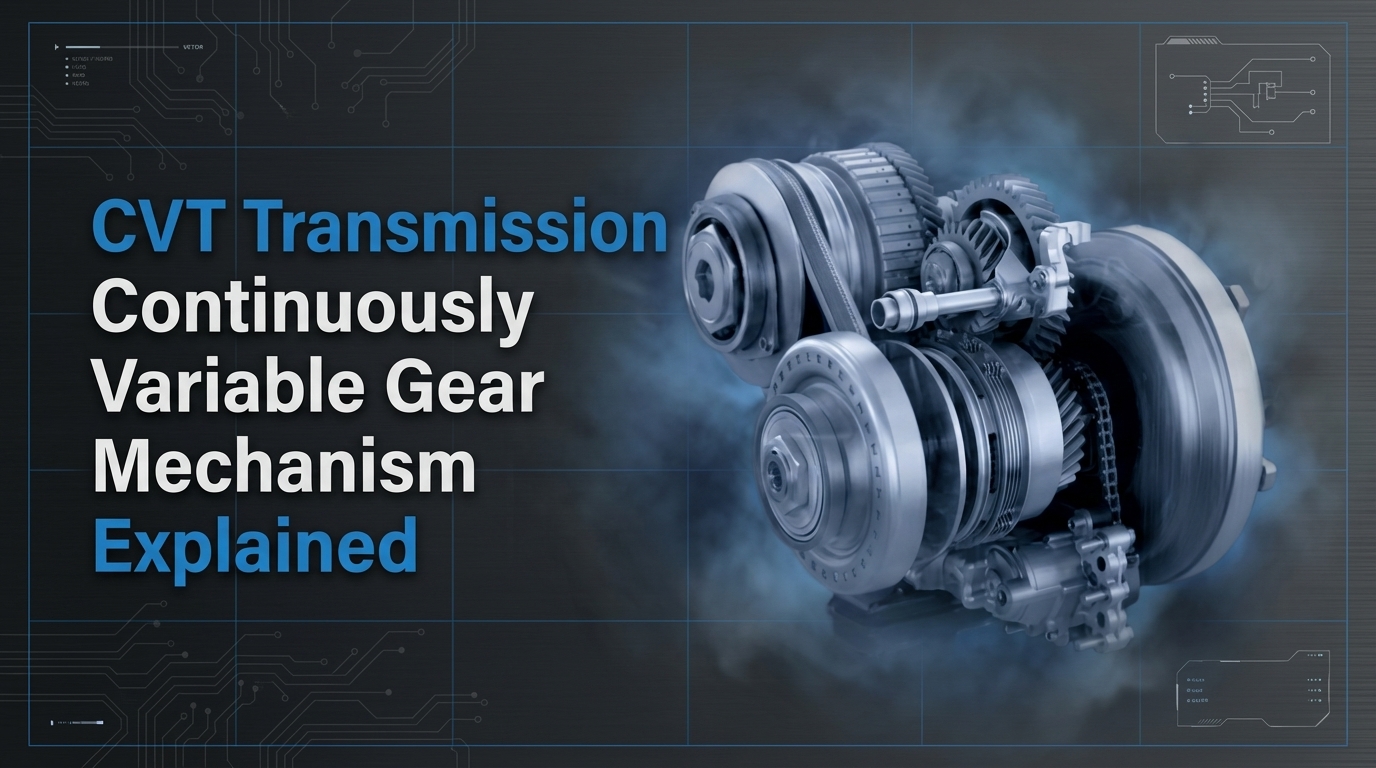
The fundamental difference is right in the name. A conventional automatic transmission has a set number of fixed gear ratios, like 6, 8, or 10 speeds. It must jump from one ratio to the next. A CVT has an infinite number of ratios between its minimum and maximum. It achieves this not with gears, but with a belt or chain running between two variable-diameter pulleys.
One pulley is connected to the engine, the other to the wheels. As you accelerate, the pulleys change their width. The driving pulley gets smaller, the driven pulley gets larger, seamlessly altering the ratio. This allows the engine to stay in its most efficient or powerful RPM range while the vehicle speed increases. There's no "shift shock" because there's no physical shift. For a deeper comparison of how this stacks up against other designs, our article on decoding transmission types breaks it down clearly.
This is why you might experience a constant engine drone during hard acceleration. The computer is holding the engine at, say, 5000 RPM where it makes peak power, while the transmission continuously adjusts the ratio to accelerate the car. It feels strange, but it's effective. When you understand this, the comment "It's revving too high" changes to "It's holding the optimal RPM."
Why It Needs Special Care (And Fluid)
This unique design places very specific demands on its components. The steel belt or chain and the pulley faces are under constant, precise pressure. The fluid in a CVT is not just a lubricant; it's a hydraulic medium that creates the clamping force to hold the belt and change pulley diameters. Using the wrong fluid, or letting the fluid degrade, is a sure path to failure.
Manufacturers specify unique CVT fluid for a reason. It has different friction properties and additives compared to regular automatic transmission fluid (ATF). I've seen too many cases where someone says, "Transmission fluid is transmission fluid," and uses the wrong type. The result is often rapid wear, shuddering, and a very expensive repair. Always, always consult your owner's manual. The importance of the correct fluid cannot be overstated, a point we also stress when discussing gearbox oil changes in general.
Furthermore, CVTs are particularly sensitive to overheating. The constant friction can generate significant heat. Aggressive driving, frequent towing, or stop-and-go traffic in hot weather can push temperatures beyond the fluid's safe operating range. Once the fluid breaks down, performance suffers and damage follows. If you use your vehicle for heavy-duty work, a CVT might not be the most robust choice. For insights on how heat affects transmissions, our guide on why transmissions fail when hot is essential reading.
Driving With It, Not Against It
You can't drive a CVT like a traditional automatic and expect the best longevity or experience. The driving habits that help it last are straightforward.
First, avoid "power braking" or holding the car on an incline with the accelerator. This causes excessive belt slip and heat buildup. Use the brake to hold the car. Second, be smooth with inputs. Jackrabbit starts and aggressive throttle stabs put sudden, high stress on the belt and pulleys. A smooth, progressive application of power is kinder.
Many modern CVTs have simulated "steps" or "gears" programmed in to make the driving feel more familiar. Don't be fooled. These are software maps that make the RPM jump in steps, but the physical hardware is still varying continuously. Using manual mode or paddle shifters in these scenarios is fine, but understand it's an emulation. For a look at how modern automatics intelligently manage gear selection, you can explore how automatic transmissions decide when to shift.
Finally, adhere strictly to the service intervals for fluid changes. This is not a "lifetime" fluid in the real world. Contamination and heat degrade it. A fluid exchange at the recommended interval, often around 60,000 miles, is the single best thing you can do for CVT longevity. Waiting for symptoms like shuddering or hesitation means damage has likely already begun. Recognizing early CVT warning signs can save you from a major repair.
The CVT is an engineering solution for efficiency and smoothness. Its behaviour is different, but not defective. By understanding its continuous nature, respecting its need for specific fluid and cooling, and adapting your driving style to be smoother, you can enjoy its benefits for the long haul. It asks for a little understanding in return for lower fuel bills and seamless power delivery. Give it that, and it will serve you well.
Comments (0)
Please login to join the discussion
Be the first to comment on this article!
Share your thoughts and start the discussion