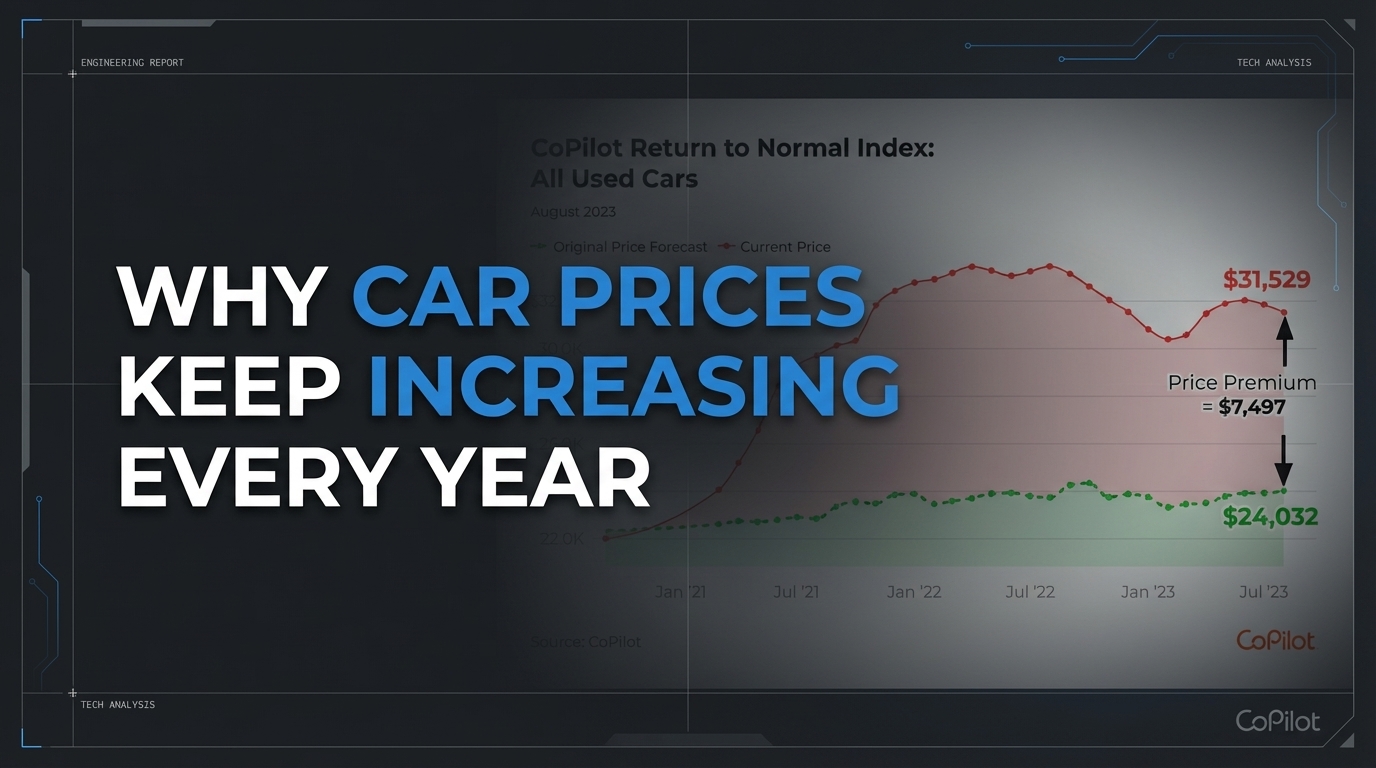
The average price of a new car in the United States hit a staggering $51,000 in 2025, according to industry data. That's a 30% increase in five years. I hear the same bewildered question from customers every week: "How can a basic family car cost more than my first house?" It's a fair point. The sticker shock isn't an accident or simple inflation. It's the result of a perfect storm of manufacturing, regulation, and technology that has fundamentally changed what a car is. The days of a simple metal box on wheels are gone, and the price tag reflects that new reality.
The Tech Tax You Can't See
Walk into a dealership and the salesperson will dazzle you with screens, driver aids, and connectivity. This isn't free. The computing power in a modern mid-range car now surpasses that of early spacecraft. Every one of those advanced driver-assistance systems (ADAS) requires a suite of radars, cameras, ultrasonic sensors, and the powerful electronic control units to process it all. A single forward-facing radar module for adaptive cruise control can cost the manufacturer hundreds of dollars before it's even installed.
This complexity has a secondary cost: development. Engineering a system that can reliably brake for pedestrians or keep a car centered in a lane takes thousands of hours of software and hardware testing. That R&D bill gets factored into the price of every single unit sold. People say, "My phone can do that." True. But your phone isn't responsible for keeping two tons of metal safe at 70 mph in a rainstorm. The reliability and redundancy requirements for automotive tech are in a different universe, and you pay for that certainty. For a deeper look at how this hidden tech works, see our article on the hidden tech inside modern cars.
Safety and Emissions: The Non-Negotiable Cost Drivers
This is where the conversation gets serious. Governments worldwide are mandating stricter safety and emissions standards every year. These aren't suggestions. They are legally required, and meeting them is incredibly expensive. Take the shift to electric vehicles. The push for EVs isn't only about consumer choice; it's driven by stringent global emissions targets like the Euro 7 standards and Corporate Average Fuel Economy (CAFE) regulations. Developing a new EV platform from the ground up costs automakers billions.
Even for conventional cars, the cost is immense. Adding more airbags, reinforcing structures for crash test ratings, and implementing complex exhaust after-treatment systems for cleaner tailpipe emissions all add material and engineering cost. A modern catalytic converter, packed with rare metals like palladium and rhodium, is a major expense. When a customer asks, "Why is a bumper replacement so expensive?" I tell them they're not paying for plastic. They're paying for the sensors and crumple zones embedded within it. The quest for efficiency also forces expensive tech, as explored in this article on fuel consumption culprits.
The Supply Chain Has a Memory
The global semiconductor shortage that began in 2020 was a wake-up call. It showed how fragile the modern automotive supply chain truly is. While chip availability has improved, the financial and strategic impact is permanent. Automakers got a brutal lesson in the cost of scarcity. The response? Stockpiling key components, dual-sourcing parts, and redesigning systems to use more readily available chips. All of these strategies cost money.
Furthermore, the cost of raw materials hasn't returned to pre-pandemic levels. Steel, aluminum, lithium for batteries, and those rare earth elements I mentioned are subject to volatile global markets and geopolitical tensions. A manufacturer can't absorb a 20% spike in lithium prices when building an EV; that cost gets passed directly to the consumer. This volatility makes long-term pricing stability a thing of the past. This financial pressure affects the entire industry, from manufacturers to local spare parts shops.
How This Changes Your Buying Experience
You feel this shift on the showroom floor. The base model is increasingly a myth. To achieve profit margins, manufacturers heavily incentivize moving you up to higher trim levels packed with the profitable technology. That's why the "well-equipped" model is often the one prominently displayed and promoted. The truly stripped-down car might exist on a website configurator, but good luck finding one on a dealer lot.
There's also the subscription model creep. Features like remote start, advanced navigation updates, or even heated seats are now sometimes software-locked, available via a monthly subscription. This turns a one-time purchase into a recurring revenue stream for the automaker. It's a fundamental change in how we "own" a car's functionality. Making a smart purchase now requires more research than ever, which is why we advise caution on buying a new model in its first year.
Is There Any Relief in Sight?
Honestly, don't expect a reversal. The trajectory is set. However, understanding the forces at play helps you navigate them. The value proposition is shifting from pure transportation to a tech-enabled, safe, and connected experience. For the savvy buyer, this makes a well-maintained used car a more attractive financial proposition than ever. The depreciation hit has already been taken by the first owner, but you still benefit from modern safety and efficiency.
For new car buyers, the strategy is to prioritize. Decide which tech is essential for you and which is a costly extra. Sometimes, opting for a lower trim and adding one or two standalone options is smarter than jumping two whole package levels. And always, always factor in the long-term cost of ownership, not only the sticker price. A cheaper car with poor reliability or expensive proprietary parts will cost you more in the long run. Protecting your investment is key, starting with understanding how to extend your car's lifespan.
The bottom line is this. We are not paying more for the same thing. We are paying for a completely different product that is more complex, safer, and cleaner than what we drove a decade ago. The price tag tells that story. Your job as a buyer is to decide if that story is worth the new, much higher cover price.
Related Reading: The Theory That Fuel Economy Numbers Are Optimized for Testing Only
Comments (0)
Please login to join the discussion
Be the first to comment on this article!
Share your thoughts and start the discussion