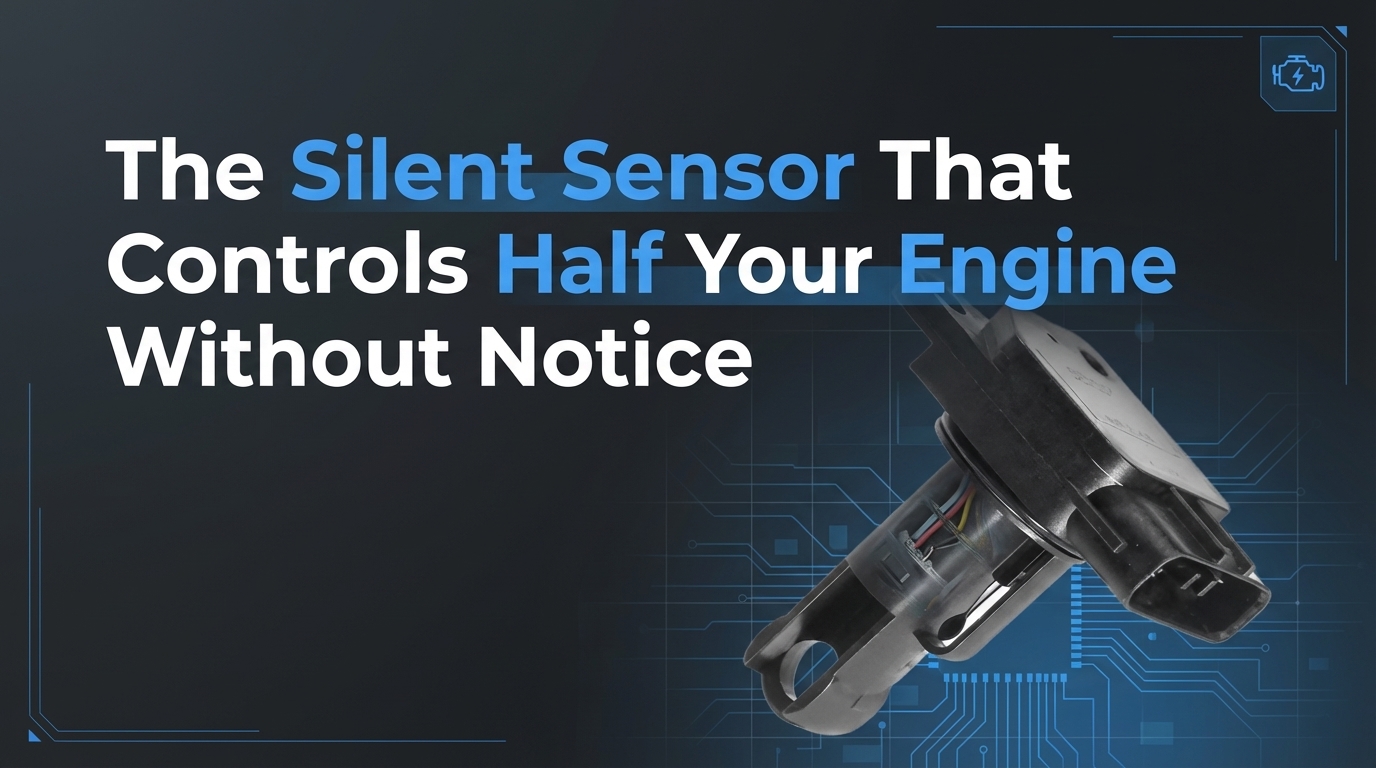
Modern engines are managed by a network of sensors, but there's one that operates in the shadows, influencing more than you might realize. According to data from automotive diagnostic specialists, the Mass Air Flow (MAF) sensor is responsible for calculating up to 50% of your engine's core operating parameters. It's the silent gatekeeper of performance and efficiency.
I hear the confusion all the time in the shop. A driver will say, "The car feels lazy, but the check engine light isn't on." They assume no light means no problem. That assumption is where the trouble starts. The MAF sensor can degrade silently, sending bad data that the engine computer accepts as truth. Your fuel economy drops, acceleration feels soft, and you're left wondering why. The system doesn't know what it doesn't know, and a failing MAF often stays below the fault code threshold until it's completely gone.
What the MAF Sensor Actually Controls
Think of the MAF as the engine's chief accountant for air. It's mounted in the intake hose, right after the air filter. Its sole job is to measure the exact mass of air flowing into the engine. This number is not a suggestion. It's the primary input your Engine Control Unit (ECU) uses to calculate how much fuel to inject. Get the air measurement wrong, and the entire fuel equation is off.
This is why its influence is so vast. Based on the MAF's reading, the ECU determines:
- Fuel Injector Pulse Width: How long to spray fuel into each cylinder.
- Ignition Timing: When precisely to spark the air-fuel mixture.
- Transmission Shift Points: In many modern cars, the ECU uses engine load data from the MAF to decide when to shift.
- EGR Valve Operation: It helps manage exhaust gas recirculation rates.
When this sensor lies, the engine runs on bad instructions. It's like navigating with a broken compass. You might still move, but you're wasting fuel and straining the engine with every mile.
The Silent Symptoms of a Failing MAF
Because it rarely throws an immediate code, you need to become a detective. The symptoms are subtle but consistent. The most common thing I hear is, "It's using more petrol than it used to." That's your first major clue. A dirty or failing MAF typically reads less air than is actually entering, causing the ECU to inject less fuel. This creates a lean condition. To compensate, the ECU adds fuel via long-term fuel trim, which you feel as poor mileage.
Other signs include a noticeable hesitation when you press the accelerator from a stop. The engine stumbles for a second before catching up. You might also experience rough idling or random surges in power. In severe cases, the car may even stall after starting because the air calculation is so far off. People often mistake this for a different starting problem, but the root cause is that critical first air measurement.
Related Reading: Ignoring These Fuel Usage Signs Can Lead to Expensive Engine Repairs Later
Practical Diagnosis and Action
You don't need to guess. Before you spend money on a new sensor, try the simplest fix first. A contaminated MAF is far more common than a broken one. The hot wire inside gets coated with dirt, oil from aftermarket air filters, or carbon. A proper cleaning with a dedicated MAF sensor cleaner can often restore perfect function. It's a five-minute job that can save you over a hundred dollars. Remember, cleaning your MAF sensor can go wrong if you use the wrong product or are too rough.
If cleaning doesn't work, or the symptoms return quickly, it's time for a closer look. The best tool for this is a live data scanner. Ask your mechanic to check the MAF's grams-per-second reading at idle and at a steady 2500 RPM. They can compare it to known good values for your engine. They'll also check the long-term and short-term fuel trim values. High positive fuel trim numbers (like +10% or more) are a giant arrow pointing at a MAF that's under-reporting airflow.
Replacement is straightforward, but buy an OEM or high-quality branded part. Cheap, no-name MAF sensors are notorious for being inaccurate right out of the box, putting you right back where you started. After replacement, the ECU may need a short drive cycle to relearn, but you should feel the difference immediately. Throttle response sharpens, and that vague sluggishness vanishes.
Keep Reading: This Is How to Fix Sensor-Related Fuel Consumption Problems Yourself
Don't wait for a warning light to tell you something is wrong. Your car's behavior is the most honest diagnostic tool you have. If it feels down on power or is drinking more fuel, that silent sensor on your intake pipe is a prime suspect. Addressing it isn't just about fixing a stumble. It's about restoring the precise balance of air and fuel that keeps your engine running smoothly, efficiently, and for the long haul. Trust the feel of the car over the silence of the dashboard.
Comments (0)
Please login to join the discussion
Be the first to comment on this article!
Share your thoughts and start the discussion