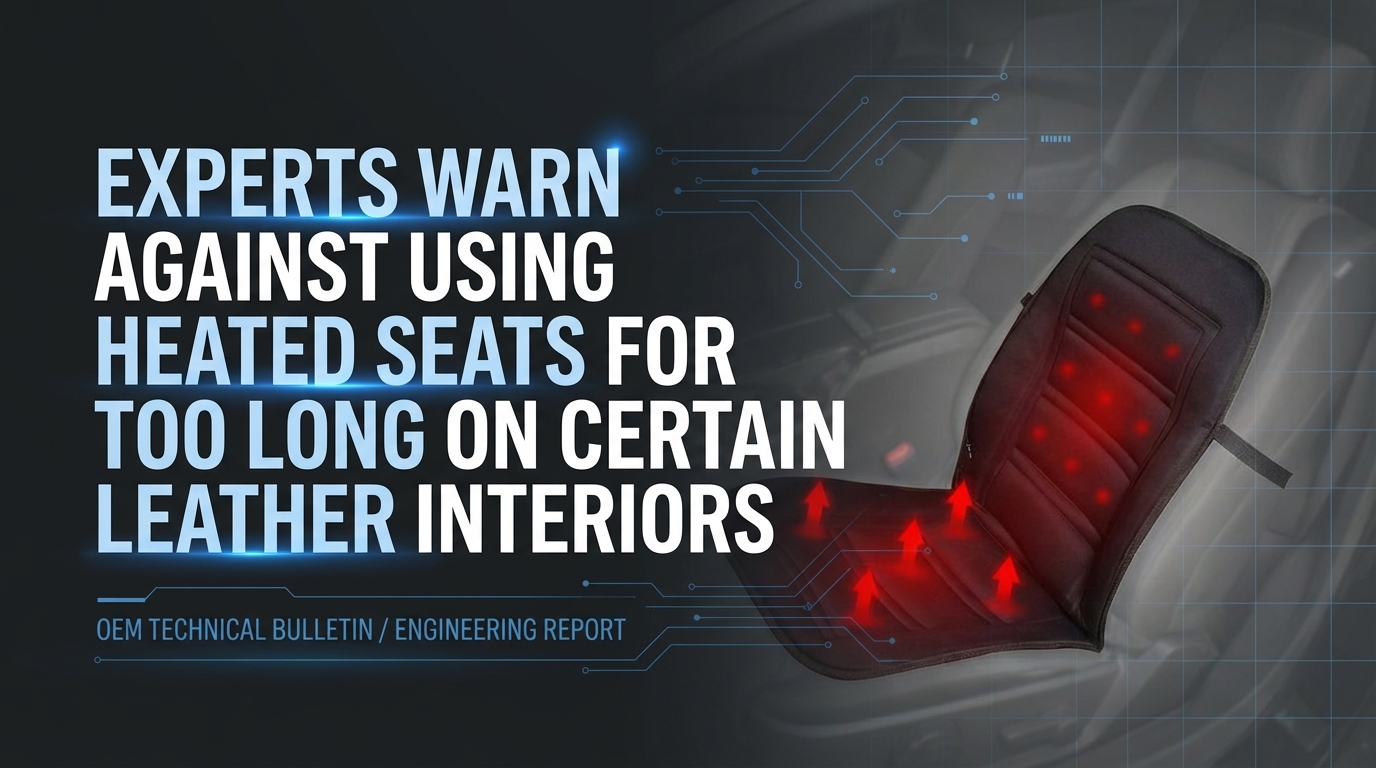
That warm, comforting embrace of a heated seat on a cold morning feels like a luxury you earned. But what if that same comfort is quietly baking the life out of your car's leather interior? Recent analysis from detailing professionals and upholstery specialists points to a growing trend of premature leather wear directly linked to prolonged, high-heat seat usage. The damage isn't always immediate. It's a slow, cumulative process that many owners don't notice until the leather is permanently hardened, cracked, and faded. I've seen it in the shop too many times. An owner will say, "I treat this
Your car's leather is not a living hide anymore. It's a finished material. The top layer is a protective coating, and beneath that, the leather itself has been tanned and treated. Consistent, direct heat from the seat elements accelerates the evaporation of the natural oils and moisture within the leather substrate. Think of it like leaving a fine leather wallet on a radiator. The result is the same: dehydration leading to stiffness and, eventually, cracks. This isn't speculation. Industry resources from detailing experts and material scientists consistently identify excessive heat as a primary catalyst for leather degradation, ranking it alongside UV damage and chemical cleaners. The climate control systems in your car are designed for ambient air, not for direct, sustained contact with sensitive materials.
The Science of Heat and Leather Degradation
Leather is hygroscopic, meaning it naturally absorbs and releases moisture to stay supple. The ideal environment for automotive leather is a stable, moderate temperature. Heated seats, especially on their highest settings, create a microclimate that can reach temperatures high enough to disrupt this balance. Prolonged exposure doesn't just dry it out. It can also break down the chemical bonds in the dyes and the protective top coat, leading to color transfer onto clothing and a loss of that rich, matte finish. This is why you might see the driver's seat bolster looking more worn and faded than the passenger side, even with similar physical use. The constant thermal cycling from hot to cold stresses the material at a cellular level.
Deep Dive: Extend Your Car's Lifespan to 300000 Miles with These Powerful Maintenance Tips
Which Leather Types Are Most at Risk?
Not all leather is created equal, and its vulnerability to heat damage varies significantly.
Aniline and Semi-Aniline Leather
This is the premium, porous leather found in many luxury vehicles. It has a minimal protective coating to showcase the natural grain. Because it's less protected, it's exceptionally susceptible to drying out and staining. Heat accelerates the absorption of body oils and sweat into the material, causing permanent darkening and stiffening. If your car has this type of leather, extreme caution with heated seats is non-negotiable.
Protected or Coated Leather
Most modern mass-market vehicles use this. It has a durable polyurethane coating on top, making it more resistant to spills and stains. However, the heat problem remains. While the coating might resist immediate damage, the heat penetrates to the leather underneath, drying it out. Over years, this causes the coating to separate from the shrunken, dry leather beneath, leading to peeling and cracking that cannot be repaired, only replaced.
Actionable Steps to Protect Your Investment
You don't have to give up heated seats entirely. The key is intelligent, moderated use. The goal is to take the chill off, not to achieve a sauna-like experience. Here is the protocol I recommend to every client concerned with their interior's long-term health.
Moderate Your Heat Setting and Duration
This is the single most effective thing you can do. Use the lowest effective setting. Once the seat feels comfortably warm to the touch, turn it down or off. Avoid running it on high for your entire commute, especially if it's longer than 20-30 minutes. Think of it as a warm-up aid, not a continuous feature. This simple habit drastically reduces the thermal load on the leather. It's similar to the principle behind avoiding prolonged idling for your engine's health.
Establish a Consistent Conditioning Routine
If you use heated seats, you must replenish what the heat takes out. Use a high-quality leather conditioner designed for automotive use every 3-4 months. Do not use all-purpose cleaners or oils meant for furniture. Apply it to clean, cool leather and buff it in thoroughly. This replaces lost oils and helps maintain flexibility. Ignoring this is like skipping oil changes for your seats.
Related Reading: Does An Engine Oil Flush Help Or Harm Modern Cars Over Time
Manage the Overall Cabin Climate
Don't pair scorching seat heat with blasting, dry air from the vents. Use your car's climate control to bring the whole cabin to a moderate temperature. This reduces your reliance on the seat heaters and creates a more balanced environment for all interior materials. A comprehensive approach to cabin care is as important as understanding critical warning lights for vehicle safety.
Recognizing the Early Warning Signs
Damage doesn't appear overnight. Be vigilant for these subtle cues that your leather is under thermal stress. The first sign is often a change in texture. The leather may feel drier and less supple than areas not exposed to heat, like the rear seats. You might notice a slight loss of color vibrancy or a whitish, chalky appearance in the creases. This is the top coat beginning to break down. If the leather starts to feel unusually stiff or develops small, hard wrinkles that don't relax, the dehydration process is advancing. Catching it here, with adjusted habits and aggressive conditioning, can often reverse the early stages. Wait until you see deep cracks, and the conversation shifts from prevention to expensive repair or replacement.
Heated seats are a fantastic feature. But like any tool, they require informed use. Your leather interior is a major part of your car's value and your daily driving pleasure. Protecting it isn't about paranoia. It's about understanding the interaction between technology and material. Use the heat wisely, nourish the leather consistently, and your seats will remain comfortable and beautiful for the long haul. Because that satisfying feeling of "like new" should last for years, not just one winter season.
Comments (0)
Please login to join the discussion
Be the first to comment on this article!
Share your thoughts and start the discussion