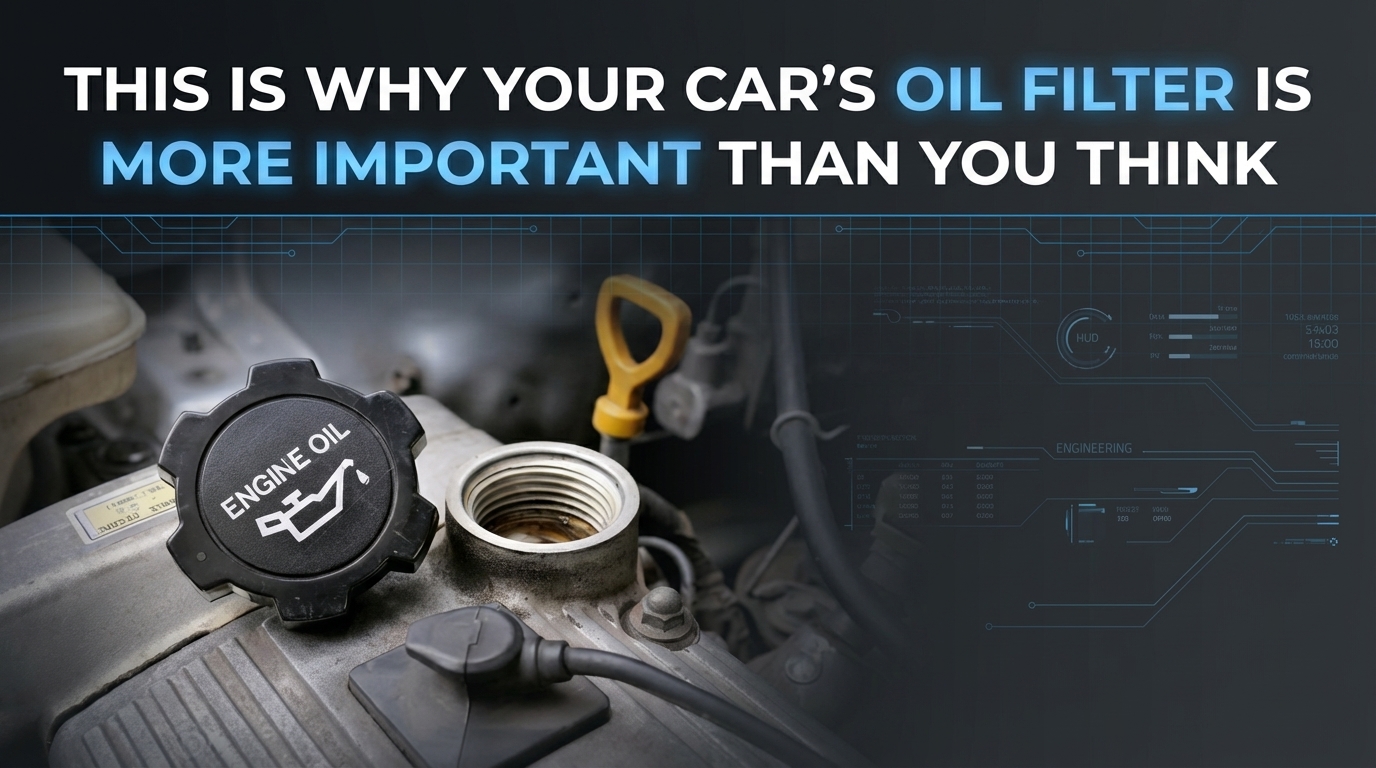
Think of your engine oil as the lifeblood of your car. Now picture the oil filter as its kidney. A study published in the Journal of Tribology found that abrasive wear particles as small as 10 microns can accelerate engine wear dramatically. Your filter's job is to trap those particles. Most drivers focus on the oil change interval, but they treat the filter as an afterthought. I hear it all the time in the shop: "The oil is new, so it's fine." That logic misses the point entirely. A new oil change with a spent or cheap filter is like giving a patient a blood transfusion through a dirty filter
What a Good Filter Actually Does
Modern full-flow oil filters have one non-negotiable task: clean every single drop of oil that circulates through your engine, multiple times a minute. They don't just catch big chunks. A quality filter uses a pleated media, often synthetic, designed to trap microscopic particles that cause the most damage. These are the particles that grind away at bearing surfaces, cylinder walls, and turbocharger shafts. The bypass valve is another key feature. When the filter becomes clogged or the oil is too cold and thick, this valve opens to ensure oil still flows to the engine. This is a fail-safe, not a feature to rely on. When that valve is open, unfiltered oil is circulating. That's the "protection" you get from a clogged filter.
Deep Dive: Optimizing Engine Performance: The Critical Need for Oil Filter Maintenance
The High Cost of a Bad Filter
Neglecting the filter doesn't usually cause a sudden, dramatic failure. It's a slow, silent killer. The damage accumulates over thousands of miles. You'll notice it first as slightly increased oil consumption, then perhaps a faint engine noise under load, and eventually, a significant loss of power and efficiency. The financial math is brutal. A premium filter costs maybe $10 more than the cheapest option on the shelf. Replacing an engine due to accelerated wear costs thousands. I've torn down engines where the root cause was chronic use of poor-quality filters. The telltale scoring on the camshaft lobes and crankshaft journals doesn't lie.
Choosing the Right Filter
Don't just grab the one that "fits." Look for a filter that meets or exceeds your vehicle manufacturer's specifications. This is often printed on the box. For modern engines with extended oil change intervals, the filter's capacity and media quality are paramount. It must last the distance. I always recommend a filter with a robust anti-drain back valve. This is a rubber gasket that prevents oil from draining out of the filter and the engine's oil galleries when the engine is off. A failed drain back valve causes dry starts, where critical components run without lubrication for those first few seconds. This is a major source of wear.
Related Reading: Oil filter vs. oil: Which is more important to change?
The Installation Mistake That Bypasses All Protection
Here's a hands-on truth. Even the best filter in the world is useless if installed incorrectly. The most common and devastating error is failing to properly lubricate the filter's rubber sealing gasket with fresh oil before installation. A dry gasket can bind, twist, or tear as you tighten the filter, leading to an immediate and catastrophic oil leak. I've seen it happen. Another mistake is over-tightening. You don't need heroic force. Hand-tight is usually sufficient after the gasket makes contact. Over-tightening can crush the filter element internally, compromising its flow and filtration. The phrase "it's on there good" should not apply to your oil filter.
Your Action Plan
First, never, ever skip replacing the filter during an oil change. The idea of "just changing the oil" to save a few dollars is a false economy that directly trades money for engine lifespan. Second, buy a quality filter from a reputable brand. Consult your owner's manual or a trusted parts professional. Third, during every oil change, inspect the old filter. Look for any metal debris on the mounting plate. This can be an early warning sign of internal wear, prompting further investigation into issues like engine knocking or bearing problems.
Finally, understand that your oil and filter are a system. Using a high-performance synthetic oil with a bargain-bin filter undermines your entire investment. The oil's advanced additives and lubricity are compromised if the filter can't keep it clean. As the experts at AutoZone emphasize, the filter is integral to maintaining oil pressure and protecting engine components. Your engine's longevity isn't determined by a single component. It's the result of a chain of protections, and the oil filter is one of the strongest links. Treat it with the importance it deserves.
Essential Guide: The Ultimate Engine Oil Handbook: Your Go-To Resource
Comments (0)
Please login to join the discussion
Be the first to comment on this article!
Share your thoughts and start the discussion