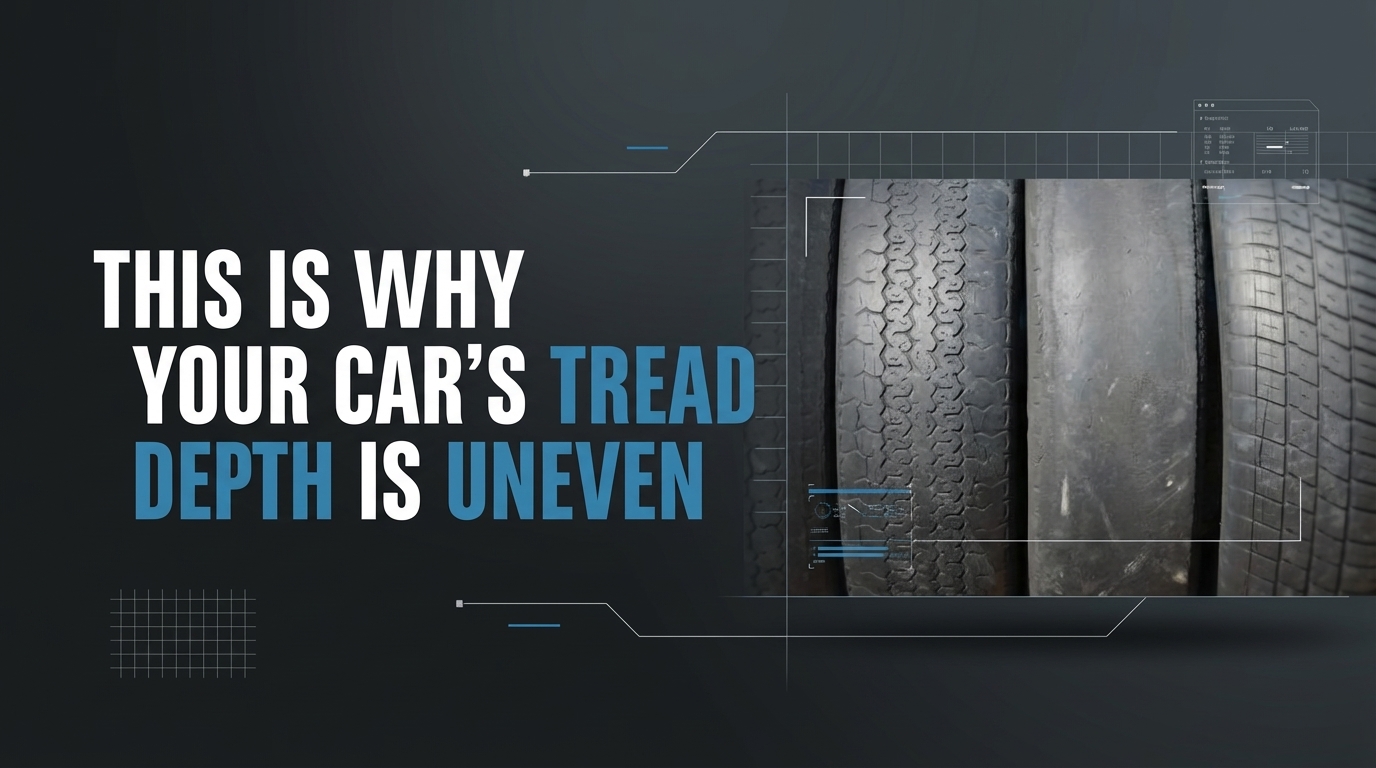
I see it all the time in the shop. A customer points at their tire and says, "It's wearing out so fast on the inside edge." They often follow it with a shrug and a phrase I've heard a thousand times: "I guess that's normal wear and tear, right?" No. It is not. Uneven tread wear is not a random act of tire fate. It is a precise, mechanical message from your car, telling you exactly which component is out of spec. Ignoring that message costs you tires, fuel, and safety. Let's decode it.
The Primary Culprit: Wheel Alignment
When tread is worn more on one side of the tire than the other, your first and most likely suspect is wheel alignment. Your wheels are supposed to be set to very specific angles. When those angles drift, the tires scrub against the road instead of rolling cleanly. This creates distinct, predictable wear patterns.
Toe Wear: The Saw-Tooth Scallop
This is the most common pattern I see. It looks like the tread blocks are feathered or scalloped. Run your hand across the tread. If it feels smooth one way and sharp the other, you have toe wear. Toe refers to whether the fronts of the tires are pointed slightly inward or outward relative to each other. Even a tiny misalignment, a few millimeters off spec, causes this aggressive scrubbing. It robs you of tread life and creates a constant, quiet hum on the highway. People often say, "My car feels like it's dragging." That's the feeling of incorrect toe.
Camber Wear: The Inside or Outside Edge Taper
This is when one entire shoulder of the tire is worn bald while the other side looks fine. Negative camber (top of the tire tilted in) wears the inside edge. Positive camber (top tilted out) wears the outside edge. This is a classic sign of worn suspension components like ball joints, control arm bushings, or a bent component from a curb impact. It's not an alignment you can always adjust out. You must fix the worn part first.
Read Also: Why Does Your Car Still Pull to one Side Even After Wheel Alignment?
Secondary Causes You Cannot Ignore
Alignment is the big one, but it's not the only player. These issues create their own unique signatures.
Inflation Pressure: The Center or Shoulder Wear
This is simple physics, but it's devastatingly common. Under-inflation causes the tire's outer shoulders to contact the road more, wearing them down faster. Over-inflation causes the center of the tread to bulge out and bear all the load, wearing the center strip out prematurely. According to tire industry data compiled by NHTSA, under-inflated tires can wear up to 25% faster. Check your pressures monthly, when cold. Do not trust your eyes. Use a gauge.
Suspension and Bearing Failures: The Cupping or Spot Wear
This pattern is more dramatic. You'll see dips or cups worn around the tire in a random or diagonal pattern. This is often called "cupping" or "scalloping." It points directly to a failing shock absorber or strut that can't keep the tire planted on the road, causing it to bounce and slam down. A severely worn wheel bearing can also cause similar erratic wear. If you hear a growling noise that changes with speed, that's your clue. This wear pattern also creates a vibration you can feel in the seat or steering wheel, which people often mistake for a wheel balance issue. For more on how vibrations manifest, see our guide on why your car vibrates at high speeds.
The Actionable Diagnostic Path
Do not guess. Follow this sequence. It's the same one I use on the hoist.
First, read the tire. Get down and look. Feel the tread. Identify the pattern: feathered (toe), one-shoulder (camber), both shoulders (under-inflation), center (over-inflation), or cupped (suspension).
Second, check the simple things. Verify all four tire pressures with a quality gauge. Inspect for obvious damage or loose components. Grab the tire at the 3 and 9 o'clock positions and shake it. Any clunk or movement indicates a tie-rod or steering issue. Grab at 12 and 6 o'clock and shake. Movement here points to a wheel bearing or ball joint problem.
Third, get a professional alignment check. This is critical. A good shop will put the car on the alignment rack and give you a printout showing the before measurements. This sheet is gold. It tells you if it's a simple adjustment or if there's a damaged or worn component preventing a proper alignment. Never let them adjust it without showing you the "before" numbers.
Essential Guide: This Is How Uneven Tread Wear From Poor Alignment Causes Blowouts
Final Word
Uneven tread depth is a billboard advertising a mechanical problem. It is never normal. Addressing it early saves you the cost of premature tires, improves fuel economy by reducing rolling resistance, and most importantly, restores the safe, predictable handling your car was designed for. The next time you hear someone say, "It's just how this car wears tires," you'll know better. It's how a *misaligned* or *failing* car wears tires. The distinction is everything.
Comments (0)
Please login to join the discussion
Be the first to comment on this article!
Share your thoughts and start the discussion