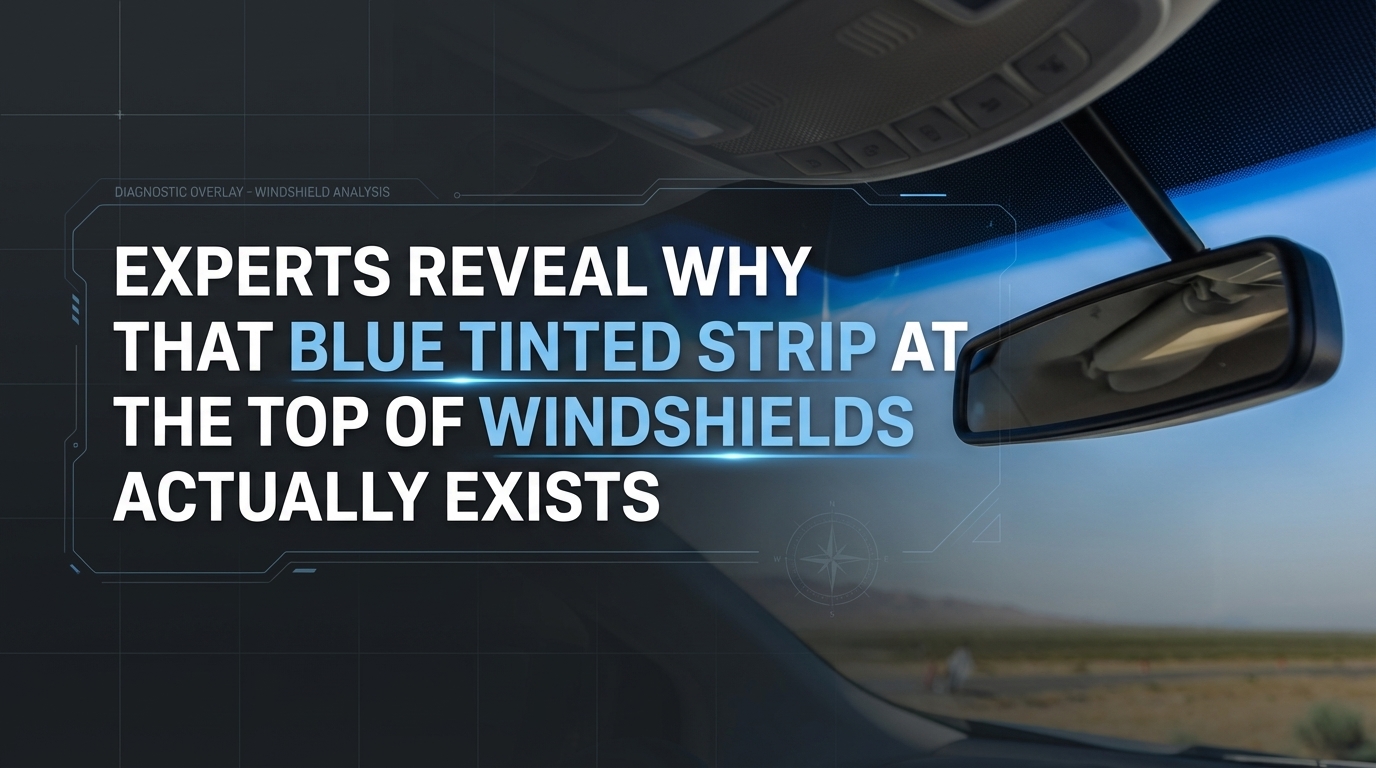
Look at the top of your windshield. That blue or sometimes greenish-purple tint across the top edge isn't a style quirk. It's a piece of automotive engineering that solves a specific, critical problem. I've heard drivers call it "the sun blocker" or ask, "Is it supposed to be a built-in pair of sunglasses?" It's more intelligent than that. This feature, known as a shade band or visor tint, is a permanent, laminated part of your windshield designed for safety and comfort. Its purpose is rooted in physics, not fashion.
Your car's windshield is a complex sandwich. According to glass manufacturers like Pilkington, modern windshields are laminated safety glass, consisting of two layers of glass bonded to a middle layer of polyvinyl butyral (PVB). This PVB interlayer is where the magic happens. To create the shade band, a special ceramic frit a type of enamel is printed onto the inner surface of the outer glass layer before lamination. This frit contains metal oxide particles that are then fired into the glass. The result is a graduated, translucent band that filters specific wavelengths of light. It's not a film or a coating added later. It's baked right in.
Read Also: People Left Stunned After Finding Out Why Cars Have Tiny Black Dots On Windows
It's Not Just About Glare
Yes, reducing glare from the sun and bright sky is the primary job. But the specific blue or green tint is a calculated choice. The human eye is most sensitive to high-energy visible (HEV) light in the blue-violet spectrum. This light scatters more easily, causing glare and eye strain. The shade band acts as a filter, attenuating these harsh wavelengths while allowing other light to pass. This improves contrast and reduces driver fatigue on long, sunny drives. It's a passive, always-on system. You don't have to remember to flip it down like a sun visor.
The Hidden Structural Role
Here's a piece of information many miss. That tinted band plays a key role in the windshield's durability and installation. The area where the glass meets the car's roof and pillars is bonded with urethane adhesive. This adhesive cures best when protected from direct, prolonged UV exposure. The ceramic frit in the shade band acts as a UV barrier, protecting the adhesive bond line from degradation over time. A stronger, lasting bond means better structural integrity for the vehicle's roof and safer occupant protection in a rollover. It's a safety feature you never see working.
Related Reading: What Happens When Car Safety Systems Fail
Why The Color Varies
You might see blue, green, blue-green, or even a subtle gray. The variation depends on the specific metal oxides used in the ceramic frit. Cobalt oxide often produces blue, while chrome oxide yields green. Manufacturers select the hue based on the vehicle's overall design, the desired level of light transmission, and cost. The important part is the function. The next time you're driving into a low sun and that band takes the edge off, you'll know it's doing its job perfectly. It's one of those small, thoughtful engineering details that makes driving safer and more comfortable.
So when a passenger points and asks, "What's that blue strip for?" you can tell them it's a fused glass filter. It cuts glare, protects critical adhesives, and is a permanent part of the windshield's construction. It's a brilliant solution to a universal driving problem. It works silently, without any switches or moving parts. That's good design.
Automotive Insight: The Hidden Mirror In Your Sun Visor Actually Has A Surprising Backstory
Deep Dive: The Hidden Tech Inside Modern Cars Most Drivers Don’t Understand

Comments (0)
Please login to join the discussion
Be the first to comment on this article!
Share your thoughts and start the discussion