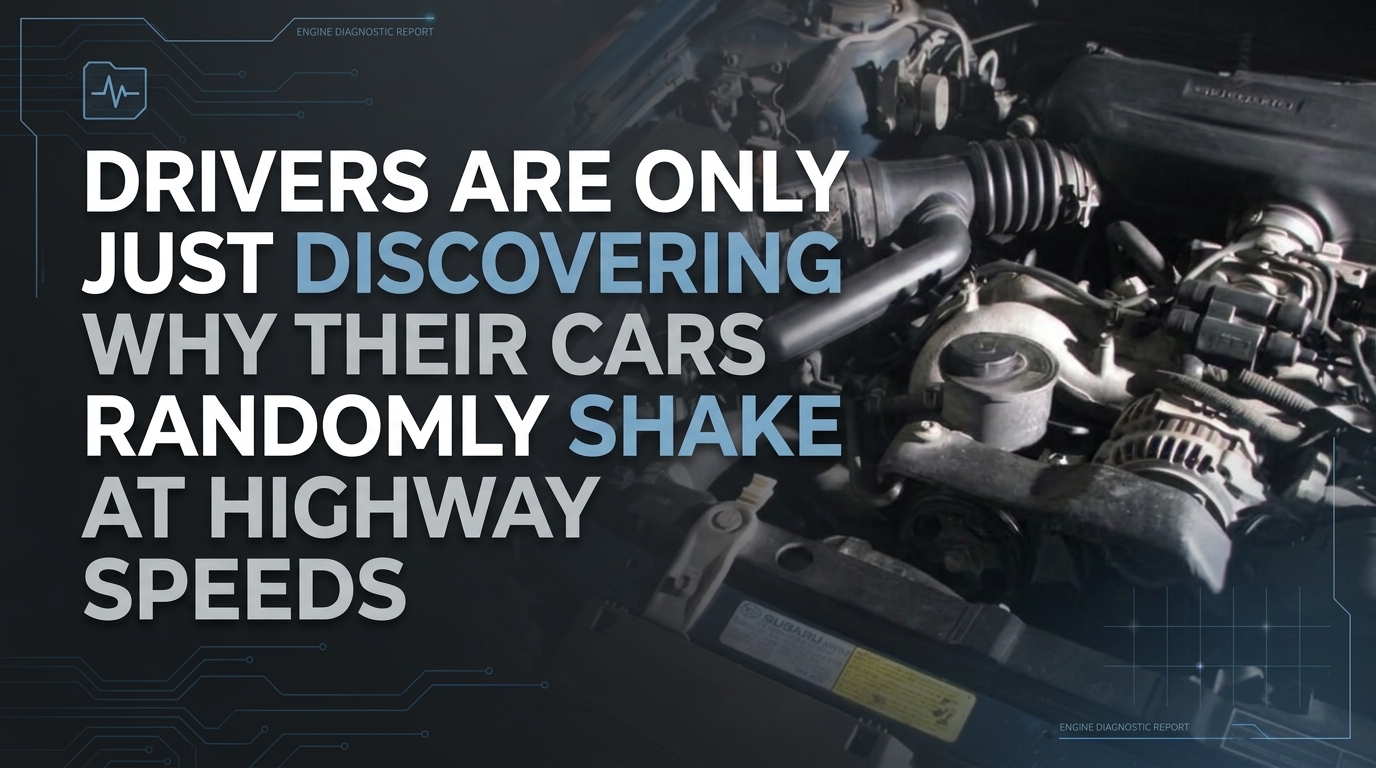
You're cruising at 70 mph, everything is smooth, then a sudden, rhythmic shudder starts pulsing through the steering wheel. It feels like the car is trembling. You ease off the gas, and it fades. You accelerate again, and it returns. This isn't a "check engine" light moment. It's a physical conversation your car is having with the road, and it's telling you something is out of balance. I hear drivers describe this exact scenario all the time, often with a shrug and a hopeful "maybe it's the road surface?" While that's possible, a persistent shake at highway speeds is almost always a mechanical whisper turning into a shout. Ignoring it is a gamble with safety and your wallet.
The Usual Suspects Behind the Highway Shakes
When a vibration appears specifically at higher speeds and often feels like it's coming through the steering wheel or the seat, the problem is almost always related to rotating components. The forces at play are immense. A tiny imbalance that's unnoticeable at 30 mph becomes a major disturbance at 70 mph. Let's break down the most common culprits, starting with the one I check first.
Unbalanced or Damaged Tires
This is the number one cause of speed-specific shaking. Tires are not perfectly uniform. Weight distribution can vary slightly across their circumference. When a wheel is balanced, a technician adds small weights to the rim to counteract these heavy spots. Over time, weights can fall off, tires can wear unevenly, or a tire can develop a slight bulge or "separated" belt from an impact with a pothole.
What you feel is a steering wheel shake that starts at a specific speed, often between 55 and 70 mph, and may intensify or change as you go faster. The fix is straightforward: a professional tire balance and inspection. If a tire is damaged, it must be replaced. This isn't a suggestion. Driving on a separated tire is a serious blowout risk.
Related Reading: This Is Why Your Car Vibrates at High Speeds
Worn Suspension or Steering Components
If the shake is more of a shimmy or feels like the whole front end is loose, suspect the suspension. Your tires are connected to the car by a network of joints, arms, and bushings. Components like tie rod ends, ball joints, and control arm bushings wear out over time. When they do, they introduce play into the system.
At high speeds, this play allows the wheels to oscillate or wobble slightly, creating a distinct shaking or vibration. You might also notice the steering feels vague or the car darts slightly over bumps. A mechanic can perform a "shake down" test to check for worn parts. This is a critical safety check, as a failed ball joint can lead to a wheel collapsing.
Warped Brake Rotors
This cause has a specific signature. Does the shaking only happen when you apply the brakes at highway speeds? If yes, you likely have warped brake rotors. The rotors are the discs your brake pads clamp onto. Under intense heat and stress, they can warp or develop uneven thickness. When you brake, the pads grab an uneven surface, causing a pulsation you feel through the brake pedal and steering wheel.
People often say, "I know my brakes are fine, they still stop the car." That's true, but the vibration is a clear sign of rotor distress. Continued driving will accelerate pad wear and lead to more expensive repairs. Resurfacing or replacing the rotors is the solution.
Check This Out: Why Does Your Car Shake When Braking at High Speeds?
Less Common But Critical Causes
Sometimes the shake points to a more serious underlying issue. These problems are less frequent but have severe consequences if ignored.
Driveshaft or CV Joint Issues
For rear-wheel or all-wheel drive vehicles, a failing driveshaft is a prime suspect for a vibration that comes through the seat or floor. The driveshaft spins at engine speed to transfer power to the rear wheels. If its universal joints are worn or it's out of balance, you'll feel a pronounced shake that gets worse with speed. A telltale sign is a loud clunk when shifting from drive to reverse. Front-wheel drive cars have constant velocity (CV) axles. A worn inner CV joint can cause a vibration under acceleration, often accompanied by a clicking noise on tight turns.
Engine Mount Failure
Engine mounts hold your engine and transmission securely to the chassis. They are designed to absorb vibration. When they break or collapse, the engine can move excessively. At highway speeds, especially under load like climbing a hill, this movement translates into a heavy shudder throughout the entire vehicle. You might also feel a thump when shifting gears or accelerating hard. This needs immediate attention, as a broken mount can lead to damage to other components like hoses and wiring.
What You Should Do Immediately
Do not dismiss a highway-speed shake. Your action plan is simple and logical.
First, perform a visual check. Look at your tires for obvious damage, uneven wear, or missing wheel weights. Check tire pressures when cold; incorrect pressure can contribute to strange wear patterns and vibration.
Second, think about the pattern. Does it shake all the time at high speed, or only when braking? Is it in the steering wheel or the seat? This information is gold for your mechanic.
Third, get a professional diagnosis. A technician will start with the most likely causes: tire balance and suspension inspection. They may road-test the vehicle to experience the shake firsthand. This systematic approach is far better than guessing and replacing parts at random.
Deep Dive: Understanding Car Wheel Shaking at Low Speeds: Causes and Solutions
Final Word
A car that shakes at highway speeds is not being quirky. It is communicating a clear mechanical fault. The cause is almost always in the rotating assembly tires, brakes, or driveline or the components that control them. Addressing it quickly is not only about comfort. It's about preventing accelerated wear on other parts and, most importantly, ensuring your safety. That random shudder is a question your car is asking. Make sure you get the right answer before the question becomes a much louder, and more expensive, statement.
Pro Tip: This One Habit Most Drivers Repeat Is Quietly Destroying Their Cars

Comments (0)
Please login to join the discussion
Be the first to comment on this article!
Share your thoughts and start the discussion