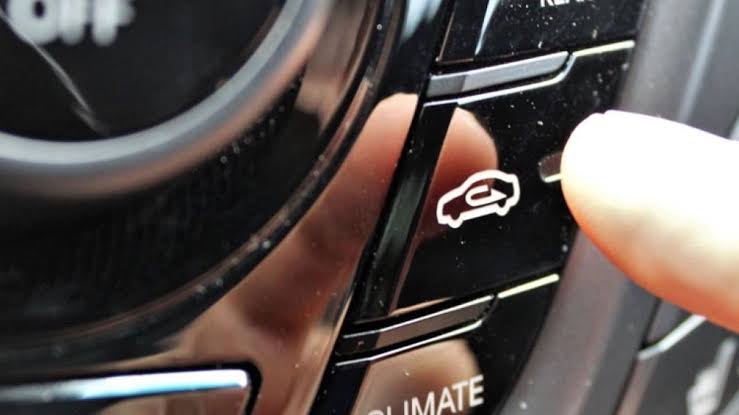
In a recent survey by the car care company Halfords, nearly 40% of drivers admitted they had no idea what a specific button on their dashboard did. They pressed it anyway. That number is terrifying, because that button, the one with the little car icon and the squiggly lines, can save your life or cost you an engine. I am talking about the air recirculation button, and most people use it backwards.
I hear the same thing in the shop all the time. "I push that button when the car smells bad outside." That is not wrong, but it is missing the point. The real function of that button is something drivers only discover after a breakdown or a near miss. Let me explain what that mysterious button actually does, how to use it correctly, and why ignoring it can lead to expensive repairs.
The Real Purpose of the Air Recirculation Button
That button with the car and the U-shaped arrow does not filter the air. It cuts it off. When you press it, the system closes a flap inside your HVAC box and stops drawing fresh air from outside the vehicle. Instead, it recirculates the air already inside the cabin. That is why it feels so effective when you are stuck behind a diesel truck or driving through a tunnel. It blocks the outside air completely.
But here is the part that leaves drivers speechless. The button has a second, far more critical job. It helps your air conditioning system reach maximum cooling efficiency. When the cabin air is already cool, recirculating that cold air is far easier for the AC compressor than cooling hot, humid outside air from scratch. AutoZone explains that using recirculation mode in summer can reduce strain on the AC system and cool the car faster.
When You Must Use It (And When You Should Never Touch It)
The button works best in three specific situations. First, summer heat. On a 35 degree Celsius day, your AC has to work overtime to cool down air that is already hot. Recirculation cuts that workload in half. Second, heavy traffic. Exhaust fumes from the cars around you get pulled into the fresh air intake. Pressing that button seals you off from the pollution. Third, when you need your defroster to work fast. Recirculation helps clear foggy windows faster by pulling moisture out of the already conditioned cabin air.
Here is where people get it wrong. You should never use recirculation when the windows are badly fogged up on a cold morning. The button traps moisture inside the cabin, making fog worse. You also should not leave it on for long highway drives with a full car of people. The carbon dioxide levels inside the cabin can rise, making you drowsy. I have seen drivers fall asleep at the wheel because they ran recirculation for three hours straight. The button is a tool, not a permanent setting.
The Hidden Danger of Leaving It On Too Long
Let me be direct. Running the recirculation button continuously for hours in a sealed car is a real safety risk. As passengers breathe, oxygen levels drop and carbon dioxide builds up. A study from the National Renewable Energy Laboratory found that CO2 levels inside a vehicle can reach over 2,500 parts per million after an hour of recirculation, which is enough to cause drowsiness and reduced concentration. That is exactly when you hear a driver say, "I got tired on the highway but I thought it was the heat." It was the air.
Modern cars with automatic climate control manage this better. They cycle the flap open periodically to bring in fresh air even when the button is lit. But older cars do not. If your car is from before 2015, you are fully responsible for managing the button yourself. Use it for 15 to 20 minutes, then switch to fresh air for a few minutes to vent the cabin. That rhythm keeps you comfortable and alert.
A Quick Maintenance Check That Saves Your AC
If your recirculation button does not seem to make a difference, the flap inside your HVAC box might be stuck. This is common in cars driven in dusty areas or after a cabin air filter has been ignored for years. The flap gets clogged with debris and stops moving. You can test it easily. Park the car, turn the fan to high, and press the recirculation button. Listen for a change in the sound of the fan. If the pitch does not change, the flap is not closing. That means outside air is still coming in, and your AC is working harder than it should.
Replacing a clogged cabin air filter often fixes this issue. It costs under $30 and takes ten minutes. I have seen mechanics charge $150 for a diagnostic on a recirculation problem that was solved by a $15 filter. Check your owner's manual for the filter location. It is usually behind the glove box. Pull it out, hold it up to the light, and if you cannot see through it, replace it. That simple step restores the function of your mysterious button instantly.
The button is not a gimmick. It is a mechanical shortcut that gives you control over your cabin environment. Use it to cool down faster, block out exhaust, and clear fog. But respect its limits. Your car needs fresh air as much as you do. Driving with the wrong airflow settings can lead to unexpected breakdowns. Now you know what that button actually does. Use it wisely.

Comments (0)
Please login to join the discussion
Be the first to comment on this article!
Share your thoughts and start the discussion