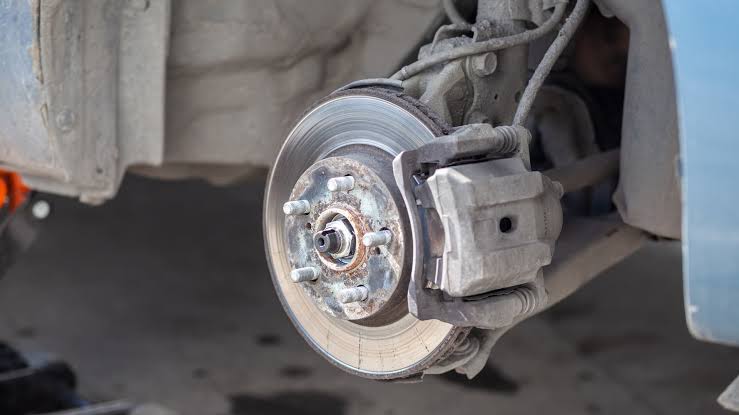
Brake pads are designed to stop your car quietly. When they grind, something is already damaged. I see this every week in the shop. A driver pulls in, the car sounds awful, and they say, "I thought it was the weather." No. Weather does not cause grinding. Metal on metal does. According to the National Highway Traffic Safety Administration, brake related problems account for roughly 22% of all vehicle defects reported in the United States each year. That is a staggering number. That grinding noise is not a suggestion. It is a direct physical message from your braking system that a component has worn past its limit. Let me tell you exactly what is happening and what you need to do about it.
The Most Obvious Cause You Cannot Ignore
Worn Brake Pads Down to the Backing Plate
This is the number one reason brakes grind. It is also the most preventable. Brake pads have a friction material bonded to a metal backing plate. That friction material is the only part designed to contact your rotor. When it wears away completely, the metal backing plate slams directly into the rotor. That is the grinding sound you hear. It is a metal on metal contact that destroys the rotor surface. You cannot polish or machine that damage away once it goes deep. According to Firestone, once the friction material is gone, the rotor is often ruined and replacement becomes the only safe option. You will need new pads and new rotors. That is a much bigger bill than if you had replaced the pads alone 5,000 miles ago.
I hear drivers say, "But my brake light never came on." That is not a reliable indicator. Many cars do not have a dedicated brake pad wear sensor. And even the ones that do can fail to alert you if the sensor wire breaks before the pad wears out. Do not wait for a warning light. Listen to the sound. A grinding noise means you have already passed the point of routine maintenance.
When the Rotors Themselves Are the Problem
Deep Scoring and Rust Build Up
Sometimes the pads are fine but the rotor surface is not. A rotor that has developed deep grooves from worn pads, rust from sitting, or hard debris embedded in the friction surface can produce a grinding sensation under braking. It feels like the pedal is vibrating and the noise comes through the chassis. This is not as common as worn pads, but it happens. A jerky braking feel after changing pads and rotors is often caused by improper bedding in or contamination. If the rotor surface is uneven, the new pad cannot seat properly. The result is noise and poor stopping performance.
Rust build up is another overlooked cause. If your car sits for a few days in damp conditions, a thin layer of rust forms on the rotor surface. The first few brake applications will grind and scrape that rust off. That is normal. But if the grinding persists beyond the first few stops, the rust may have pitted the rotor surface. That requires rotor replacement or resurfacing if enough material remains. Check the rotor face with your fingers. If you feel ridges or deep grooves, it is too late for a simple pad swap. The rotor needs attention.
The Components That Can Mimic Worn Pads
Stuck Brake Calipers and Debris Trapped Between Parts
A grinding sound does not always mean the pads are gone. Sometimes a caliper seizes. When a caliper sticks, it holds the pad against the rotor even when you are not pressing the brake pedal. That constant contact generates heat, noise, and accelerated wear on one side of the car. I have seen cars where one front wheel is hot to the touch after a short drive while the other is cool. That is a stuck caliper. It will grind. It will pull the car to one side. And it will ruin a new set of pads in a matter of weeks if left alone.
Debris is another hidden culprit. A small stone, a piece of road grit, or a broken piece of brake hardware can lodge itself between the pad and the rotor. That hard object scrapes against the rotor with every rotation. It makes a grinding sound that comes and goes. It can also score the rotor in a single groove. You need to inspect the brake assembly visually. Look for anything that should not be there. If you find debris, remove it carefully. If the rotor is already scored, replacement is the only fix. A stuck brake caliper is a complete guide to troubleshooting and should be your next step if the noise is isolated to one wheel.
The Noise That Means Your ABS Is Working
Anti Lock Brake System Activation
This is the one time grinding is normal. When you brake hard on a slippery surface and the ABS engages, you will feel a strong pulsing vibration through the pedal. You will hear a mechanical grinding or buzzing sound from the wheels. That is the ABS pump rapidly modulating brake pressure to prevent wheel lock up. It is designed to do that. The ABS adapts to prevent wheel lock up by releasing and reapplying braking force many times per second. That creates a distinct sound. If the grinding only happens during hard stops on wet or icy roads, and the pedal pulses rhythmically, you are hearing your safety system working correctly.
But if the ABS light is on and the grinding happens during normal braking, that is a different story. A faulty wheel speed sensor, a damaged tone ring, or a failing ABS module can cause the system to activate incorrectly. That will produce grinding and a pulsating pedal at low speeds or gentle stops. That is not normal. That is a fault that needs diagnosis of the ABS light that changes how your brakes behave. A professional scan tool is needed to read the ABS fault codes. Do not ignore an illuminated ABS warning light combined with grinding.
What You Should Do Right Now
Stop driving the car if the grinding is constant and loud. Driving with metal on metal brakes is unsafe. It reduces your stopping distance dramatically. It can also damage the caliper pistons and wheel bearings from excessive heat. Pull over safely and call a tow truck if necessary. If the grinding is intermittent or only happens under specific conditions, you can drive carefully to a shop, but minimize braking and leave extra following distance.
Inspect the brake pads through the wheel spokes. Look at the outer pad. If you cannot see at least 3mm of friction material remaining, the pads need replacement. Check the inner pad as well. The inner pad often wears faster than the outer one. Use a flashlight. If you see shiny metal where the friction material should be, stop driving immediately.
Listen to the sound carefully. A grinding noise that changes with wheel speed, not braking, often points to a wheel bearing issue, not brakes. A grinding noise that only happens when you turn the steering wheel suggests a CV joint or suspension problem. If the grinding is directly tied to pressing the brake pedal, the brakes are the source. Knowing when to replace the brakes is a skill every driver should develop. It saves money and prevents dangerous failures.
Keep Reading: If My Brakes Are New, Why Do They Still Squeal?
Brake work is not an area for shortcuts. If you replace pads, always resurface or replace the rotors. If one caliper is sticking, replace both calipers on that axle. Brake fluid should be flushed every two years because it absorbs moisture and lowers the boiling point. These steps ensure the grinding does not come back after you spend the money to fix it. A properly serviced brake system is silent. If you hear grinding, your brakes are telling you they have run out of life. Listen to them before you run out of stopping power.

Comments (0)
Please login to join the discussion
Be the first to comment on this article!
Share your thoughts and start the discussion