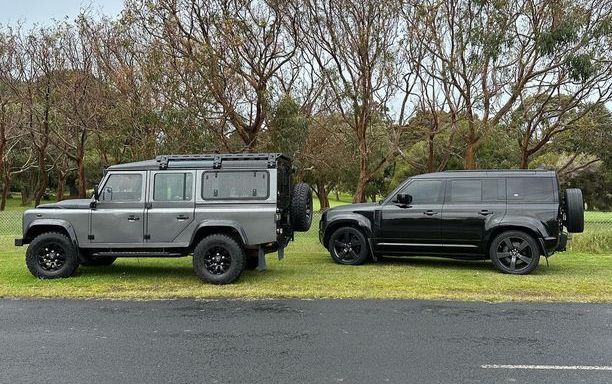
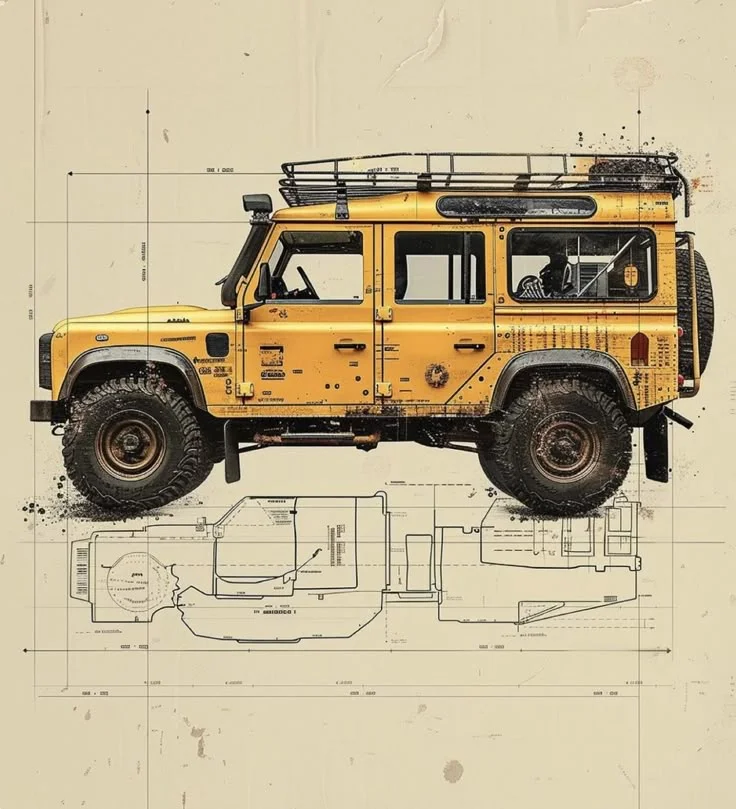
There is an old saying among off-road drivers: "Any vehicle can handle a good road. Only a Defender can make a bad road irrelevant." I've worked on enough of them over the years to know that saying didn't come from a marketing department. It came from people who actually used them.
A History That Actually Starts in 1948, Not the 1990s
The Land Rover story begins in postwar Britain. Steel was scarce. Money was tight. And a company called Rover, better known at the time for making comfortable saloon cars, needed a way to stay in business.
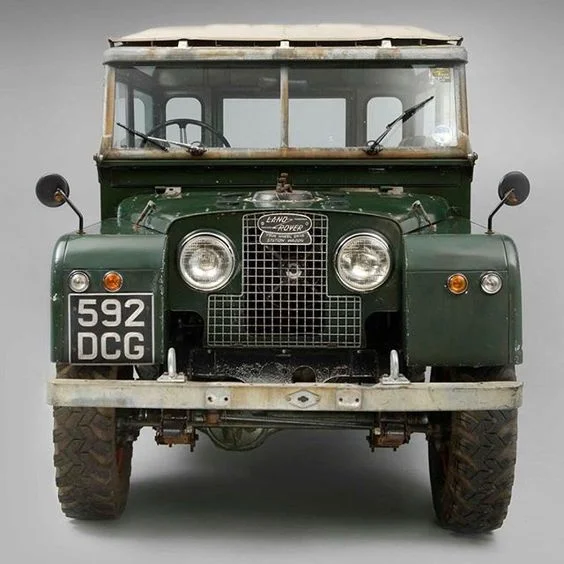
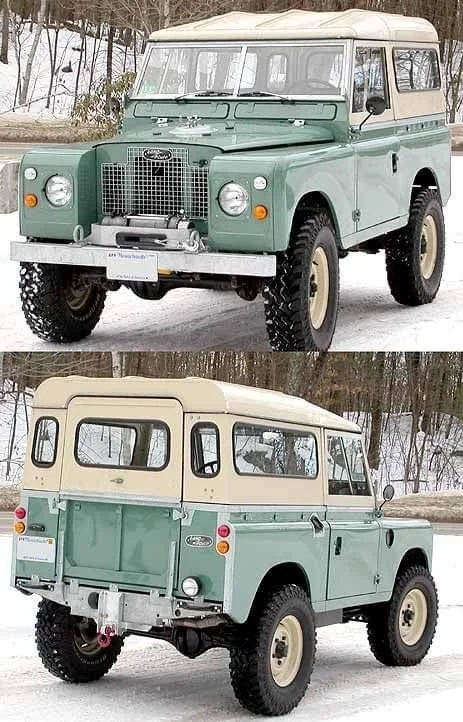
Chief engineer Maurice Wilks sketched the first Land Rover concept in the sand on a Welsh beach in 1947, using the dimensions of a borrowed American Willys Jeep as his starting point. By April 1948, the completed Series I was revealed at the Amsterdam Motor Show. It was built with an aluminium body to get around postwar steel rationing, powered by a modest 1.6-litre engine, and designed to work on farms as much as on roads. Within a year, Land Rover had produced 8,000 units. The British Army placed its first order shortly after.
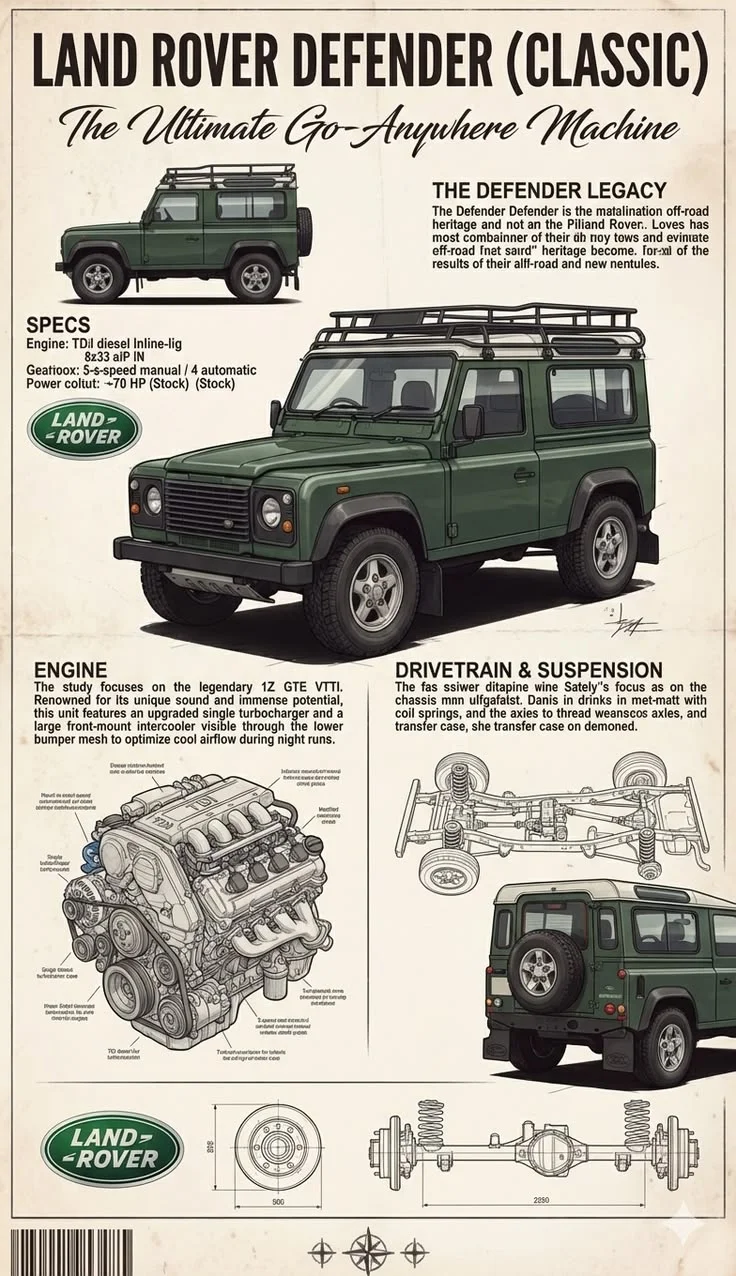
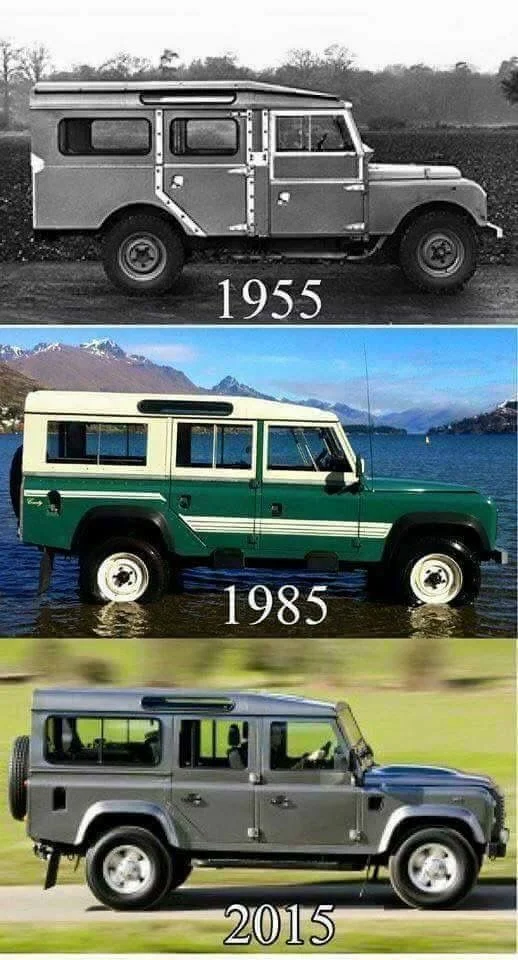
That is where the legacy starts. Not in the 1990s. The name "Defender" was officially applied to the model in 1990, but the vehicle itself had been in continuous production at Solihull since 1948. Over nearly seven decades, it served farmers, soldiers, expedition teams, aid organisations, and emergency services across more than 170 countries. When production of the classic Defender finally ended in January 2016, it wasn't because the vehicle had failed. It was because it could no longer meet modern emissions and safety regulations in its original form.
The farewell was emotional for a lot of people in the industry. I remember watching coverage of the last classic Defender rolling off the Solihull line. It felt like the end of something genuinely irreplaceable.
The New Generation
The current Defender, known internally as the L663, arrived in late 2019 and went on sale in 2020. It is not a 2022 vehicle. By 2025, it has been on the market for five years, gone through multiple updates, and expanded to three body sizes: the two-door Defender 90, the four-door Defender 110, and the extended seven-or-eight-seat Defender 130.
This is a completely different vehicle from the classic. New platform, new engines, new architecture. Land Rover didn't try to update the old ladder-frame design. They replaced it entirely with a monocoque structure that is stiffer, safer, and better suited to modern manufacturing standards.
Engines and Powertrain
The current lineup covers significant ground. In the United States market for 2025, buyers can choose from:
- A 2.0-litre four-cylinder petrol (P300) producing 296 horsepower, paired with an eight-speed automatic gearbox and permanent four-wheel drive
- A 3.0-litre inline-six mild-hybrid petrol (P400) producing 394 horsepower, with a 48-volt belt-integrated starter-generator for improved efficiency
- A 3.0-litre inline-six diesel (D250 or D300) in markets where diesel is offered, producing between 247 and 296 horsepower
- A 5.0-litre supercharged V8 (P525) for performance-focused variants
- The new Defender OCTA variant powered by a twin-turbocharged 4.4-litre V8 producing a remarkable 626 horsepower, with a starting price of $158,300
Pricing for 2025 starts at $56,900 for the base Defender 90 S and climbs steeply depending on configuration. The range is wide, and the options list can add up very quickly. That is worth knowing before you sit down with a sales consultant.
Off-Road Credentials
This is where the new Defender genuinely earns its nameplate. The numbers are serious. Ground clearance reaches 11.5 inches with the available air suspension. Maximum wading depth is 35.4 inches, which exceeds the Jeep Wrangler's maximum clearance according to Car and Driver testing data. Approach angle on the 110 is 37.5 degrees. Departure angle is 40 degrees.
The Terrain Response 2 system, which Land Rover first introduced on the LR3 in 2004 and has refined steadily since, allows the driver to select optimised settings for grass, gravel, snow, mud, sand, rocks, and wading. The system adjusts throttle response, transmission shift points, differential behaviour, and suspension calibration automatically once a terrain mode is selected. There is also a Configurable Terrain Response mode that allows experienced drivers to adjust individual parameters manually.
On a standard set of road tyres, the new Defender will go places that most other vehicles fitted with dedicated all-terrain rubber cannot follow. I've read accounts from owners and tested vehicles myself enough to confirm that the system is genuinely effective rather than a marketing feature.
Towing capacity reaches 8,200 pounds when properly equipped, putting it in competitive territory with alternatives like the Toyota Land Cruiser and the Ford Bronco.
What You Should Know Before Buying One
Honest experience matters here. The new Defender is impressive, but it is not without issues.
The Pivi Pro infotainment system has attracted consistent criticism from owners. Software freezes, connectivity faults, screen black-outs, and intermittent Car Play errors are documented across owner forums and real-world reviews. Land Rover has issued multiple software updates to address these problems, and newer builds are better than early production vehicles. The technology is capable when it works. The instability has frustrated owners who paid significant money and expected better reliability from the interface.
From a workshop perspective, the Ingenium engine family that powers most Defender variants has shown mixed results in owner reports. The 3.0-litre six-cylinder engines, including the D250, D300, and P400, have generally received more positive reliability feedback than the four-cylinder units. Owners on long-term reports recommend oil changes at every 5,000 miles rather than extending to the manufacturer's maximum service interval. That is sensible advice for any vehicle used in demanding conditions.
The Land Rover brand as a whole still carries a complicated reliability reputation. It has improved. It hasn't disappeared entirely. If you are buying used, a pre-purchase inspection by a qualified Land Rover specialist is not optional. "It drove fine on the test drive" is a phrase I've heard many times before a vehicle arrived in the workshop needing several thousand dollars of attention.
Is It Actually Worth Buying?
That depends entirely on what you need and what you value.
If you want serious off-road capability in a vehicle that doesn't require you to sacrifice comfort or technology on everyday roads, the Defender 110 delivers that combination better than most competitors at any price point. The towing capacity is strong. The three body sizes give genuine flexibility. The design is distinctive without trying too hard.
If maximum long-term reliability is your primary concern, there are more dependable choices in the same price bracket. The Toyota Land Cruiser has a stronger reliability track record. The Lexus GX 550 offers similar capability with better quality control scores.
If the Defender's specific combination of heritage, capability, and character speaks to you, and it does speak loudly to a lot of buyers, then the 2025 model is the most complete version of that package the brand has ever produced.
It is expensive. It demands proper maintenance. And it rewards drivers who respect what it was built to do.
That has been true since 1948. It remains true today.
Comments (0)
Please login to join the discussion
Be the first to comment on this article!
Share your thoughts and start the discussion