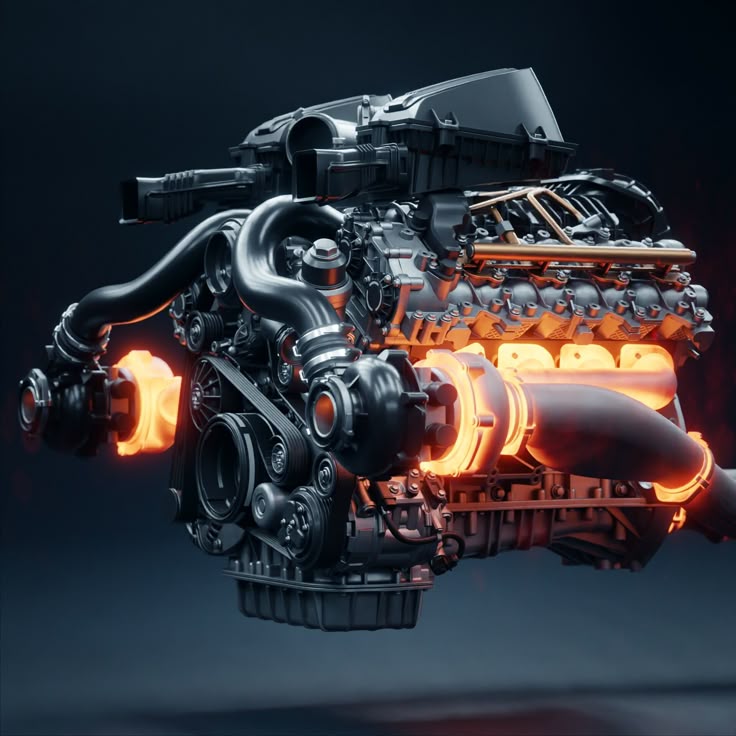
Cooling system failures account for 11% of all roadside vehicle breakdowns in the United States, according to breakdown data compiled from AAA roadside assistance records.
That number sounds manageable until you consider what cooling system failure actually means for your engine. One mile. That is all the time an overheating engine needs to cause irreversible internal damage, according to automotive repair specialists at Car Life Auto Care. Most drivers have no idea they are that close to the edge.
The frustrating part, from my experience working on these engines, is that overheating rarely comes out of nowhere. There are almost always warning signs in the days or weeks before a catastrophic failure. Drivers see them. They make a judgment call. And that judgment call costs them thousands of dollars they didn't budget for.
Understanding what causes an engine to overheat, and what your dashboard is trying to tell you before things go wrong, is one of the most practical things you can do as a car owner.
The Temperature Gauge Is Telling You Something
Your engine operates normally between 195°F and 220°F, which is roughly 90°C to 105°C. According to Auto Zone and general industry guidance, the temperature needle on your dashboard should rest comfortably near the midpoint of that range under normal driving conditions. The moment it starts climbing toward the upper portion of the gauge, something in your cooling system is not performing as it should.
I've seen this situation play out in workshops more times than I can count. A driver comes in after a breakdown, and when you ask about the lead-up, the answer is almost always the same: "The gauge had been running a little high for a few days, but it always came back down on its own." They waited. The engine didn't recover on its own. It got worse.
The cooling system that keeps your engine in that safe temperature window relies on a precise chain of components working together: the coolant itself, the water pump circulating it, the thermostat regulating flow, the radiator dissipating heat, the radiator cap maintaining pressure, and the cooling fans pulling air through when the vehicle is stationary or moving slowly. When any single component weakens, the entire system loses capacity. A failing thermostat, a low coolant level, a sticky cooling fan, a small leak in a hose, each one reduces the margin between normal operation and overheating.
A thermostat replacement typically runs $30 to $500. A coolant flush and refill costs $20 to $200. These are manageable numbers. The problem is that drivers often notice the temperature running slightly higher than normal, dismiss it as "probably the summer heat," and continue driving without investigation. The thermostat gets progressively worse. The system loses more capacity. Then one afternoon, on a long highway run with the air conditioning on full, the gauge climbs into the red.
What Happens Inside the Engine When It Overheats
This is the part that matters most, and it's worth understanding clearly.
Permanent damage from overheating can begin in as little as 30 to 60 seconds once the engine temperature exceeds its operating limit, according to Co Pilot automotive data. The aluminium alloy components in modern engines are particularly vulnerable. Cylinder heads, the components that seal the top of each combustion chamber, begin to warp at high temperatures. When a cylinder head warps, the head gasket between the head and the engine block loses its seal. Coolant and combustion gases begin to mix in places they should never meet.
A blown head gasket is one of the most expensive direct consequences of overheating. Repair costs typically fall between $2,400 and $3,200 for a modern passenger car, according to CarParts.com data, with labour accounting for roughly two-thirds of the total. In more severe cases involving warped heads requiring machine work, or engines that continued running well past the point of initial damage, quotes above $5,000 to $9,000 are not unusual. In the worst cases, where an engine seizes entirely from oil breakdown caused by extreme heat, replacement costs run $3,000 to $10,000 or more.
The driving habits that accelerate this outcome are specific. Running the air conditioning at maximum output while towing or climbing a steep grade in hot weather places the cooling system under compounded stress. Driving with a known low coolant level because "it's only a short trip" removes the buffer that keeps temperatures from spiking under load. Continuing to drive after the temperature gauge moves above the midpoint because "I'm almost home" is the scenario I've personally seen precede the most expensive repair bills.
What To Do The Moment Your Gauge Climbs
Pull over. That is the action. Not at the next exit, not at home, not after one more kilometre. Stop the vehicle as soon as it is safe to do so.
Turn off the air conditioning immediately. If stopping safely is not yet possible, turn the heater on full. Counterintuitive as that feels, the heater core acts as a secondary radiator and draws heat away from the engine coolant. Once stopped, turn the engine off and do not open the bonnet or remove the radiator cap until the engine has cooled for at least 30 minutes. Opening a pressurised cooling system on a hot engine causes serious burns.
From a stopped position, call for assistance. Driving a short distance further to reach a garage or home is a gamble that regularly results in five-figure repair bills. An overheated engine that is shut down quickly and assessed properly can often be repaired at reasonable cost. The same engine driven another mile frequently cannot.
Regular cooling system checks, including coolant condition, level, and visible hose integrity, take minutes and cost nothing. The consequences of skipping them can cost everything your engine is worth.
Comments (0)
Please login to join the discussion
Be the first to comment on this article!
Share your thoughts and start the discussion