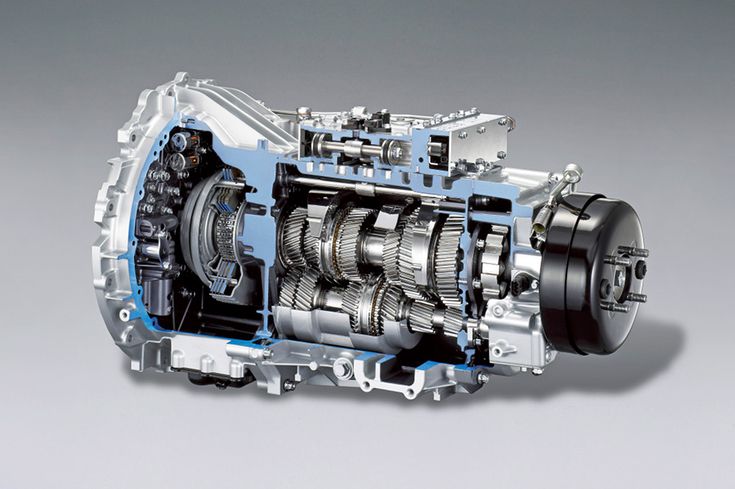
The average automatic transmission repair in America costs $4,700, and a full replacement can easily clear $6,000. What makes that number particularly painful is how many of those repair bills started with a symptom the driver noticed months earlier, dismissed, and forgot about.
That brief hesitation on acceleration. That small jolt when the car changed gears. That slight vibration cruising at highway speed. Familiar? You're not alone.
We sat down with a transmission specialist with over two decades of hands-on diagnostic work to get straight answers about something almost every driver has experienced but rarely understands. The conversation was direct, technical where it needed to be, and eye-opening throughout.
We started by asking the most common question drivers bring through the door. "The number one thing I hear is, 'It only does it when it's cold, so I figured it was normal,'" he said. “Cold symptoms are actually more important, not less. When that transmission is cold and the fluid is thick, any weakness in the system gets amplified. If it jerks cold and smooths out warm, your fluid is degraded. That's your transmission warning you, clearly and early.”
The science behind that warning matters. Transmission fluid doesn't wear out all at once. It degrades gradually through a process called shear thinning, where the long-chain polymer molecules that give the fluid its protective viscosity are physically broken apart by the constant pressure between gear surfaces. By 60,000 miles, the friction modifiers inside the fluid begin depleting in earnest. Those additives are what allow the clutch surfaces and the torque converter's lock-up clutch to engage smoothly rather than chatter or slip. Once they're gone, the mechanical behavior of those components changes in ways drivers feel but can't always name.
"Torque converter shudder is probably the most misdiagnosed symptom I deal with," the specialist explained. “People describe it as a vibration, a shimmy, sometimes even like driving over rumble strips for a second at around 45 to 60 miles per hour. They've been told it's a wheel balance issue, a tire issue, a motor mount. Nine times out of ten it's the lock-up clutch inside the converter slipping because the fluid has lost its friction modifiers. A fluid service at that stage costs maybe $150 to $300. Ignoring it for another 20,000 miles turns it into a torque converter replacement, and now you're talking $1,000 to $1,500 before labor.”
We asked him what hesitation on engagement means when you shift from Park to Drive and feel that sluggish, almost lazy delay before the car moves. His answer was unambiguous. “That delay is a pressure problem. A healthy transmission builds clutch pack pressure almost instantly. When you feel that lag, the fluid isn't generating adequate hydraulic force fast enough. It could be fluid volume, fluid condition, or a shift solenoid that's starting to stick. What it's never telling you is that everything is fine. People say, 'It's been doing that for six months and the car still drives fine.' That gap between when a problem starts and when it becomes catastrophic is the only window you get to fix it cheaply.”
On the topic of fluid, the specialist had a clear warning about the "lifetime fluid" label found in many owner's manuals. “Manufacturers define lifetime as the warranty period, typically 60,000 to 100,000 miles. After that, the problem becomes yours financially. The fluid doesn't know about your warranty. Heat, friction, and oxidation don't pause because the manual says they don't need to. I've pulled fluid out of transmissions at 90,000 miles that looked like used motor oil and smelled like burnt toast. The owners were shocked. Their manual told them nothing was needed.”
His guidance on fluid service is specific. A drain-and-fill, which replaces roughly 40 to 50 percent of the fluid volume, is generally safer on higher-mileage transmissions than a complete flush. Loosening accumulated sludge through a high-pressure flush on a transmission that's been neglected can dislodge deposits that then clog the valve body, triggering new problems. And the fluid specification matters enormously. Using a generic multi-vehicle ATF in a transmission engineered for a specific formulation, such as Dexron VI, Mercon LV, or ATF+4, can begin causing internal damage within 1,000 miles. Always confirm the OEM specification before purchasing fluid.
The closing message from the specialist was the kind of practical honesty that rarely gets said plainly enough. "By the time most people come to me, they've already passed the point where a simple service would have fixed it. The jerking got worse. The hesitation got longer. They waited until the transmission started slipping on the highway or dropped into limp mode. All of that could have been a fluid change and a diagnostic scan six months earlier." He paused, then added, “Your transmission never stops sending signals. Most drivers are just waiting for it to shout.”
Comments (0)
Please login to join the discussion
Be the first to comment on this article!
Share your thoughts and start the discussion